

A calming face cream for flushed skin can offer moisturising care and a cooling feel, but it can’t identify or treat the cause of facial redness. If your face feels warm or looks flushed, choose a product for its texture and comfort rather than expecting it to stop the flush.
A gentle routine matters too. Simple cleansing, moisturiser and careful introduction of new products can help you care for sensitive or dry-feeling skin without adding unnecessary irritation. This guide explains what to consider when choosing a cream and how to apply it with care.
Redness that persists, worsens or comes with other concerning symptoms deserves advice from a health professional. Skin changes during perimenopause or menopause are worth taking seriously, without assuming every flush has the same cause. The aim is comfort and informed choices, not a promise that skincare can treat the reason your skin is flushing.
Key Takeaways
- Flushing is a visible response, but ongoing redness can have different causes and may need professional advice.
- A simple routine with gentle cleansing, moisturiser and lukewarm water can help keep skincare comfortable and consistent.
- Choose a calming face cream for flushed skin by considering its texture, hydration and barrier-supporting care.
- Apply face cream with a light touch. Avoid vigorous rubbing or trying several unfamiliar products at once.
- Vivéa® Cooling Day Gel-Cream is a lightweight cooling gel-cream with moisturising and barrier-supporting care.
Why can skin look flushed during perimenopause or menopause?
Flushing is a visible response. Redness that persists or repeatedly returns can have different causes. A sudden warm face can be distracting, especially when it arrives without warning, but changes during perimenopause or menopause aren’t a personal failing or something you need to conceal.
A hot flush can bring a wave of warmth and visible redness, including across the face and neck. Hormonal changes during the menopause transition may affect the body’s temperature regulation, but they aren’t the only possible explanation for facial redness. Skincare can support comfortable, hydrated-feeling skin; it can’t identify or treat the underlying cause.
What might contribute to facial flushing?
A temporary flush may follow a hot drink, spicy meal, exercise, emotional stress or a warm room. These are possible triggers, not proof of a particular cause, and patterns differ from person to person. During perimenopause or menopause, hormonal changes may coincide with altered skin comfort or sensitivity, as well as hot flushes. For an accessible Australian overview, read Healthdirect Australia’s information on menopause and its symptoms. The Australasian Menopause Society is another reputable source for general health guidance.
Noticing what happens before a flush may help you describe its pattern to a health professional. You could record whether it follows warmth, a particular food or activity, how it feels, and whether the redness settles. This isn’t a way to diagnose yourself; it’s simply useful context if you decide to ask for advice.
When is redness more than a passing flush?
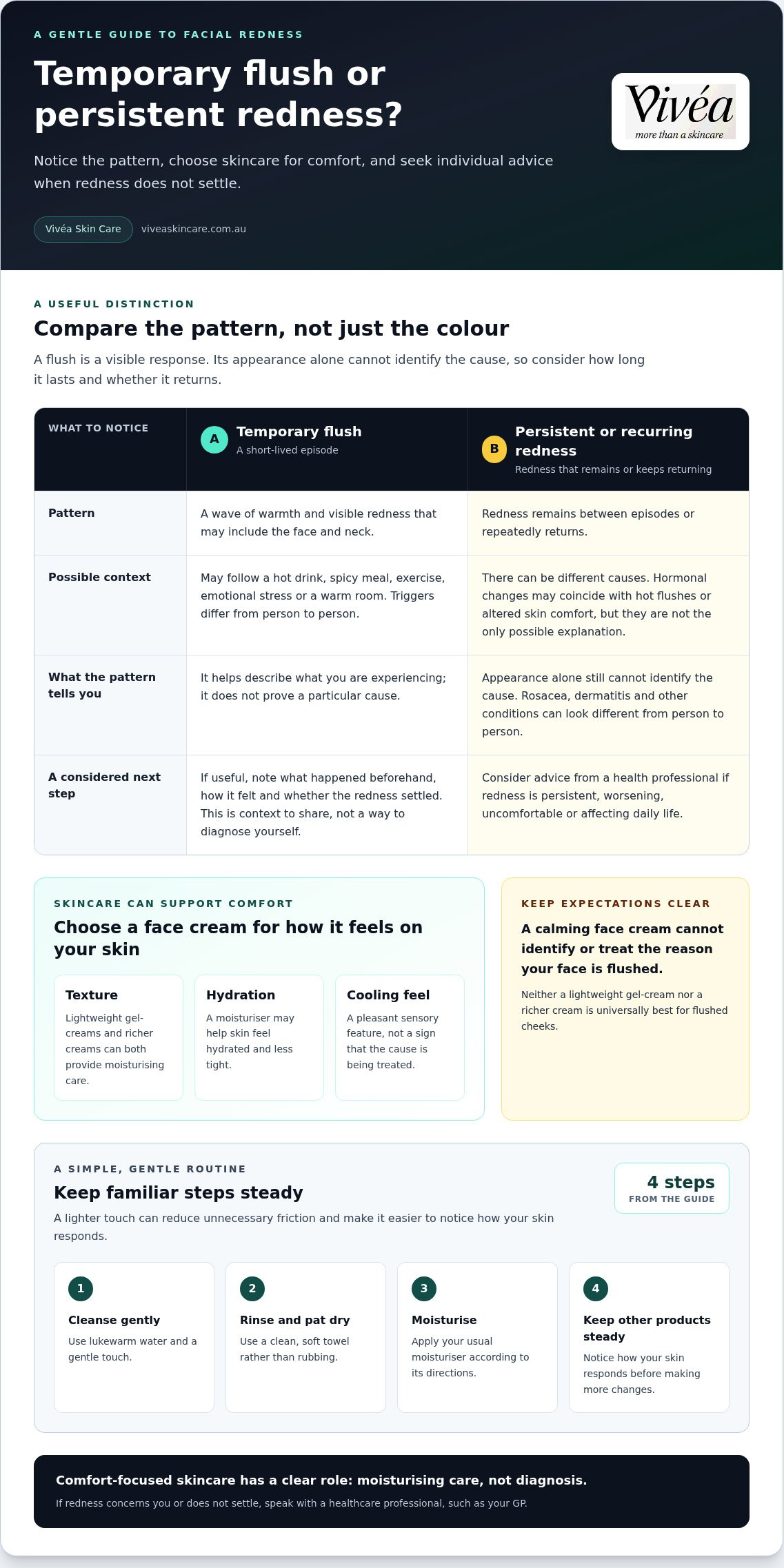
A temporary flush is a short-lived episode of warmth and visible redness. Recurring or persistent redness remains between episodes or keeps returning. This distinction can help you describe what you’re experiencing, but it doesn’t explain why it’s happening.
Consider individual advice if redness is persistent, worsening, uncomfortable or affecting your daily life. The same applies if the skin feels unusually sore or irritated, or if you’re uncertain about a change. Rosacea, dermatitis and other conditions can look different from person to person, so appearance alone isn’t enough to identify the cause.
A calming face cream for flushed skin may offer a cooling sensation or moisturising comfort, but it isn’t a diagnosis or medical remedy. If redness concerns you, speak with a healthcare professional, such as your GP. They can consider your symptoms and circumstances and advise whether further assessment is appropriate. You deserve clear, individual guidance, particularly when a change is new or doesn’t settle.
How can a gentle skincare routine calm flushed, sensitive skin?
A simple, consistent routine can support skin comfort without trying to manage every flush with another product. Keep the steps familiar: cleanse gently, apply moisturiser, and avoid introducing several new products at once. Skincare may help skin feel hydrated and comfortable, but it can’t guarantee that flushing will stop.
A simple routine makes it easier to notice how your skin responds because fewer changes help you identify what it seems to tolerate. If you adjust your routine, change one product at a time and give yourself a clear point of comparison. Note when you started using it and whether stinging, tightness or discomfort appeared afterwards.
Keep cleansing and moisturising low-fuss
Use lukewarm water rather than very hot water, and let your fingertips do the work. A gentle cleanser can lift away daily residue without scrubbing; pat your face dry with a soft towel instead of rubbing. Then apply a moisturiser that feels comfortable on your skin. It can support hydration and a softer, less tight feeling, but it isn’t a treatment for the reason your cheeks look flushed.
A gentle cream cleanser can be one option for a simple cleanse, particularly if you prefer a creamy texture. Choose a cleanser that feels comfortable on your skin and follow its directions.
Reduce avoidable irritation while skin feels warm
If a product stings or seems to worsen discomfort, pause it rather than adding more products to counter the reaction. This doesn’t mean that a particular ingredient will irritate everyone; individual responses vary. Keep the rest of your routine steady while you observe how your skin feels, and seek advice from a healthcare professional if reactions continue or concern you.
For a calm, repeatable routine, try this order:
- Wet your face with lukewarm water and cleanse with a gentle touch.
- Rinse without rubbing, then pat dry with a clean, soft towel.
- Apply your usual moisturiser according to its directions.
- Keep other products unchanged while you notice how your skin responds.
There’s no need to scrub, massage vigorously or layer several unfamiliar products during a flush. If your skin feels particularly warm, return to familiar basics rather than testing a new formula in that moment. A lighter touch can make the routine more comfortable and help avoid unnecessary friction.
If you’re looking for skincare designed with changing comfort during perimenopause and menopause in mind, explore Vivéa Skin Care’s skincare range as one option for a gentle routine.
Choosing a calming face cream for flushed skin
A suitable moisturiser feels comfortable on your skin and fits easily into your routine. Lightweight gel-creams and richer creams can both provide moisturising care; neither is universally best for flushed cheeks. Hydration and barrier support are useful cosmetic considerations, but they don’t diagnose or treat the cause of redness.
A cooling sensation may feel pleasant, but it doesn’t reveal why your skin is red or mean that a cream is treating the cause. Consider it a sensory feature, not a medical sign or a promise of lasting relief. Persistent or concerning redness still deserves individual advice.
Which texture might feel comfortable on your skin?
If you dislike a heavy or rich feel, a lightweight gel-cream may be more pleasant to apply. A richer cream may feel more comforting if your skin tends to feel dry or tight. These are preferences, not rules: how a product sits on your skin and how your skin responds matter more than its texture category.
| Texture | Intended feel | Questions to consider |
|---|---|---|
| Lightweight gel-cream | Light and less rich on the skin | Do you prefer a less substantial feel? |
| Richer cream | More substantial and cushioning | Does your skin often feel dry or tight? |
Notice how your skin feels after application rather than judging a cream by its label alone. Does it feel pleasant, or is the texture distracting? If a new product causes discomfort, pause it and notice whether the reaction continues before making another change.
How to think about calming and hydrating ingredients
Ingredient lists can offer clues, but they can’t guarantee how a finished formula will feel on your skin. Ingredients used in moisturising skincare can serve different purposes, but their presence alone doesn’t prove that a particular cream will improve redness or suit everyone.
Look at the whole formula and your own response, rather than assuming that an ingredient is automatically gentle because it’s familiar or described as natural. A calming face cream for flushed skin may offer a comfortable cooling feel and moisturising support, but that’s different from treating persistent redness. Introduce a new formula cautiously, follow its directions, and seek professional advice if skin reactions continue or cause concern.
How should you apply face cream when your skin feels flushed?
Keep application gentle and straightforward: begin with clean skin, use the amount of cream directed on the product label, and follow its instructions for how often to apply it. Smooth it on lightly rather than rubbing briskly. A cream may feel soothing or cooling, but it can’t guarantee that redness will settle or address what’s causing it.
A simple application approach for sensitive-feeling skin
Before trying a new product across your face, test it cautiously on a small area, following any testing advice on its label. Notice how the skin feels after application and whether discomfort develops. If it stings, feels increasingly uncomfortable or seems to worsen irritation, stop using it. Seek professional advice if the reaction concerns you or doesn’t settle.
During a flush, resist the urge to layer several unfamiliar products in search of faster comfort. More products make it harder to tell what your skin is responding to, and vigorous rubbing can add friction when your face already feels warm. If you’ve just cleansed, pat the skin dry gently, then apply your usual moisturiser in a light, even layer. Follow its directions rather than adding extra applications because redness is present.
If you’re introducing a new cream, choose a time when your skin feels relatively settled rather than testing it in the middle of a flush. That can make it easier to notice how it feels without confusing a new product response with the temporary warmth or redness you were already experiencing.
When to seek advice about recurring redness
Facial redness can have several possible causes, and its appearance alone can’t establish which one applies. Arrange an individual assessment with a healthcare professional if redness persists, worsens, becomes painful or keeps returning in a way that concerns you. Healthdirect Australia offers general information on skin changes and when to seek medical advice, but it can’t assess your particular symptoms.
It may help to keep a brief, neutral record of when redness occurs, what you applied beforehand and whether anything seemed to make the discomfort better or worse. Include everyday details such as warmth, activity or a new skincare product if they seem relevant. This record isn’t a way to diagnose the cause; it simply gives you clearer details to discuss during an appointment.
A cooling sensation is a comfort feature, not evidence that a cream is treating the reason for redness. If you’re looking for a lightweight moisturising option with a cooling feel, explore Vivéa Skin Care’s cooling skincare as part of a gentle routine.
Vivéa Skin Care's cooling care for flushed skin
Once you’ve kept your routine simple and considered what feels comfortable, you may want to add a moisturiser with a lightweight texture and cooling feel. Vivéa® Cooling Day Gel-Cream is a lightweight cooling gel-cream with moisturising and barrier-supporting care. It can fit into a routine when you want a light-feeling moisturiser, not as a treatment for flushing or the cause of redness.
Where the day gel-cream may fit in a gentle routine
Use it as your moisturising step after cleansing, following the directions on the product label. Keep the rest of your routine familiar while you notice how the cream feels on your skin. Its cooling sensation and hydration are cosmetic comfort benefits; they don’t establish why your cheeks are flushed or promise that redness will fade.
If you’re considering a calming face cream for flushed skin, think about whether its texture feels pleasant and whether your skin seems comfortable after use. Introduce it thoughtfully, and stop using it if it causes discomfort. If redness persists or concerns you, a cream shouldn’t take the place of advice from a healthcare professional.
Choose comfort, not promises, when skin feels flushed
Vivéa Skin Care is a New Zealand-origin skincare brand focused on women experiencing perimenopause and menopause. The range is menopause-specific and features low-allergen scent and mood-balancing fragrances. These range descriptors aren’t a guarantee that every person will find a product suitable for their skin; individual responses can differ.
Cooling skincare may offer a pleasant sensation and moisturising support as part of a routine, but it can’t address every possible reason for redness. Choose a product for the comfort and texture it offers, while treating persistent, worsening or painful redness as a separate concern to discuss with a healthcare professional.
Vivéa Skin Care’s mission is to help women feel understood, supported and confident during this powerful stage of life. If a lightweight cooling moisturiser sounds right for your routine, explore Vivéa® Cooling Day Gel-Cream and follow its product directions. Notice how it feels without expecting a skincare step to diagnose or resolve the cause of flushed skin.
Make comfort your next step
Your skincare routine doesn’t need to solve every change your skin goes through. Let comfort guide your choices: notice how a cream feels, introduce it thoughtfully and adjust if your skin responds differently than expected. A calming face cream for flushed skin can be part of that care, but persistent or worrying redness is still a reason to seek professional advice.
Vivéa Skin Care develops skincare for women experiencing perimenopause and menopause, with products created in New Zealand. The range is clinically tested and dermatologically approved for safety and efficacy. These details can inform your choice, while your own comfort and the product’s directions remain important.
If a lightweight cooling moisturiser feels like a suitable next step, take a closer look at Vivéa® Cooling Day Gel-Cream. Explore Vivéa Skin Care’s range and choose care that feels considered and manageable.
Frequently Asked Questions
Can a calming face cream stop facial flushing?
No, a face cream can’t be relied on to prevent facial flushing. Its role is cosmetic, such as adding moisture or a cooling sensation, rather than controlling the body’s response during a hot flush. When comparing products, consider whether you want a lighter or richer feel and whether the label describes a cooling sensation. Judge the cream by comfort, not by whether it stops flushing.
Is facial redness always caused by menopause?
No, facial redness isn’t always caused by menopause. A hormonal transition may be relevant, but redness can have other explanations, and appearance alone can’t identify one. Consider whether it happens only during a wave of warmth or remains visible at other times, then share that distinction with a healthcare professional if you’re concerned. For general background, Healthdirect Australia’s menopause information is a useful starting point.
Can I use a new moisturiser when my skin is sensitive?
Yes, you can try a new moisturiser cautiously. Read its label first, then test a small area as directed before applying it more widely. Keep the rest of your routine familiar so you can better judge how the new product feels. “Natural” on a label doesn’t mean a product will suit every person. If you’re unsure about a reaction or it persists after stopping use, seek professional advice.
Should I use a face cream during a hot flush?
You can use a face cream during a hot flush if applying it feels comfortable, though it won’t necessarily change the flush. If your face feels too warm or touch-sensitive, you can wait until you feel ready to apply your usual moisturiser. Extra layers won’t necessarily shorten the episode. Follow the product’s directions and use your comfort as a guide.
Can I wear makeup over moisturiser on flushed skin?
Yes, you can wear make-up over moisturiser if both products feel comfortable and their labels allow it. Give the moisturiser time to settle, then apply make-up with clean fingers or a soft tool and a light touch. If products tend to pill, try using less moisturiser or allow more time before applying make-up. At the end of the day, remove it gently rather than scrubbing.
When should I get medical advice about facial redness?
Seek medical advice if redness persists, becomes more pronounced, feels painful or otherwise concerns you. To make a conversation more useful, note when it began, whether it comes and goes, and which skincare products you use. Mention any changes you’ve noticed alongside the redness. A healthcare professional can consider this information in context; a cosmetic cream can’t determine the cause or replace an assessment.


