

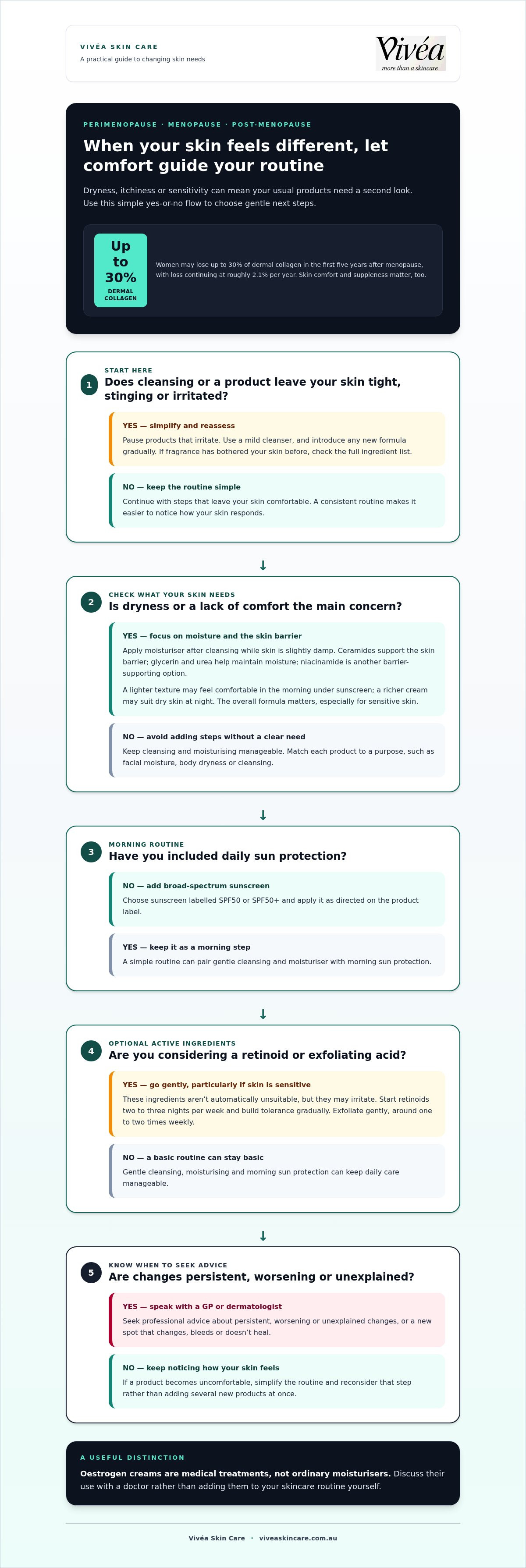
Menopause can leave skin drier, itchier and less supple as its moisture needs change. In the first five years after menopause, women may lose up to 30% of dermal collagen, with loss continuing at roughly 2.1% per year. A thoughtful menopause skincare routine in Australia can focus on gentle cleansing, lasting hydration and support for the skin barrier.
If your usual products suddenly feel drying or uncomfortable, you’re not alone, and your routine doesn’t need to become complicated. Small, soothing adjustments can help your skin feel more comfortable through perimenopause, menopause and post-menopause.
This guide explains how these changes can affect your skin and shares practical ways to care for dryness and itchiness, from choosing a gentle cleanser and moisturiser to building a simple morning and evening routine. You’ll also learn which ingredients help attract and retain moisture, when to keep your routine especially gentle, and when persistent or concerning changes call for professional attention.
Key Takeaways
- Skin can feel drier, more sensitive and less supple through perimenopause, menopause and post-menopause, so your routine may need to adapt.
- Choose gentle cleansing and moisturising steps that support comfort and help your skin hold onto hydration.
- Keep your daily routine simple and consistent, and take a closer look at products that leave your skin feeling tight or irritated.
- For dry, itchy skin, focus on replenishing moisture and protecting the skin barrier rather than adding lots of new products at once.
- Explore cooling skincare options when soothing hydration is what your routine needs.
How does Menopause impact the skin?
Falling oestrogen can affect collagen, moisture and how your skin feels. These changes may begin during perimenopause, before periods stop.
Estrogen, collagen and skin moisture
Oestrogen supports skin structure and moisture, so declining levels can affect firmness and elasticity. Women may lose up to 30% of dermal collagen during the first five years after menopause, with loss continuing at roughly 2.1% per year. Type I collagen makes up about 80% of skin collagen, while Type III accounts for about 15%. Look for changes in comfort and suppleness, not just visible lines.
Sensitivity and the skin barrier
A less resilient barrier can leave menopausal skin feeling tight, dry or more reactive to familiar products. Notice whether cleansing causes discomfort or a fragranced cream triggers stinging. When sensitivity increases, simplify your routine: use a mild cleanser, pause products that irritate, and introduce new formulas gradually. Rose-powered skincare may sound appealing, but rose ingredients aren’t automatically gentle. Consider the full formula, especially if fragrance has bothered your skin before.
Moisturisers for menopausal skin
Choose moisturisers with ingredients that help the skin barrier retain hydration. Ceramides support the barrier, while glycerin and urea help maintain moisture. Niacinamide is another barrier-supporting option. Apply moisturiser after cleansing while skin is slightly damp, then notice how your skin feels. The overall formula matters: one useful ingredient doesn’t guarantee a finished product will suit sensitive skin.
For daily sun protection in Australia, choose broad-spectrum sunscreen labelled SPF50 or SPF50+. Cancer Council Australia recommends SPF50 or SPF50+ sunscreen. Apply it as directed on the product label, and include it in your morning routine.
Retinoids and exfoliating acids aren’t automatically unsuitable, but either may irritate sensitive skin. Start retinoids two to three nights per week and build tolerance gradually; exfoliate gently, around one to two times weekly. Estrogen creams are medical treatments, not ordinary moisturisers. Discuss their use with a doctor rather than adding them to your skincare routine yourself.
See a GP or dermatologist about persistent, worsening or unexplained changes, or a new spot that changes, bleeds or doesn’t heal. A clinician can assess the concern and advise whether further care is needed.
Menopausal hormone therapy may affect skin, but it isn’t prescribed solely as a skincare product. Potential risks can include blood clots, stroke and certain cancers, and depend on the therapy and your health history. A doctor can explain how the treatment’s form and your circumstances affect the balance of benefits and risks.
Skincare products for perimenopause, menopause and post-menopause
Choose products based on what your skin needs now, rather than age-based labels. A simple routine can pair a gentle cleanser with moisturiser and morning sun protection.
Products across menopause stages
During perimenopause, fluctuating oestrogen may coincide with changing dryness, sensitivity or breakouts. At menopause and post-menopause, reassess whether your usual products still leave your skin comfortable. Look for straightforward formulas suited to how your skin feels now, including a cleanser, moisturiser and sunscreen. Consider haircare and body products separately, depending on scalp or body dryness.
Cleansing and moisturising options
A creamy cleanser can remove daily residue without the stripped feeling some stronger cleansers leave behind. Follow with a moisturiser that helps reduce moisture loss. For example, choose a lighter texture in the morning if it sits comfortably under sunscreen, and a richer cream at night if your skin feels dry. Add products gradually so you can identify what suits you.
Product names and packaging can make menopause skincare seem specialised, but the label still deserves a close read. Check the intended use, directions and full ingredient list. If fragrance bothers your skin, choose a product without it. A “for mature skin” label alone doesn’t tell you whether the texture or ingredients will suit your skin.
Australian-made skincare, haircare and body products may appeal if local origin matters to you. Look for clear country-of-origin information on the packaging or official product page. “Australian-made” describes origin, not whether a formula suits sensitive skin. Choose a cleanser, cream or body lotion based on its ingredients and intended use, rather than treating origin as a measure of compatibility.
Galvanic ion devices are sometimes promoted alongside skincare to support product absorption. They aren’t essential to a basic routine, and device claims shouldn’t distract from choosing a suitable cleanser and moisturiser. If you’re comparing a device, read its instructions and consider what it adds to your existing routine. A new tool can make your routine more involved without addressing the product choice that matters most.
For a practical product check, match each item to a specific need: cleansing, facial moisture, body dryness or scalp care. Keep your morning and evening routines easy to repeat. If a new cleanser leaves your face uncomfortable or a cream doesn’t feel moisturising enough, reconsider that step instead of adding several products at once. Consistency makes it easier to notice what feels comfortable.
Gentle cleansing and daily skincare routines
A calm routine can keep cleansing, hydration and sun protection manageable as your skin’s needs change. Choose morning and evening steps that leave your face comfortable, not tight or stinging.
Gentle cleansing and fragrance avoidance
In the morning, choose a mild, pH-balanced cleanser to lift overnight residue without stripping natural oils. If your skin is sensitive, a soap-free formula and less exposure to fragrance may make cleansing more comfortable. Use lukewarm water, massage gently with your fingertips, then rinse and pat dry. Avoid scrubbing with a face cloth, as friction can leave skin feeling unsettled.
Notice how your skin feels after washing. Tightness, persistent stinging or a dry, rough texture can be signs to review your cleanser or how often you use it. Keep the rest of your routine steady while you make that change, so it’s easier to identify what helps. For example, don’t introduce a new cleanser and exfoliant on the same day.
Build your morning routine in a simple order: cleanse, moisturise, then apply sunscreen. Let each layer settle before adding the next, particularly if products pill or feel uncomfortable together. If a cleanser leaves your skin feeling stripped, switch to a gentler option rather than cleansing again for a squeaky-clean finish. The aim is to remove residue while keeping skin comfortable.
Take a measured approach to active ingredients when your skin feels dry or reactive. If you use retinol, start two to three nights per week and build tolerance gradually. Exfoliate gently, around one to two times weekly. Don’t introduce several active products at once; spacing out changes makes it easier to spot irritation and adjust one step.
Night-time cleansing and moisturising
In the evening, remove the day’s sunscreen, makeup and residue before moisturising. A double cleanse can start with an oil-based cleanser, followed by a gentle water-based cleanser. Use soft fingertips rather than vigorous rubbing, then apply moisturiser while your skin is slightly damp. If you haven’t worn makeup or sunscreen, cleanse gently and avoid unnecessary scrubbing.
Separate potentially irritating steps across different nights. For example, use retinol one evening and exfoliate another, rather than layering both into one routine. On quieter nights, cleanse and moisturise without an active ingredient. This creates a repeatable pattern and makes changes in texture or comfort easier to notice. If a product repeatedly causes discomfort, pause that step and simplify your routine.
Dryness, itchiness and hydration
Dry, itchy skin can feel uncomfortable during menopause, especially when familiar products no longer feel soothing. A hydration-focused routine can help reduce moisture loss and support a more comfortable skin barrier.
Start with a short, lukewarm shower or face wash. Hot water and prolonged washing can leave dry skin feeling tighter. Pat your skin gently with a clean towel instead of rubbing. Apply moisturiser soon afterwards, while your skin is still slightly damp, to help retain surface moisture.
For facial hydration, a serum containing hyaluronic acid or glycerin can attract water to the skin. Apply it as directed, then follow with moisturiser to help reduce moisture loss. Glycerin is also found in some creams and lotions. Choose a comfortable texture, and don’t assume a serum alone will be enough for dryness.
In the morning, a light lotion or cream can feel comfortable beneath sunscreen. At night, a richer cream or more occlusive ointment can help limit water escaping from the skin’s surface. Apply the evening layer to dry areas such as your cheeks or hands. Avoid textures that feel uncomfortable or irritate your skin.
Dryness and itchiness can have different triggers, so change one step at a time. Note, for example, whether discomfort follows a new cleanser, a fragranced product or a long shower. Pause any product that consistently causes irritation and keep the rest of your routine simple. This makes it easier to spot patterns without adding several new formulas at once.
Hydration improvements from a consistent skincare routine may become noticeable within 2 to 4 weeks. That timeframe is a guide for noticing comfort, not a reason to continue a product that irritates your skin. Check how your face feels after cleansing and moisturising, and whether tightness returns during the day. Adjust the texture or application step that feels least comfortable.
Wrinkles and changes in skin texture can accompany dryness, but adding more active products may not ease the immediate feeling of tightness. Prioritise hydration first, then consider whether other products suit your skin. If itchiness persists or skin changes concern you, seek medical advice rather than relying on moisturiser alone.
Skincare for perimenopause, menopause and postmenopause
Skin needs can shift through perimenopause, menopause and post-menopause, so review your routine when comfort or appearance changes. Menopause skincare in Australia can be adapted to suit your skin now, rather than following a fixed, age-based plan.
Skincare across menopause stages
During perimenopause, changing oestrogen levels may coincide with new concerns such as sensitivity or breakouts. Later, dryness or changes in texture may become more noticeable. These shifts don’t follow a set order, so let your skin’s current needs guide your choices. For example, if a product that once felt comfortable begins to sting, pause it and reassess.
Look beyond facial products when reviewing your routine. Dryness on your hands, neck or body may call for a separate moisturising step, while scalp discomfort may mean reconsidering your hair products. Make one adjustment at a time and observe how the area responds. A brief note about the product and the change you notice can help you identify patterns.
Hormonal skin concerns can change over time, too. If breakouts appear alongside dryness, avoid treating your whole face as oily; a harsh spot treatment may leave other areas uncomfortable. Consider the location and feel of each concern, and keep the rest of your routine familiar while assessing a new step. Menopause skincare in Australia should work for daily life, not require a long list of products.
Australian advice for skin changes
Australian health advice is to discuss significant or persistent skin concerns with a doctor. Before an appointment, note when a change began, where it appears, and whether it followed a new product or another change. These details can help your GP assess the concern and decide whether further assessment, including a dermatologist referral, is appropriate.
For a helpful conversation, describe how the concern affects your daily comfort as well as your appearance. Mention whether itching affects sleep, a rash is spreading or a spot is changing. A doctor can consider the pattern, your health history and any other symptoms when discussing next steps. Skincare products can support everyday comfort, but they don’t diagnose the cause of a new skin problem.
If you’re considering medical support for menopause symptoms, discuss that separately with your GP. They can consider your health history and the symptoms you want help managing. Keep cosmetic skincare choices focused on how your skin feels and responds, while medical decisions address broader health concerns. This distinction can help you make more considered, comfortable skincare choices.
Vivéa Skin Care: Vivéa Cooling Night Gel Cream for Menopause
Vivéa Cooling Night Gel Cream for Menopause offers a cooling, hydrating option for your evening routine. It may suit you if you want moisturising care that feels refreshing as you wind down. Cosmetic skincare can support skin comfort, but it doesn’t treat menopause or replace medical care.
For a simple routine, pair it with Vivéa Gentle Creamy Cleanser for Sensitive Mature Skin. Vivéa Hydrating Cooling Mist Spray offers another option when you want a cooling hydration step. Choose products according to your skin’s needs and how it responds.
Explore relevant products and skincare options at Vivéa Skin Care.
Make your next skincare step a gentle one
Your routine can evolve with your skin. Instead of changing everything at once, choose one step that could make daily care more comfortable, then take time to notice how your skin responds. A thoughtful menopause skincare routine in Australia can stay personal and simple, shaped by what feels soothing and manageable for you.
If you’d like to explore products for changing skin, Vivéa Skin Care offers Vivéa Cooling Night Gel Cream for Menopause, Vivéa Gentle Creamy Cleanser for Sensitive Mature Skin and Vivéa Hydrating Cooling Mist Spray. Choose the step that best suits your routine and preferences.
Contact Vivéa Skin Care to explore skincare options for your changing needs. A little care, chosen at your own pace, can help make your routine feel more comfortable.
Frequently Asked Questions
How can I support my skin barrier?
Support your skin barrier by keeping daily contact gentle and reducing avoidable friction. Apply products with clean hands, avoid rubbing with towels, and change pillowcases regularly if they collect hair products or residue. If you wear jewellery or use hair styling products, notice whether irritation appears where they touch your skin. A brief note about these contacts can help you spot patterns beyond your face cream.
How do you manage the sudden onset of sensitivity?
If sensitivity appears suddenly, consider a new exposure and simplify what touches the affected area. Check whether irritation follows a contact pattern, such as where a scarf, jewellery or hair product rests. Avoid trying several replacement products at once, which can make the trigger harder to identify. If the reaction is severe, spreads quickly, or comes with swelling or pain, seek prompt medical advice.
What can contribute to dryness and skin sensitivity?
Dryness and sensitivity can be influenced by hormonal changes, weather, repeated washing and products that don’t suit your skin. Seasonal shifts, air conditioning and swimming may also affect how skin feels. Consider the pattern: discomfort after a particular activity may point to a different trigger from persistent, all-over dryness. Keep a simple record of exposures and symptoms to discuss with your GP if concerns continue.
What factors contribute to visible signs of skin ageing?
Visible signs of skin ageing reflect several influences, including natural changes in skin structure and cumulative exposure to sunlight. Genetics and individual skin history also shape how changes appear. Distinguish gradual changes in texture from a new or changing spot. Don’t use a cosmetic routine to assess a spot’s cause; note changes in its appearance and seek medical assessment for concerning or persistent changes.
What skin changes are common during menopause?
Common changes can include dryness, increased sensitivity, reduced firmness, altered texture and breakouts. They may affect the face or other areas, and people don’t all experience the same combination. Note where a change appears and whether it is constant or comes and goes. That context can help distinguish a temporary reaction from a concern worth discussing with a health professional.
How do estrogen changes affect skin during menopause?
Changing oestrogen levels can influence skin structure and moisture retention, which may affect firmness and comfort. Skin appearance alone can’t tell you your hormone levels. If skin changes occur alongside symptoms affecting your wellbeing, keep a record of both and discuss them with your GP. Cosmetic products can support everyday skin comfort, but they don’t adjust hormone levels.
What skincare ingredients help menopausal dry or sensitive skin?
For dry or sensitive skin, useful ingredients to look for include glycerin, ceramides, urea and hyaluronic acid. Compare the full ingredient lists, since the overall formula matters more than one highlighted ingredient. When choosing between two products, consider which addresses your main concern and has fewer unfamiliar ingredients. Introduce one new formula at a time to make it easier to notice how your skin responds.
What is a simple menopause skincare routine for morning and night?
A simple routine uses a few steps you can repeat comfortably. In the morning, cleanse if needed, moisturise and apply sunscreen. In the evening, remove makeup or sunscreen, cleanse, then moisturise. If you haven’t worn makeup, a single gentle cleanse may be enough. Keep optional products separate from your basic routine at first, so you can tell which steps suit your skin and which may cause discomfort.


