

Could a moisturiser hydrate your skin without feeling heavy when a hot flush brings sudden facial warmth? If you’re looking for a non greasy face cream for hot flashes, the balance matters: a rich texture may feel uncomfortable when your skin is already warm, while dry or sensitive skin can still benefit from gentle daily moisture.
A lightweight cream may make your skincare routine feel more comfortable, but it can’t prevent hot flushes or change the hormonal shifts behind them. Knowing the difference helps you choose skincare for comfort without expecting a moisturiser to do more than it can.
This guide explains what a light gel-cream can offer, how to choose a texture that feels right for your skin, and what to consider if dryness or sensitivity is part of the picture. You’ll also find practical ways to keep your routine simple and assess cooling claims realistically.
Key Takeaways
- A rich cream may feel heavy during facial warmth, but that doesn’t mean it causes a flush.
- Dryness, sensitivity and warmth can affect how your skin feels, and everyone’s experience of perimenopause and menopause is different.
- A non greasy face cream for hot flashes may offer a lighter feel while still providing moisture, depending on your skin’s needs.
- Choose a texture that feels comfortable, follow the product directions and introduce one new face product at a time.
- Vivéa® Cooling Day Gel-Cream has a lightweight cooling texture that may suit a simple moisturising routine.
Non-greasy face cream for hot flashes: does a rich cream really trap heat?
A rich cream may feel heavier during a hot flush, but that sensation alone doesn’t show that the cream caused the flush. Facial warmth and a noticeable skincare texture can happen at the same time, making the combination uncomfortable without one necessarily triggering the other.
That distinction matters when choosing a non greasy face cream for hot flashes. A lighter finish may feel more pleasant on warm skin, but “non-greasy” describes how a product feels and wears, not whether it can control flushing. A moisturiser can support skin comfort without acting on the processes behind a hot flush.
Hot flushes are bodily episodes that may include a sudden feeling of warmth and visible flushing. The Hot flush overview describes this experience, but noticing warmth after applying a cream doesn’t, by itself, show that the product brought it on. You can observe whether the timing repeats, but timing alone doesn’t prove cause.
Myth: a richer cream always causes facial heat
A rich, substantial finish can feel occlusive or simply more noticeable to some people, particularly when the face already feels warm. Someone else may find the same texture comfortable, especially if their skin feels dry. Skin responses and preferences vary, so there isn’t one cream texture that suits everyone during a flush.
Perceived heaviness is a texture experience, not proof that a cream triggers a flush. If warmth and product application seem to coincide, notice whether the sensation happens repeatedly and whether it occurs without the cream, too. This can help you describe what you’re experiencing without treating one overlap as proof of a cause.
What a non-greasy finish can and cannot promise
“Non-greasy” usually signals a finish that feels lighter or less oily on the skin. It’s a texture preference, not a measure of a moisturiser’s strength, quality or ability to treat a symptom. A light cream may still be formulated to moisturise, while a richer one may suit someone who prefers a more substantial feel.
A comfortable finish can make daily skincare easier to tolerate, but it doesn’t mean a product prevents or stops hot flushes. Cosmetic moisturisers support the skin’s moisture needs and comfort. They don’t treat menopause symptoms. A cooling sensation is a sensory effect, not evidence that flushing has been medically relieved.
If a cream feels too noticeable when your face is warm, you could choose a lighter texture for those moments and keep your routine simple. If your skin feels dry, hydration still matters. The useful question isn’t whether rich creams are universally wrong, but which finish feels comfortable for your skin without expecting it to change the flush itself.
Why skin can feel dry, sensitive or hot during menopause
Skin comfort can change during perimenopause and menopause, but the experience isn’t the same for everyone. Some people notice dryness, tightness or sensitivity; others may not see much difference. A warm face during a flush is a different sensation from dry or easily irritated skin, although both can happen at once and affect how a moisturiser feels.
Healthdirect notes that menopause experiences and symptoms vary, and that skin changes can include dryness or itchiness. Its menopause information offers a general overview, but it can’t explain every individual’s skin experience. In practical skincare terms, moisturising and supporting the skin barrier are cosmetic goals. They can help skin feel more comfortable, but they don’t treat menopause or hot flushes.
How changing skin comfort affects moisturiser choice
Dryness may leave your skin feeling tight after cleansing, while sensitivity can make some products uncomfortable. These experiences aren’t universal, and they don’t automatically mean you need a complicated routine. If you dislike noticeable residue, a lighter-feeling texture may be more comfortable. If dryness is your main concern, consider whether your skin feels adequately moisturised after applying a product.
Hot flushes and skin feel are related experiences, not the same thing
A hot flush is a passing episode of warmth, sometimes accompanied by visible redness or sweating. A topical product may feel cool on application, but that surface sensation isn’t the same as changing your body temperature or treating the flush. Keeping the two effects distinct helps set realistic expectations while allowing skincare to contribute to everyday comfort.
Notice what your skin seems to need at different times. If your face feels warm but not dry, a light finish may feel less distracting. If it feels tight as well, you may prefer a texture that leaves your skin feeling moisturised without an uncomfortable coating. No single finish works for everyone, and your preference may shift with the weather, your routine or how your skin feels that day.
Think of barrier support as gentle, consistent care, not a way to alter the flush. A moisturiser can help maintain a comfortable skin feel, while using fewer familiar products can make it easier to notice what suits you. If a product consistently stings or irritates, stop using it and consider seeking advice from a health professional, particularly if the discomfort persists.
Seek professional advice for symptoms that are persistent, concerning or unusual for you. Skincare can support comfort, but it isn’t a substitute for assessment or care when something feels wrong. If you’re looking for a light-textured option as part of a simple routine, explore Vivéa Skin Care’s lightweight skincare.
Gel-cream or rich cream: which texture feels right during a hot flush?
There isn’t one texture that suits everyone. A gel-cream may feel lighter and leave less of a noticeable coating, while a richer cream can offer the substantial finish some people prefer. Either texture may be formulated to moisturise, so “lightweight” doesn’t automatically mean “not hydrating enough”. Consider how your skin feels after applying a product and whether the finish is comfortable when your face is warm.
This comparison can help you decide what texture to try without treating either one as universally better:
| Texture | How it may feel | Could suit you if… |
|---|---|---|
| Gel-cream | Lighter, with less of a rich or oily feel | You prefer a fresh, less noticeable finish during warm moments |
| Richer cream | More substantial or cushioning on the skin | You like a fuller-feeling moisturiser in your routine |
When a lightweight gel-cream may feel more comfortable
If a rich finish feels too noticeable when your face is warm, a gel-cream may feel more comfortable. Its lighter feel is a matter of texture, not a promise to cool the body or prevent flushing. A gel-cream can still be formulated to moisturise and support the skin barrier, so judge it by how your skin feels rather than assuming it offers too little hydration.
Comfort can vary from day to day. Your skin may feel different depending on dryness, sensitivity, the weather or your personal preference. If you’re considering a non greasy face cream for hot flashes, focus on whether the finish feels comfortable and your skin feels moisturised afterwards. A light texture is useful only if it also meets your skin’s needs.
When a richer cream may still suit your skin
A richer moisturiser may be the texture you enjoy, particularly if you prefer a more substantial finish as part of your dry-skin routine. That doesn’t make it unsuitable during menopause, and it doesn’t mean it causes a flush. Consider your own comfort: does your skin feel moisturised, or does the finish feel too noticeable at that moment?
A menopause label alone won’t tell you which texture is right. Compare products by how they feel and the moisture your skin seems to need, rather than assuming everyone experiencing hot flushes should avoid richer creams. If a texture feels uncomfortable, you can choose a different finish. That’s a personal skincare preference, not evidence that the original cream triggered the warmth.
For a lighter-feeling moisturising option, explore Vivéa Skin Care’s gel-cream skincare as one possibility for your routine.
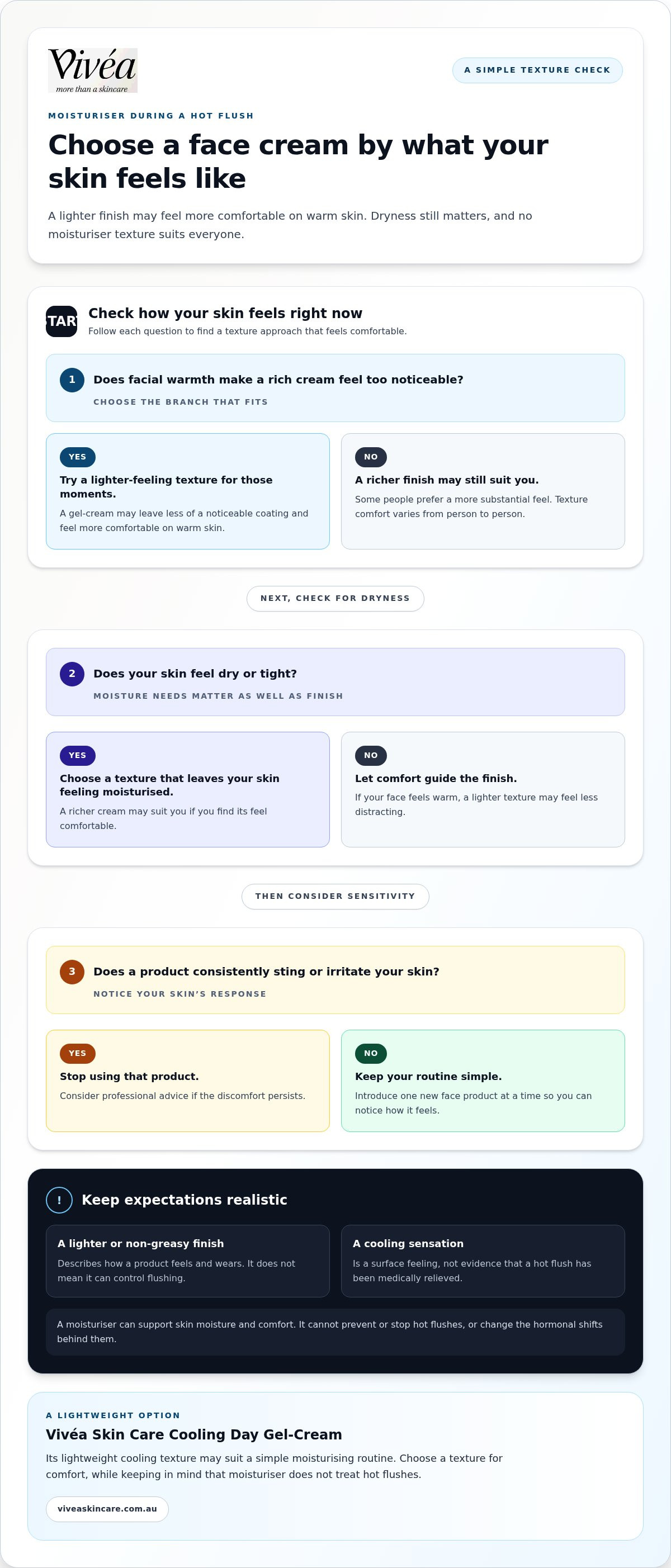
How to choose and use a non-greasy face cream for hot flashes
Choose by how your skin feels, not by a promise that a cream will stop a hot flush. A calm, simple routine also makes it easier to notice whether a new texture feels comfortable. Use this sequence:
- Consider your skin’s feel. Notice whether it feels dry, tight, sensitive or simply warm. These sensations may call for different kinds of comfort.
- Choose a finish you like. Look for a texture that feels comfortable on your skin, rather than relying on terms such as “cooling” or “lightweight” alone.
- Read the label. Check the ingredient list for anything you know you’re sensitive to, and follow the product directions.
- Introduce one new face product at a time. This makes it easier to notice how your skin responds before you change another part of your routine.
- Observe how your skin feels. If irritation occurs, stop using the product. Seek professional advice if irritation persists or you notice significant skin changes.
A simple way to assess texture and comfort
Start with the finish you find comfortable: perhaps a lighter feel with little residue, or a more substantial layer. A non-greasy label describes a texture preference, not a guarantee of suitability or a measure of hydration. Check the ingredients for known personal sensitivities, too. “Natural” doesn’t automatically mean suitable for everyone, and a product may not feel right for your skin.
After applying a product as directed, consider whether your skin feels comfortable and moisturised, or whether the finish feels distracting. Keep expectations realistic: this is a way to assess cosmetic comfort, not to test whether a moisturiser can prevent flushing.
Keep the routine calm when skin feels unsettled
Avoid starting several unfamiliar products at once. Using a gentle cleanser and moisturiser according to their directions gives you fewer changes to interpret if your skin feels different. If you’re also considering a face mist, introduce it separately rather than adding it on the same day as a new cream.
Vivéa® Gentle Creamy Cleanser is one option for gentle cleansing. A cooling mist can be a separate step, but its surface sensation shouldn’t be mistaken for treatment of a hot flush. If irritation continues after you stop a product, or a skin change is significant or concerning, seek professional advice.
If you’re looking for a lightweight moisturising texture, explore Vivéa Skin Care’s face care as you consider what feels comfortable in your routine.
A menopause-focused option: Vivéa® Women's Cooling Day Gel-Cream
If you prefer a lighter-feeling moisturiser, Vivéa® Cooling Day Gel-Cream is a menopause-specific option to consider. It’s a lightweight cooling gel-cream formulated to moisturise and support the skin barrier. Its fresh-feeling texture may suit someone who wants everyday cosmetic skincare without a heavy finish, though whether it feels right depends on your skin’s preferences and needs.
How this daytime gel-cream fits the article's question
A gel-cream texture may appeal if you prefer a less greasy-feeling finish during warm or flushed moments. Vivéa Skin Care describes its range as offering instant cooling, with low-allergen scent and mood-balancing fragrances. These are sensory qualities, not a promise to stop or prevent a hot flush or change the body’s response to one.
The distinction matters: a cooling sensation may feel pleasant on the skin, while moisturising and barrier support relate to skincare comfort. The product isn’t a treatment for menopause symptoms. As with any face moisturiser, follow the product label and consider how the texture feels on your own skin rather than assuming a cooling claim will suit everyone.
If you have known sensitivities, review the ingredient list before use. The product name and texture can help you understand its positioning, but they can’t predict how your individual skin will respond. Keep your routine familiar as you introduce it, so you can notice whether the new moisturiser feels comfortable without changing several products at once.
What to know about Vivéa Skin Care
Vivéa Skin Care’s menopause-specific skincare is developed and created in New Zealand. The brand’s mission is to help women feel understood, supported and confident during this powerful stage of life, with skincare designed around comfort and care through perimenopause and menopause.
Vivéa Skin Care describes its product range as clinically tested and dermatologically approved for safety and efficacy. This applies to the range and shouldn’t be read as proof that a particular product will prevent flushing or suit every individual. The combination of lightweight cooling gel-creams, low-allergen scent and mood-balancing fragrances is unique according to the brand’s description.
For a daytime moisturiser with a lightweight cooling gel-cream texture, Explore Vivéa® Cooling Day Gel-Cream. It may suit you if you’re looking for a non greasy face cream for hot flashes, with the understanding that its role is to moisturise and support the skin barrier, not to treat or prevent hot flushes.
Choose comfort that can evolve with you
Your skincare routine can leave room for change. There’s no need to treat one texture as the right choice every day. Let your comfort guide what you reach for, without expecting a moisturiser to control flushing. A non greasy face cream for hot flashes may be one texture to consider as you decide what feels pleasant on your skin.
To explore a lightweight cooling gel-cream, explore Vivéa® Cooling Day Gel-Cream. Choose skincare at your own pace, with comfort and confidence as your guide.
Frequently Asked Questions
Is a non-greasy face cream enough for dry menopausal skin?
A non-greasy cream may be enough for some people with dry menopausal skin, but texture alone can’t tell you whether the hydration feels adequate. Lightweight products can still moisturise, and individual needs vary. Notice whether your skin feels comfortable after use and later in the day. If you choose a non greasy face cream for hot flashes, follow its directions rather than adding extra layers. Seek professional advice if dryness remains persistent or uncomfortable.
Can face cream stop a hot flush?
No, a cosmetic face cream shouldn’t be expected to prevent or treat hot flushes. A cooling sensation on your skin may feel pleasant, but it’s different from changing the flush itself. If flushes are affecting your sleep, daily activities or general wellbeing, speak with a health professional about your symptoms and possible support. Skincare can be part of your comfort routine, but it isn’t a substitute for advice about your health.
What ingredients can make a face cream feel cooling?
Cooling sensations depend on a product’s overall formulation, so don’t assume a particular feel from one ingredient name alone. Vivéa Skin Care describes menthol release as a cooling feature of its product range. That detail doesn’t show that a finished cream treats hot flushes, nor does it guarantee it will suit every person. Check the full ingredient list for personal sensitivities, and follow the product label.
Is a gel moisturiser suitable for sensitive menopause skin?
A gel moisturiser may appeal if you prefer a lighter-feeling finish, but texture alone can’t determine whether it suits sensitive skin. Before use, review the full ingredient list for anything you know you’re sensitive to, and follow the label directions. If you’ve reacted to a particular ingredient before, don’t rely on “gel” or “natural” as a sign that a formula will suit you.
Can I use a cooling face cream during the day?
Daytime use depends on the product’s directions and how it fits your routine. Follow the official label, and keep other steps simple while you see how the cream feels on your skin. For example, if you’re introducing a new moisturiser, avoid changing several familiar products at the same time. Don’t assume a cooling face cream includes sun protection or works with every other product; follow its stated instructions.
What should I do if my face cream stings or makes my skin feel worse?
Stop using the cream if irritation occurs, and check its directions for any further guidance. Stinging or worsening discomfort can have different causes, so avoid trying to diagnose it yourself or assuming every cooling sensation is harmless. If irritation is severe or persistent, or you notice a new skin change that concerns you, seek professional advice. Keep the product details available to help explain what you used and when the reaction began.


