

Could the most comfortable hand cream be the one that feels lighter, rather than richer? If your hands feel dry or uncomfortable during perimenopause or menopause, a thick, greasy finish may be the last thing you want. When comparing cooling hand cream in Australia, focus on a pleasant cooling feel, comfortable moisture and a texture you’ll actually want to use.
“Cooling” and “lightweight” describe different things, and neither tells you everything about how a cream will feel. Your preferences may also change over time, so choose based on what feels comfortable now. This guide explains how to compare texture, cooling sensation and intended use, and how to introduce a new cream into your routine. It also helps separate a refreshing sensory effect from claims that go beyond cosmetic care.
Key Takeaways
- Choose a cooling hand cream by balancing comfortable moisture, a cooling feel and a texture you’ll enjoy using.
- Assess the cooling sensation separately from the product’s moisturising purpose.
- Check whether the product is intended for hands and body or for facial skincare.
- Follow the product label when introducing a new cream, and notice how its texture feels in your routine.
- Vivéa® Hand & Body Cooling Gel-Cream has a lightweight gel-cream texture and a cooling sensation.
Cooling hand cream in Australia: what to compare
Start with three practical details: the product’s intended area, its texture and the kind of cooling sensation it describes. Then check whether it is intended to moisturise hands and whether its ingredients and scent suit your preferences. A cooling feel can make application refreshing, but it does not mean a cream treats menopause or changes in hormones. Its role is cosmetic skincare.
Choosing a cooling hand cream for dry, changing skin
Hands can feel drier, more sensitive or simply unfamiliar during perimenopause and menopause. These experiences vary, and they don’t mean you need a complicated routine. A cooling hand cream is a moisturising product designed to leave a cool sensation on the skin. When choosing one, look for a balance of comfortable moisture, a cooling feel you enjoy and a texture you’ll use regularly.
For general context, this Hand cream overview explains the purpose of hand creams. When comparing products, focus on their stated use and how their textures sound to you, rather than assuming all hand creams feel the same.
How to recognise a comfortable cooling texture
A lightweight gel-cream may feel less dense on application than a rich cream. A richer texture may suit you if you prefer a more substantial feel. Neither format is automatically right for everyone. Look beyond the word “cooling” and consider the finish: does the texture sound pleasant on your hands, and would you feel comfortable using it during the day?
Cooling sensation and moisturising comfort are separate qualities. A strong cooling feel doesn’t tell you how moisturising a product will feel, just as a rich texture doesn’t indicate whether you’ll enjoy its cooling effect. Read the product description and directions rather than assuming it will absorb quickly or leave no residue. Your own comfort is a useful guide.
When changing skin can affect what feels right
Dryness or sensitivity can be part of an individual’s skin experience during perimenopause or menopause, but skin and preferences differ. You might prefer a lighter texture at one time and a richer cream at another, or find that certain sensations feel less comfortable than they used to. There’s no single texture every mature or changing skin type needs.
Notice how a product feels during ordinary use. If your skin is persistently uncomfortable, painful or getting worse, seek advice from a GP or another qualified health professional. A cosmetic moisturiser can support a comfortable-feeling routine, but it isn’t a substitute for assessment of ongoing symptoms.
For cooling hand cream shoppers, a practical starting point is to decide what you want from the texture and feel: a refreshing sensation, a lighter gel-cream or a richer application. Then check the intended area and whether the finish suits your habits. Choosing a cream you find pleasant to use can make it easier to include in your day, without treating normal changes in skin as a problem to fix.
How to compare cooling feel, moisture and scent before choosing
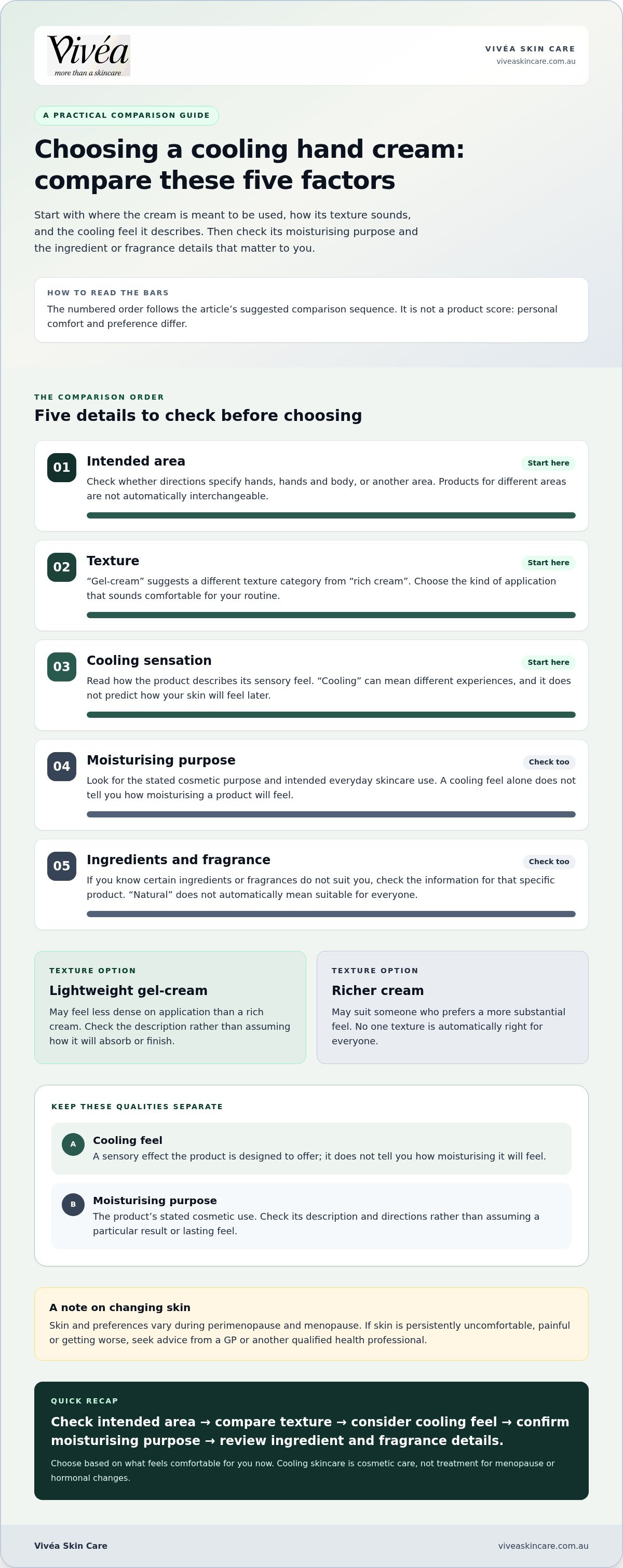
Compare the details that shape everyday use, rather than relying on the word “cooling” alone. Look for clear information about texture, intended area and fragrance. These details can help you narrow down options without assuming that similar claims mean two products will feel alike.
| What to compare | What to look for |
|---|---|
| Texture | Descriptions such as “gel-cream” or “rich cream” can help you picture whether a formula sounds light or substantial. |
| Cooling sensation | Notice how the product describes its sensory feel, without assuming every cooling claim means the same thing. |
| Moisturising purpose | Check the stated cosmetic purpose and the kind of everyday skincare the product is intended to provide. |
| Intended area | Check whether directions specify hands, hands and body, or another area. |
Specific descriptions are easier to compare. “Gel-cream” indicates a different texture category from “rich cream”, while the directions clarify where the product is meant to be used. Treat sensory wording as a guide to the product’s presentation, not as a promise that it will feel identical for everyone.
Cooling sensation is not the same as lasting skin comfort
Cooling language describes the sensation a product is designed to offer; it doesn’t predict how your skin will feel later. Product descriptions don’t establish a set duration or guarantee a particular personal experience. If the wording is broad, focus on details you can compare, such as texture, intended area and moisturising purpose.
What to consider if your skin is sensitive
Fragrance is a personal preference, so look for details about the specific product rather than relying only on a range-wide description. Vivéa Skin Care describes its product line as having low-allergen scent and mood-balancing fragrances. These descriptors don’t mean every product is fragrance-free or allergy-proof, and they don’t identify the scent of an individual product.
If you know particular ingredients or fragrances don’t suit you, check the product’s current ingredient information before choosing. “Natural” doesn’t automatically mean suitable for everyone. Comparing the details can help you decide what matters to you, while leaving room for individual preference and comfort.
To compare cooling hand cream options, start with the stated texture, intended area and fragrance details. Browse Vivéa Skin Care products and review the information provided for each product.
Cooling hand cream versus richer creams and other cooling skincare
Skincare formats are designed for different areas and parts of a routine. A hand and body cream is intended for those areas, while facial skincare has its own stated use. A mist is a spray format, and a night cream is intended for a different routine context. Shared cooling language doesn’t make these products interchangeable.
- Hand and body cream: Consider this format if you want a product whose stated use includes both hands and body.
- Facial skincare: Choose a product whose directions specifically include the face rather than assuming a hand or body cream is suitable there.
- Cooling mist: A spray is a separate format. Check its intended area and directions instead of treating it as a cream.
- Night cream: This is a distinct format for a night-time routine. Its directions determine where and how it should be used.
These distinctions make choosing simpler. A product designed for hands and body may suit someone who wants one format for both areas, while a facial product is the relevant choice for facial use. A mist may appeal if you prefer a spray application, but its directions still define its intended area. Read the label before using a product beyond the areas it names.
When a lightweight gel cream may suit your preferences
Texture can help you decide whether a product fits your habits, but it doesn’t determine the product’s intended area. If you’re choosing for hands or body, check both the texture description and the directions. Select a format you’re comfortable using for its stated purpose, rather than relying on assumptions about age or skin type.
Choosing a product for hands, body or face
Keep the intended area in mind when comparing formats. Use a hand and body product as directed for those areas, and choose facial skincare for the face when its directions specify facial use. Don’t infer an application area from a product’s format or cooling description; rely on its current product information.
A mist and a cream can each have a place in a skincare routine, but they remain different formats. Vivéa Skin Care’s related guides on cooling night cream for menopause and face mists for hot flushes cover those formats separately. They may help you consider which type of product aligns with the area and routine you have in mind.
Let the stated purpose guide your choice. That keeps each format in its intended role and helps you build a routine around how you prefer to care for your hands, body or face.
How to choose and introduce a cooling hand cream into your routine
Once you’ve chosen a product, introduce it simply and unhurriedly. A steady routine gives you a chance to notice whether it feels comfortable in practice, without adding several new skincare products at once.
- Choose a familiar moment. Pair application with an existing part of your day, such as after washing your hands, if that fits the product directions.
- Use it as directed. Follow the label for the amount, application area and any cautions. Don’t assume the same schedule applies to every cream.
- Notice your experience. Pay attention to whether the sensation and texture feel comfortable during ordinary use.
- Keep the routine manageable. Introducing one new product at a time can make it easier to identify which product you’re using if your skin becomes uncomfortable.
A simple checklist before buying
Read the current product information in full before adding a cream to your routine. Check its directions and ingredient details, and keep the packaging accessible so you can refer to it later. If you’re comparing several options, note their names rather than relying on memory. This can help you follow the correct instructions for each product.
Think about where the product will fit in your day and choose a routine you can maintain. For example, you might keep it with your everyday skincare. Follow the label for use, including how often to apply it.
Introducing a new product with care
If your skin tends to react to new products, take a cautious approach and avoid introducing several unfamiliar products at the same time. Follow the product’s current directions, and don’t increase use in expectation of a faster effect. Your experience can help you decide whether to keep a product in your routine, but it can’t guarantee results for you or anyone else.
Stop using the cream if discomfort develops. If a skin concern persists, becomes painful or worsens, seek advice from an appropriate health professional. Cosmetic skincare can be part of everyday care, but it isn’t a substitute for professional guidance about ongoing symptoms.
When you’re ready to explore options, browse Vivéa Skin Care products and use the current product information to guide how you introduce your choice into your routine.
Is Vivéa Women's Hand & Body Cooling Gel Cream the right fit?
If you’re looking for a lightweight texture and a cooling sensation in a product intended for hands and body, Vivéa® Hand & Body Cooling Gel-Cream may be worth considering. It has a lightweight gel-cream texture and a cooling effect. Whether that feel suits you is personal, so use these details to decide if it matches what you want from everyday skincare.
Vivéa Skin Care is a New Zealand-developed skincare brand with products created for women experiencing perimenopause and menopause. The range focuses on cosmetic skincare, not treatment for menopause, hot flushes or a diagnosed skin condition.
Who may appreciate this hand and body gel cream
This gel-cream may appeal if you prefer a lighter feel to a dense, rich cream and enjoy a cooling sensation during application. Its hand and body focus may also suit you if you want one product intended for both areas. These are considerations based on your preferences, not a promise that the product will feel comfortable for every person or skin type.
Think about the textures you tend to reach for. If you like a more substantial cream, a lightweight gel-cream may not be your preferred feel. If you’re drawn to a fresh, cooling sensation, its product description may align more closely with what you’re seeking. Neither preference is better; the useful question is whether the format and intended use suit your routine.
Vivéa Skin Care describes its product line as having low-allergen scent and mood-balancing fragrances. These are range descriptors, not confirmation of a particular scent or allergy-related quality for this hand and body product. If scent matters to you, consult the current product information rather than assuming the same details apply to every item.
What to check on the product page
Read the current official product information for directions, intended use and product-specific details that matter to you, including ingredients. Follow the label for where and how to apply it. If you have known sensitivities, reviewing ingredient information can help you make a considered choice, though it can’t predict exactly how your skin will respond.
For people comparing cooling hand cream options, the key question is whether this product’s format matches their preference: a lightweight gel-cream with a cooling sensation for hands and body. You don’t need to expect a particular result or treat the cooling feel as evidence of a therapeutic effect. Let your comfort and the product directions guide your decision.
If that combination sounds like a fit, explore the Vivéa Skin Care collection and its current product information.
Make space for a routine that feels like yours
Your skincare routine doesn’t need to be fixed or elaborate. It can be a small, considered part of the day that you adjust as your preferences shift. If you’re still weighing up cooling hand cream options, consider what you’d enjoy reaching for rather than choosing according to what you think mature skin is supposed to need.
Vivéa Skin Care focuses on skincare for women through perimenopause and menopause. Explore the range, read the current product information and choose what feels right for your everyday care.
Explore the Vivéa Skin Care collection and find a gentle next step for your routine.
Frequently Asked Questions
What is a cooling hand cream?
A cooling hand cream is a hand moisturiser designed to leave a cool sensation on application. The feeling is a sensory feature, not evidence that the cream changes body temperature or treats a health concern. When comparing products, check the full description and directions too: “cooling” alone doesn’t tell you the texture, intended use or how moisturising it may feel.
Can cooling hand cream also moisturise dry hands?
Yes, a cooling hand cream can also moisturise dry hands if it’s formulated for that cosmetic purpose. Cooling describes the sensation; it doesn’t indicate how much moisture care a product provides. If your hands feel tight after washing, check whether the product information describes moisturising use and whether it’s intended for hands. Choose according to the label and your comfort.
Is cooling hand cream suitable for sensitive skin?
Not necessarily. Suitability varies from person to person, and “cooling” doesn’t mean a product is suitable for sensitive skin. Review the ingredient list for anything you already know doesn’t agree with your skin, and consider cautious use on a small area first. Avoid applying it to irritated or broken skin unless its directions say otherwise. Stop use if discomfort develops.
How do I choose a cooling hand cream in Australia?
Check the intended use, texture, cooling description and moisturising purpose, then read the current label for directions and ingredients. Consider where you’ll use it and whether you prefer a lightweight gel-cream or a richer feel. Don’t assume products with similar cooling claims have the same use or texture.
Can I use a hand and body cooling gel cream on my face?
Only use a hand and body cooling gel cream on your face if its product directions specifically include facial use. A product intended for hands and body shouldn’t automatically be treated as facial skincare, even if the texture seems light. Follow the stated application areas and avoid experimenting beyond the label’s guidance.
What should I do if a cooling cream irritates my hands?
Stop using the cream if your hands become uncomfortable after application. Gently rinse the area with water if product remains on your skin, and avoid reapplying it while irritation continues. If symptoms persist, worsen or are painful, seek advice from a GP or another qualified health professional. Keep the product packaging or ingredient information available in case it helps explain what you used.
Is Vivéa Women's Hand & Body Cooling Gel Cream made in Australia?
No. Vivéa® Hand & Body Cooling Gel-Cream is part of Vivéa Skin Care’s range developed and created in New Zealand, so it shouldn’t be described as Australian-made. Vivéa Skin Care serves customers across Australia. For the latest product details, including directions and ingredients, refer to the official product information rather than assuming manufacturing origin from where a product is sold.


