

If your skin feels drier, more sensitive or less comfortable during perimenopause or menopause, a gentle routine can support everyday comfort. Thoughtful body care for menopause starts with mild cleansing, moisturising and sun protection suited to your skin.
If your usual routine suddenly feels too harsh, or dryness and sensitivity have become more noticeable, you’re not imagining it. Hormonal changes can make familiar products feel different, so a gentler approach may make everyday care more comfortable.
This article explains how to adapt skincare during perimenopause and menopause, with practical steps for dryness, sensitivity, breakouts and changes in firmness. You’ll learn how to keep your routine simple, choose soothing hydration and recognise when a skin change needs medical advice.
Key Takeaways
- Understand how hormonal shifts can affect collagen and the skin barrier, changing how your skin feels and responds to products.
- Build a simple morning and evening routine around gentle cleansing, hydration and daily sun protection.
- For breakouts, avoid harsh scrubbing and keep spot treatments focused on affected areas.
- Choose soothing, moisture-supportive care for dry or sensitive skin, and introduce new products gradually.
- Notice changes that persist or concern you, and learn when it may be helpful to seek medical advice.
1. Why can skin change during perimenopause and menopause?
During perimenopause and menopause, changing oestrogen levels can affect skin’s hydration and structure. The Australasian Menopause Society explains that hormonal changes may contribute to dryness, thinner skin and reduced elasticity. Skin may feel rough or tight, particularly on the arms, legs and torso. A familiar body wash might also feel less comfortable than it once did.
Menopause is defined as the point reached after periods have stopped for 12 consecutive months, according to the Australasian Menopause Society. Skin changes can begin during perimenopause, before periods stop. If a cleanser or fragranced body product starts causing discomfort, simplify your routine and notice whether symptoms settle when you pause it.
Oestrogen supports skin’s collagen and moisture, and changes in its levels can affect firmness and suppleness, according to the Australasian Menopause Society. These changes may make fine lines more noticeable or skin feel less resilient. The face, neck and hands can show changes clearly because they’re often exposed to the elements.
Collagen gives skin structural support, while the skin barrier helps limit moisture loss. The Australasian Menopause Society notes that menopause-related hormonal changes can affect skin thickness and hydration. If a small cut or spot seems slow to heal, avoid picking it and reduce friction over the area while it recovers.
Hot flushes and sweating are common menopause symptoms, according to the Australasian Menopause Society. Wear breathable layers that are easy to remove, and keep a cool cloth nearby. After sweating, gently wash and dry skin folds, then change into clean clothes to manage body odour without scrubbing sensitive skin.
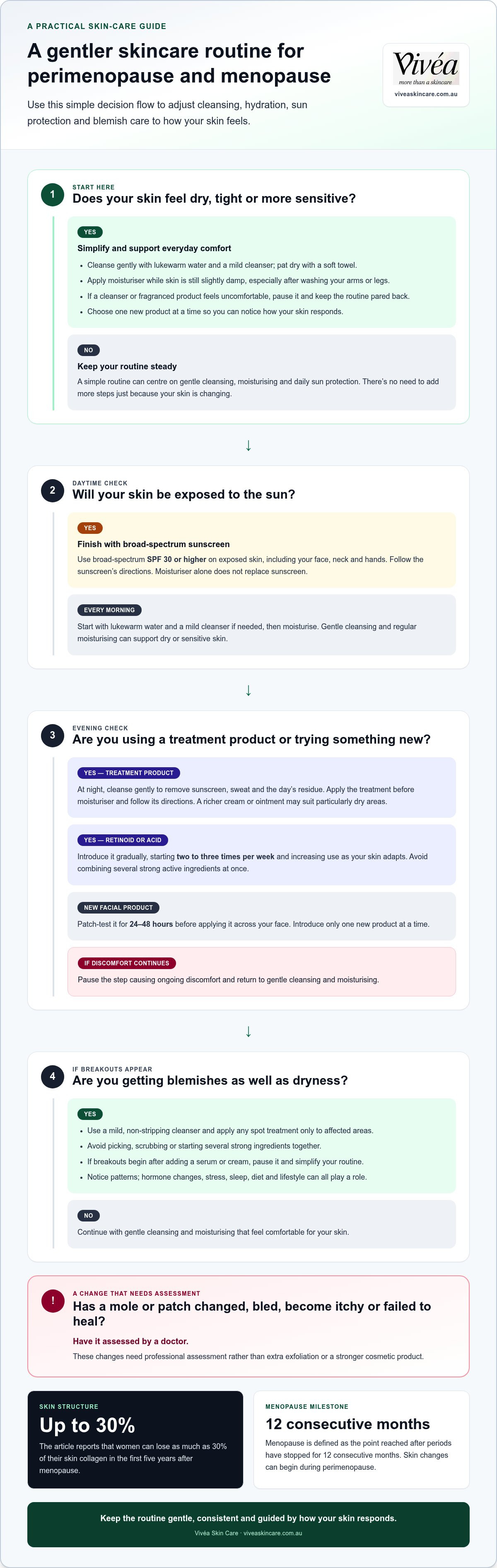
A pared-back routine can help you identify products that feel comfortable. Use a mild cleanser, apply moisturiser after washing, and protect exposed skin with sunscreen during the day. For example, if a body scrub leaves your legs sore or tight, stop using it and return to gentle cleansing until your skin feels settled.
Have a changing, bleeding, itchy or non-healing mole or patch assessed by a doctor. The Australasian College of Dermatologists advises seeking medical attention for these changes. They need professional assessment rather than extra exfoliation or a stronger cosmetic product.
During perimenopause, falling oestrogen can affect the skin’s ability to retain ceramides, which help skin lock in moisture. Women can lose as much as 30% of their skin collagen in the first five years after menopause.
2. Daytime and nighttime skincare routines
A steady morning routine can protect exposed skin and support everyday comfort. Start with lukewarm water and a mild cleanser, then pat your skin dry with a soft towel. The Australasian College of Dermatologists advises gentle cleansing and regular moisturising for dry or sensitive skin. Apply moisturiser while your skin still feels slightly damp, especially after washing your arms or legs.
For menopausal skin, choose a mild, non-foaming body wash or cleanser rather than harsh soap. Follow with a moisturiser that suits your skin. If you’re sensitive, a fragrance-free option may help reduce irritation. Read the label and introduce one new product at a time so you can notice how your skin responds.
Finish the morning routine with broad-spectrum sunscreen rated SPF 30 or higher on exposed skin, including your face, neck and hands. Cancer Council Australia recommends daily use of broad-spectrum SPF 30 or higher sunscreen to protect skin from ultraviolet radiation. Apply it according to the product directions, and remember that moisturiser alone doesn’t replace sunscreen.
At night, cleanse gently to remove sunscreen, sweat and the day’s residue without leaving skin feeling stripped. If you use a treatment product, apply it before moisturiser and follow its directions. A richer cream or ointment may suit particularly dry areas before bed. You don’t need to exfoliate every night, especially if your skin is easily irritated.
Keep your routine consistent while you assess changes in your skin’s appearance, comfort and firmness. If you choose a retinoid or acid, introduce it gradually, starting two to three times per week and increasing use as your skin adapts. Avoid combining several strong active ingredients at once. If a step causes ongoing discomfort, pause it and return to gentle cleansing and moisturising.
When testing a new facial product, patch-test it for 24–48 hours before applying it across your face. Introduce only one new product at a time, so it’s easier to notice a possible trigger. A gentle cleanser can be a practical first step if your usual wash feels harsh. Explore body-care essentials as you shape a simple routine around gentle cleansing and daily moisture.
3. Can menopause cause hormonal breakouts?
Yes. Hormonal breakouts can occur during perimenopause as hormone levels fluctuate, and changes may continue after menopause. Spots often appear along the chin and jaw, while menopausal skin may feel drier elsewhere. Stress, sleep changes, diet and lifestyle can also play a role, so note patterns rather than assuming every blemish has one cause. Adult acne can occur alongside fine lines, reduced elasticity and skin that feels thinner.
Keep blemish care gentle. Wash with a mild, non-stripping cleanser, and apply any spot treatment only to affected areas. Avoid picking spots, scrubbing or starting several strong ingredients together, as these can irritate surrounding skin. If breakouts appear after you add a new serum or cream, pause that product and simplify your routine. A non-comedogenic moisturiser can support comfortable hydration without being designed to block pores.
Ingredients matter, but more active products don’t automatically mean better care. Salicylic acid may help unclog pores, while a gentle cleanser can be a better starting point if your skin feels sensitive or dry. Introduce one new product at a time and watch for stinging, redness or increased tightness. Peptides are used in some skincare products to support the appearance of smoother, firmer skin, but they don’t treat hormonal acne.
Fine lines and sagging reflect changes in collagen and elasticity, not a lack of effort with skincare. Moisturiser can improve the appearance of dry or fragile skin by boosting hydration and supporting normal barrier function. For example, apply moisturiser after cleansing when your skin feels dry, and use sunscreen on exposed areas during the day. These steps support comfort and appearance, but cosmetic products don’t reverse hormonal changes.
Topical estriol and hormone therapy are different from ordinary cosmetic skincare. Research on topical estriol concerns facial creams and skin changes; it isn’t a reason to apply hormone products without medical guidance. Hormone therapy is a medical treatment, not a moisturiser or acne product. Discuss treatment choices with a doctor, who can consider your symptoms, health history, and relevant benefits and risks. Don’t start, stop or change prescribed hormone treatment based on a skincare routine.
For vaginal and vulval dryness, use a moisturiser or lubricant made specifically for intimate use, following its directions. If dryness persists, causes pain, or comes with unusual bleeding or irritation, speak with a doctor about suitable options.
4. What is menopause skincare?
Menopause skincare is a considered approach to cleansing and moisturising as skin comfort changes. Changing oestrogen levels can leave skin more prone to dryness or sensitivity, so a gentle cleanser is often a better choice than harsh soap. For example, if your face feels tight after washing, reassess your cleanser before adding a treatment product. Gentle cleansing can remove surface residue without making your routine feel like another task.
Use lukewarm water rather than a hot shower or face rinse, which can leave dry skin feeling tighter. Wet your face, spread cleanser lightly with your fingertips, then rinse thoroughly and pat dry. Avoid flannels or cleansing brushes if they create friction. On your body, use your hands to wash dry areas such as shins and upper arms rather than scrubbing them with a rough mitt.
Choose a cleanser that feels comfortable during and after use. A mild, creamy texture may suit dry-feeling skin, while a non-foaming option can help when skin is prone to spots. Pay attention to the label and your own response: stop using a product that repeatedly causes stinging or redness. Introducing one new cleanser at a time makes it easier to identify a possible irritant.
Exfoliation can help lift dead surface cells, but vigorous scrubbing may aggravate sensitive skin. Avoid rough scrubs and abrasive brushes, especially over areas that feel sore, flaky or fragile. If you exfoliate menopausal skin, do so once or twice a week in the evening, then apply moisturiser. Leave irritated or freshly shaved areas alone until they feel comfortable again.
Chemical exfoliants can also irritate, particularly when skin is already dry. If you choose an acid treatment, introduce it cautiously and avoid using it alongside several other active ingredients. Don’t exfoliate simply because your skin looks dull; consider whether dryness, your cleanser or sun exposure may affect its appearance. A pause can help you see whether fewer steps restore comfort.
Keep exfoliation separate from any prescribed treatment unless your clinician has advised otherwise. A dermatologist can assess persistent irritation or skin changes and explain whether an exfoliating product suits your skin. For severe or persistent itching, seek advice from a GP, pharmacist or dermatologist. This guidance can help if everyday cleansing continues to cause discomfort despite gentler handling.
Build your routine around what your skin tolerates, not the number of products on the bathroom shelf. For example, cleanse gently after the day, skip exfoliation when your skin feels tender, and moisturise after washing. This practical approach leaves room to adjust as comfort changes, without treating normal shifts in texture as a problem that needs a complicated treatment plan.
Dryness, sensitivity and loss of firmness
For menopausal dry skin, keep body care simple: wash gently, apply moisturiser while your skin is slightly damp, and use sunscreen on exposed areas during the day. Choose a richer body cream if your arms, legs or torso feel persistently tight. This routine supports hydration and comfort without adding unnecessary steps.
Dryness can feel different from ordinary tightness after a shower. Your skin may become rough, flaky, itchy or more reactive to products it once tolerated. Falling oestrogen can affect moisture retention, while lower sebum production may leave skin less supple. For example, if your shins feel uncomfortable after bathing, try shortening hot showers and moisturising straight afterwards.
A healthy skin barrier helps limit moisture loss and protects against everyday irritants. When it feels disrupted, water, fragrance or friction may trigger stinging and redness. Choose a gentle cleanser rather than harsh soap, pat skin dry instead of rubbing, and avoid scrubs over tender patches. A moisturiser containing glycerin or hyaluronic acid may help replenish moisture.
Sensitivity calls for a slower approach. Check product labels, introduce one new item at a time, and pause anything that repeatedly causes discomfort. A fragrance-free moisturiser may help reduce irritation for some people. Don’t assume “natural” automatically means suitable for sensitive skin; ingredients can affect people differently. Keeping a simple note of products and reactions can help identify patterns.
Loss of firmness and visible wrinkles can reflect changes in collagen, elasticity and hydration. Moisturisers can improve the appearance of dry or fragile skin by boosting hydration and supporting normal barrier function. Peptides may help promote the appearance of smoother, firmer skin, while retinol products may support collagen in the skin. These are cosmetic benefits, not a reversal of menopause-related changes.
Try applying moisturiser after each wash, concentrating on dry areas such as elbows, hands and lower legs. If a light lotion doesn’t ease persistent dryness, consider a richer body cream. For exposed skin, use broad-spectrum sunscreen with SPF 30 or higher each day. Consistent hydration and sun protection can support a more comfortable feel and a smoother-looking appearance.
Seek advice from a GP, pharmacist or dermatologist if itching is severe or persistent. A changing, bleeding, itchy or non-healing mole or patch also needs medical attention. These concerns require professional assessment rather than extra exfoliation or stronger cosmetic products.
For a gentle, hydration-focused routine, explore hydrating body-care options suited to changing skin.
Vivéa Skin Care: Vivéa Cooling Night Gel Cream for Menopause
Vivéa Cooling Night Gel Cream for Menopause offers a cooling, hydrating option for your evening routine. It’s designed for changing skin during perimenopause and menopause, when dryness or sensitivity can make bedtime care less comfortable.
Use it after gentle cleansing as part of a simple routine, following the product directions. For daytime refreshment, Vivéa Hydrating Cooling Mist Spray is another option in the range. These cosmetic skincare products support everyday care; they don’t treat menopause or replace medical advice.
If you’re looking for considered body care for menopause, explore the options that suit your routine on the Vivéa Skin Care website.
Make your next skincare step feel manageable
Your routine doesn’t need to be elaborate to feel thoughtful. Choose the step that best matches what your skin needs now, whether that’s gentler cleansing, a refreshing mist or comfortable evening care. A flexible approach to body care for menopause can evolve with your comfort, rather than asking you to follow rigid rules.
Vivéa Skin Care offers Vivéa Gentle Creamy Cleanser for Sensitive Mature Skin, Vivéa Hydrating Cooling Mist Spray and Vivéa Cooling Night Gel Cream for Menopause. Each provides a different starting point for an everyday skincare routine. Use products according to their directions, and seek medical advice for skin concerns that persist or worry you.
Explore Vivéa Skin Care’s body-care essentials and choose a gentle next step that feels right for you. Caring for changing skin can be calm, considered and entirely your own.
Frequently Asked Questions
Why can skin change during perimenopause and menopause?
Changing hormone levels can affect how skin holds moisture and maintains its structure. This may change how familiar products feel: a body wash that once seemed comfortable might leave skin tight, or a previously tolerated cream might sting. Notice changes in texture and comfort alongside any changes to your routine. This can help distinguish a gradual shift from a reaction to a particular product or ingredient.
What do dermatologists recommend for menopausal skin?
Dermatologists can tailor advice to specific concerns, such as persistent irritation, acne or changes in a mole. For example, they may assess whether a new rash follows product use or needs medical treatment rather than cosmetic care. Bring a list of the products you use and note when symptoms began. This gives the dermatologist useful context without requiring you to add more products beforehand.
What is the best skincare routine for perimenopause?
A useful routine is one you can follow comfortably and consistently. Keep a short record of products and skin reactions when making changes, rather than replacing several items at once. For instance, if your cheeks feel unsettled after adding a serum, pause that new step and observe whether comfort improves. Adjust your routine to your skin’s response, not a fixed set of products or a promise of instant results.
Can menopause cause hormonal breakouts?
Yes, hormonal shifts during perimenopause and menopause can coincide with breakouts. Stress, sleep changes, diet and lifestyle may also play a part, so notice whether spots relate to a new product or changing routines. Avoid squeezing blemishes, which can further irritate the area. If acne is persistent, painful or affecting your wellbeing, seek medical advice about suitable options rather than layering on multiple active ingredients.
Can perimenopause cause spots on your face?
Yes, spots can appear during perimenopause, including on the chin or jawline. If they develop after you change your cleanser or moisturiser, consider whether that product may be contributing. Introduce new skincare one product at a time and use spot treatments only on affected areas. Persistent or painful breakouts deserve attention, especially if they leave marks or don’t settle with gentle everyday care.
How do I offset the effects of menopause on my skin?
Focus on steady care rather than trying to erase natural changes. For example, protect exposed skin with broad-spectrum sunscreen during the day, and avoid adding several strong products at once. A wide-brimmed hat and clothing that covers exposed areas can also provide practical sun protection outdoors. Choose products according to your skin’s comfort, and speak with a health professional about changes that concern you.
What is menopause skincare?
Menopause skincare means adapting everyday cosmetic care to skin that may feel different through perimenopause, menopause and post-menopause. It can involve choosing a comfortable cleanser, moisturising dry areas and simplifying steps that cause irritation. It isn’t hormone therapy or treatment for a skin condition. For example, a cooling moisturiser may offer a pleasant sensory feel, while medical concerns need appropriate professional care.
How does menopause affect skin dryness, sensitivity and itching?
Menopause-related skin changes can leave skin feeling drier, more reactive or itchy. Heat, fragranced products, rough fabrics or long, hot showers may add discomfort for some people. Notice whether symptoms follow a particular exposure, then remove that likely trigger and keep care gentle. If itching is severe or persistent, or a patch changes, bleeds or won’t heal, seek medical advice rather than relying on moisturiser alone.


