

Could a cooling night cream make your skin feel more comfortable at bedtime without treating night sweats? A cooling night cream for menopause may provide a fresh-feeling layer of moisture when skin feels dry, sensitive or uncomfortably warm. Its cosmetic benefits are different from medical treatment.
If changes to your skin have made your usual night-time routine less comfortable, it’s understandable to look for a product that feels gentle as well as hydrating. Texture, cooling ingredients and fragrance can all affect how a cream feels on sensitive skin. Check the formula and product directions, then consider how your own skin responds.
This guide explains what a cooling night cream can and can’t do, how to compare overnight moisturisers, and how to introduce a new product thoughtfully. It also covers when skin comfort and menopause symptom support call for different approaches, so you can choose without expecting one cream to resolve every change.
Key Takeaways
- A cooling night cream for menopause may support overnight skin comfort and moisture, but it doesn’t treat hot flushes or night sweats.
- Compare texture, moisturising purpose, scent and ingredient information to find a formula that suits your preferences.
- A cooling sensation alone doesn’t show that a product supports the skin barrier or will suit your skin.
- Gel-creams, regular night moisturisers and non-skincare symptom support serve different purposes. Choose based on what you need.
- Introduce one new product at a time, follow its directions and check product-specific details before choosing an overnight moisturiser.
What to expect from a cooling night cream for menopause
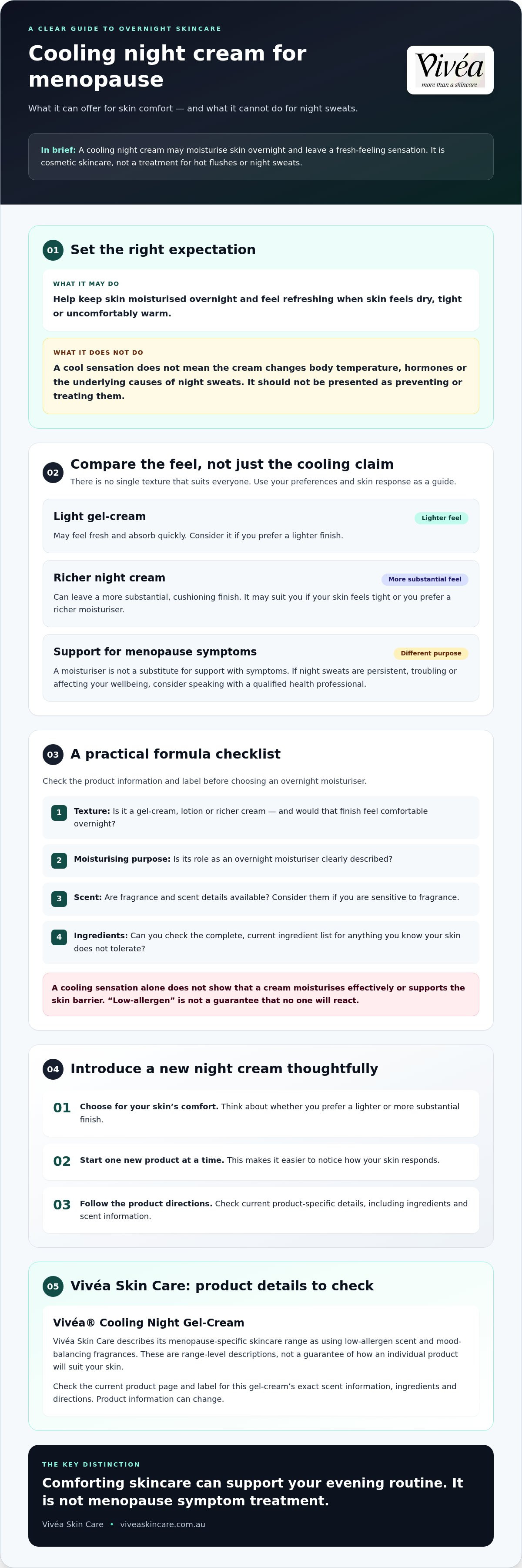
A night cream can help keep skin moisturised overnight, which may feel welcome if your face is dry or tight by bedtime. A cooling night cream for menopause may also leave a fresh, cool sensation, depending on its formula. These are cosmetic skincare effects. A moisturiser isn’t a treatment for hot flushes or night sweats, and shouldn’t be presented as preventing them.
Definition: A cooling night cream for menopause is an overnight moisturiser intended to hydrate the skin and provide a cooling sensation, not to treat menopause symptoms.
Why overnight moisturising may appeal during menopause
Dryness or sensitivity can make a familiar routine feel less comfortable, so both the texture and tolerability of a night cream matter. A light gel-cream may feel more comfortable if you dislike a rich finish. If your skin feels tight, you may prefer a more substantial moisturiser. There’s no single texture that suits everyone, so use your own preferences and skin response as a guide.
Skin needs and responses vary, and dryness or sensitivity can have different contributing factors. For an overview of menopause and common changes people may experience, see Healthdirect’s menopause information. Rather than assuming a particular cause or relying on a promise that one formula suits everyone, choose skincare based on how your skin feels and responds.
Cooling sensation versus night-sweat treatment
A cream can feel cool on the skin, but that sensation doesn’t mean it changes your body temperature, hormones or the underlying causes of night sweats. It may make applying moisturiser feel more refreshing while still functioning as topical cosmetic care. Cooling is a skin sensation, not proof of a wider effect on the body.
Night sweats affect more than the area where a face cream is applied, and a moisturiser shouldn’t be described as preventing or treating them. If symptoms are persistent, troubling or affecting your wellbeing, consider discussing them with a qualified health professional. Skincare can be one part of an evening routine, but it isn’t a substitute for support with menopause symptoms.
How to assess a cooling night cream’s formula and feel
A useful formula should suit what you want from overnight skincare and feel comfortable on your skin. Before choosing a cooling night cream for menopause, look beyond the cooling claim. Check its texture, moisturising purpose, scent information and full ingredient list. These details give you a practical basis for comparison.
Texture, moisture and skin-barrier support
A lightweight gel-cream may feel fresh and absorb quickly, while a richer cream can leave a more substantial, cushioning finish. Neither is automatically better. Consider whether you generally prefer lighter layers or a more nourishing feel, and whether you plan to apply other products over the top.
Use this checklist to compare products:
- Texture: Is it a gel-cream, lotion or richer cream? Would that finish feel comfortable to wear overnight?
- Moisturising purpose: Does the product clearly describe its role as an overnight moisturiser?
- Scent: Is fragrance included, and are scent details available? If you’re sensitive to fragrance, factor that into your choice.
- Ingredients: Can you review the complete, current ingredient list and check it for anything you know your skin doesn’t tolerate?
A cool feeling alone doesn’t show that a cream supports the skin barrier or moisturises effectively. Research about an ingredient on its own also doesn’t prove that a finished cream delivers the same result. Look for claims that relate to the product itself, and don’t treat a cooling claim as evidence of menopause symptom relief. For broader guidance, the American Academy of Dermatology shares dermatologist-recommended skin care advice for skin changes during menopause.
Cooling ingredients, fragrance and sensitivity
Cooling describes how a product feels on the skin. It doesn’t establish what causes that sensation or mean the cream changes body temperature. Fragrance is personal too: some people enjoy a scented formula, while others prefer to check scent details carefully. “Low-allergen” shouldn’t be read as a guarantee that no one will react.
Vivéa® describes its menopause-specific skincare range as using low-allergen scent and mood-balancing fragrances. These are range-level descriptions, so check the current product page and label for the exact scent information, ingredients and directions for Vivéa® Cooling Night Gel-Cream. Product information can change. To explore the range, visit the menopause skincare range.
Cooling night cream versus other options: what each can offer
A cooling night cream for menopause is one option for overnight skin comfort, not a solution for night sweats. Compare products by their purpose and feel, then decide what you want skincare to do. If symptoms need attention, keep that separate from your choice of moisturiser.
| Option | Purpose and texture | Scent considerations | What it can’t promise |
|---|---|---|---|
| Cooling night gel-cream | Overnight moisture with a cooling sensation; a gel-cream may feel lighter than a rich cream. | Check the product’s scent information and ingredient list, particularly if fragrance is a concern for you. | It can’t prevent or treat night sweats, or guarantee a particular skin response. |
| Regular night moisturiser | Moisture without necessarily offering a cooling sensation; textures range from light lotions to richer creams. | Fragrance varies by formula, so check the label rather than assuming it’s unscented. | It can’t address the underlying causes of night sweats. |
| Non-skincare symptom support | A conversation with a qualified health professional can help you discuss disruptive symptoms and appropriate support. | Not applicable to skincare scent; any care options depend on individual circumstances. | It isn’t a moisturiser and doesn’t replace a skincare routine if your skin needs moisture. |
When a cooling gel-cream may suit your preferences
If you prefer a lightweight layer and enjoy a fresh, cooling sensation, a gel-cream may feel comfortable as part of your evening routine. That’s a preference, not evidence that it’s more effective than a regular moisturiser. Check the current product label and official directions, including its ingredients and how it should be applied.
A regular night moisturiser may suit you better if you prefer a richer finish or don’t want a cooling sensation. Neither option is universally better. The practical question is whether the texture and formula suit your skin and the kind of moisture you want.
When skincare is not the whole answer
A topical cream may feel soothing where it’s applied, but it doesn’t change body temperature or treat night sweats. If sweating at night is persistent, disruptive or concerning, consider talking with a qualified health professional about your symptoms and possible support. Skincare can sit alongside professional care, but it can’t replace assessment or treatment.
How to choose and introduce a night cream for changing skin
To choose a cooling night cream for menopause, start with the skin concern you want your routine to address. Then compare texture, ingredients and directions. This keeps your decision focused on what you need from skincare, rather than claims about effects a moisturiser can’t provide.
A simple checklist before purchasing
Before choosing a product, work through these steps:
- Identify your priority. Is it overnight moisture, a cooling sensation or a lighter texture? Naming your main preference makes it easier to compare products.
- Consider the finish. Decide whether you generally prefer a lightweight gel-cream or a more substantial feel on your skin.
- Check the ingredients. Review the full, current ingredient list for anything you know your skin doesn’t tolerate. If scent matters to you, look for product-specific fragrance information too.
- Confirm how it’s intended to be used. Check that the product is for facial use and read its current directions on the label or official product page.
For example, if a light finish is your priority, a gel-cream may appeal more than a rich cream. That preference alone doesn’t tell you how well it will suit your skin, so ingredient transparency and clear directions still matter. If you’re considering Vivéa® Cooling Night Gel-Cream, review its current official product information to check the formula, scent details and directions against your preferences.
How to assess comfort without expecting a guaranteed result
Introduce one new product at a time and follow its official directions. Keeping the rest of your routine steady can make it easier to notice how your skin responds, including whether it feels comfortable and moisturised after use. Individual responses vary, so a product that suits one person may not suit another, and no particular result is guaranteed.
If irritation or an unexpected reaction occurs, stop using the product. Seek appropriate advice from a health professional, particularly if the reaction is persistent or concerning. If your skin remains comfortable, assess how the product fits your routine over time without expecting it to change night sweats or other menopause symptoms.
Vivéa® offers a menopause-specific skincare range, including Vivéa® Gentle Creamy Cleanser and Vivéa® Cooling Night Gel-Cream. If you’re considering the night cream, check its current product details before choosing. Explore Vivéa Skin Care’s cooling night skincare.
Vivéa® Cooling Night Gel-Cream: product details to review
Once you’ve compared textures and decided what you want from overnight skincare, you may wish to consider Vivéa® Cooling Night Gel-Cream. It’s part of Vivéa®’s menopause-specific skincare range, developed and created in New Zealand. It is an overnight cosmetic option, not a way to prevent or treat night sweats. As with any gel-cream, the name alone can’t tell you exactly how it will feel on your skin or how you’ll respond to it.
What to verify about the product before describing it
Check the current official product page and label before making a decision. In particular, look for:
- Directions: Confirm how and where the cream is intended to be used, and follow the current instructions.
- Ingredients: Review the full, current list and consider any ingredients you know your skin doesn’t tolerate.
- Texture and cooling: Check how the product describes its feel. A cooling sensation is a sensory feature, not evidence of treatment for menopause symptoms.
- Scent: Confirm the scent information for this cream specifically rather than assuming a range-level description applies to it.
- Availability: Check the official product page for current availability and product information.
Vivéa® describes its range as using low-allergen scent and mood-balancing fragrances. Its skincare products are described as all-natural and menopause-specific, and the range is developed and created in New Zealand. These range-level descriptions don’t confirm every detail of an individual product’s formula or scent. Check the current product information for Vivéa® Cooling Night Gel-Cream rather than assuming ingredients, reviews or claims listed for another product apply to it.
A considered next step with Vivéa Skin Care
Vivéa® describes its range as clinically tested and dermatologically approved for safety and efficacy. Check the current product information to understand which claims apply to Vivéa® Cooling Night Gel-Cream specifically. These claims don’t establish that the cream will suit every person or treat menopause symptoms.
The brand reports visible improvements in hydration, comfort and skin barrier within 2-4 weeks for its range. This is a brand-reported timeframe, not a guarantee, and shouldn’t be taken as evidence that every product will have the same effect for every person. Check whether the claim applies to the specific product you’re considering, and introduce it cautiously as you would any new skincare.
If the current formula and directions match your preferences, consider Vivéa® Cooling Night Gel-Cream for the cosmetic comfort and moisture it’s intended to offer. Choose it as skincare, not as treatment for night sweats.
Choose overnight skincare with comfort in mind
A cooling night cream for menopause may be a comfortable, moisturising step in your evening routine, but it isn’t a treatment for night sweats. The right choice depends on your preferences: consider the texture you enjoy, check ingredient and scent information, and introduce one new product at a time.
Vivéa® Cooling Night Gel-Cream is one option to review if you’re seeking overnight cosmetic care. Vivéa®’s menopause-specific skincare range is developed and created in New Zealand and is described as using low-allergen scent and mood-balancing fragrances. Check the current product directions and formula, and confirm which clinical or dermatological claims apply to this cream rather than assuming range-level statements cover every product.
If the product details align with what you’re looking for, explore Vivéa® Cooling Night Gel-Cream. Check the current information before choosing, and seek professional advice if night sweats are persistent or concerning. Thoughtful skincare can support everyday comfort, one considered step at a time.
Frequently Asked Questions
Can a cooling night cream stop menopause night sweats?
No, a cooling night cream can’t stop or prevent menopause night sweats. It may provide a cooling sensation where it’s applied and moisturise facial skin, but that cosmetic effect doesn’t change body temperature or treat the causes of sweating. Choose a cream for how it feels on your skin, rather than expecting it to manage night sweats. If sweating is persistent or disruptive, consider discussing it with a qualified health professional.
What should I look for in a cooling night cream for menopause?
Look for a clear moisturising purpose, a texture you’re comfortable wearing overnight, and transparent ingredient and scent information. If you know certain ingredients don’t suit your skin, check the full, current list. Confirm that the product is intended for facial use and follow its directions. A cooling sensation alone doesn’t prove a cream supports the skin barrier or will suit you, so assess the formula as a whole.
Is a cooling gel-cream suitable for dry menopausal skin?
A cooling gel-cream may suit dry skin if you prefer a lighter texture, but whether it provides the feel and moisture you want depends on the specific formula and your skin’s response. Some people prefer a richer cream for a more substantial finish. Check the product’s moisturising purpose, ingredients and directions, then introduce it cautiously. If your skin still feels uncomfortable, reassess whether the texture suits your routine.
Can fragrance irritate sensitive skin during menopause?
Fragrance may not suit everyone, and individual skin responses vary. If your skin is sensitive or you’ve reacted to scented products before, check the specific product’s scent information and ingredient list rather than relying on general range descriptions. “Low-allergen scent” doesn’t mean a product is fragrance-free or guarantee that you won’t react. Stop use if irritation occurs and seek appropriate advice if the reaction persists or concerns you.
How long does a menopause night cream take to improve skin hydration?
There’s no guaranteed timeframe, as results depend on the product and your skin. Vivéa® reports visible improvements in hydration, comfort and skin barrier within 2-4 weeks for its range. This is a brand-reported timeframe, not a promise, so check whether the claim applies to the specific product you’re considering. Notice how your skin feels over time and follow the product’s current directions.
Can I use a night cream instead of getting advice about night sweats?
No, a night cream isn’t a substitute for advice about night sweats. It can be part of your skincare routine for overnight moisture, but it doesn’t assess or treat sweating. If night sweats are persistent, disruptive or concerning, speak with a qualified health professional about your symptoms and appropriate support. You can still choose a moisturiser for skin comfort while keeping that cosmetic role separate from health care.


