

More breakouts don’t automatically mean your skin needs stronger products. If acne appears alongside dryness or sensitivity, a skincare for hormonal acne perimenopause routine can start with comfort and consistency, rather than a rush to exfoliate or layer on active ingredients. Hormonal fluctuations may contribute to breakouts during this stage, while skin can also feel drier or more reactive.
When familiar products suddenly feel too harsh, it can be difficult to know what to change. This guide explains how perimenopause may coincide with changing breakouts and how to build a simple routine that respects your skin’s comfort.
You’ll find practical steps for cleansing and moisturising, ways to approach acne-focused ingredients thoughtfully, and signs that it may be helpful to speak with a health professional. Skincare can support everyday comfort, but it isn’t medical treatment. Seek guidance if breakouts are persistent, painful or worrying.
Key Takeaways
- Hormonal fluctuations may be associated with breakouts, but a spot alone can’t confirm its cause.
- Keep skincare for hormonal acne perimenopause simple: cleanse gently, moisturise if needed and use daytime sun protection.
- Introduce acne-focused ingredients carefully. Stronger products or several active formulas aren’t automatically right for changing skin.
- Persistent, painful, worsening or distressing breakouts may be a reason to seek advice from a health professional.
Skincare for hormonal acne during perimenopause: what may be changing?
Breakouts can feel unexpected when your skin is also becoming drier, more sensitive or less predictable. These changes can happen at the same time. A blemish doesn’t mean you need to scrub, dry out or aggressively exfoliate your skin. A gentle skincare for hormonal acne perimenopause approach starts by observing how your skin responds, rather than assuming every breakout has one clear cause.
Hormonal acne is acne associated with hormonal influences, but a breakout alone can’t confirm perimenopause or identify a hormone problem. It’s a useful description, not a diagnosis. Acne involves changes in hair follicles and oil-producing glands. Healthdirect explains that acne can occur when hair follicles become blocked with oil and dead skin cells. Hormones may be one influence among several, but appearance alone can’t tell you why a spot has formed.
Can breakouts change as you approach menopause?
They can, but there’s no single pattern. Some people notice new or recurring blemishes around this life stage, while others don’t experience acne. Adult acne can have different contributing factors, and a possible association with perimenopause doesn’t prove hormonal changes caused an individual breakout. The Mayo Clinic’s overview of acne causes provides broader context. A change in your skin is worth observing, not a reason to self-diagnose.
Why acne can coexist with dryness or sensitivity
Skin isn’t always consistently oily or dry. You might notice blemishes in one area while other areas feel tight, flaky or easily unsettled. These experiences can occur together, and neither one establishes a skin condition or explains its cause. Even a spot-prone area can feel uncomfortable if cleansing habits or products leave it feeling stripped.
Pay attention to your skin’s day-to-day responses. Note where blemishes appear, whether discomfort follows a particular product, and how dryness or sensitivity changes over time. This can help you explain what’s happening if you seek professional advice. It also helps you avoid introducing several products at once, which makes it harder to tell what your skin tolerates.
Treat breakouts and sensitivity as information, not proof of a hormone imbalance. If changes persist, become painful or affect your wellbeing, a health professional can help assess them. A calm, adaptable routine can support comfort without assuming that harsher acids are the answer.
How hormonal changes may influence perimenopausal acne
Hormones can be one influence on acne, but they’re only part of a more complex picture. Hormonal patterns may fluctuate during perimenopause, and some people notice changes in their skin. The timing can make hormones seem like an obvious explanation, but it can’t confirm what’s driving an individual breakout. Other factors and personal health history may also matter, so a clinician is best placed to assess persistent or concerning acne.
Hormonal fluctuations may affect oil production, and excess oil can combine with dead skin cells to block hair follicles and contribute to acne. This describes a possible process, not proof that hormones are causing a particular person’s spots. The NHS overview of acne causes explains how blocked follicles can contribute to breakouts.
Hormones, oil production and clogged pores
Sebum is the oily substance made by the skin’s oil glands. It helps keep skin lubricated, but a pore can become blocked when sebum and dead skin cells build up together. This explains one way acne can form; it doesn’t reveal whether hormones, a product, another factor or a combination is responsible in your case. Breakouts don’t have to follow one specific pattern to be acne-related.
Why your usual routine may feel different
A product that once felt comfortable may start to leave your skin feeling tight, dry or unsettled. This can happen alongside breakouts, but it isn’t a universal effect of perimenopause or evidence of a particular diagnosis. Skin responses vary, so use your own experience to guide routine changes instead of assuming every familiar product is suddenly unsuitable.
A simple record can help you spot patterns. Note the products you use, when irritation or dryness appears, and whether you’ve introduced anything new. If you adjust your routine, change one thing at a time. That makes it easier to notice what feels comfortable and what doesn’t. Avoid reading too much into a single blemish or one uncomfortable day.
Focus on observing patterns rather than trying to control suspected hormones with harsher skincare. If breakouts are persistent, painful or worrying, a health professional can help assess possible causes. For everyday cleansing and comfort, explore Vivéa Skin Care’s gentle skincare options as part of a considered routine.
Do perimenopausal breakouts need stronger acne products?
No, stronger products aren’t automatically the right first step. A more intensive formula may be useful for some people, but it can also irritate or dry the skin, especially if your skin already feels sensitive. The right approach depends on the type and persistence of your acne, your skin’s tolerance and any other treatments you use. A gentle routine can support everyday comfort, but it isn’t a replacement for acne treatment or professional assessment when those are needed.
With skincare for hormonal acne perimenopause, avoid escalating products simply because a breakout has appeared. Consider what you want a product to do, read its directions and pay attention to how your skin responds. If acne is persistent or causing concern, a health professional can help you understand the available options.
When targeted acne ingredients may need careful introduction
Products designed to manage acne may contain active ingredients that cause dryness, stinging or irritation in some people. That doesn’t mean they’re unsuitable for everyone, but it is a reason to use them thoughtfully, follow the product directions and avoid combining several new formulas at once. Research about an individual ingredient also isn’t proof that a particular finished product will work for you.
If irritation develops, don’t push through worsening discomfort in the hope that stronger use will help. Stop using the product and seek appropriate professional advice if the reaction persists, is severe or leaves you unsure what to do. The UK’s NICE acne recommendations note that some acne treatments can irritate the skin and offer guidance on managing treatment-related effects. Individual circumstances still matter.
Gentle support versus medical acne treatment
Cleansing and moisturising have a different role from products intended to treat acne. A cleanser can help remove everyday residue, while a moisturiser can support skin comfort. Neither should be presented as a medical acne treatment. If a skincare product is marketed to treat acne, follow its directions and consider professional advice about whether it suits your needs.
There isn’t one approach that works for everyone. Some people may need a clinician’s assessment and treatment, while others may be focusing on a simple cosmetic routine. Persistent, painful or worsening acne, or breakouts that affect your wellbeing, are good reasons to seek medical advice rather than relying on cosmetics alone.
For gentle cleansing within an everyday routine, Vivéa® Gentle Creamy Cleanser is a cleansing option, not an acne treatment. Explore Vivéa Skin Care’s gentle cleansing option as one part of a considered routine.
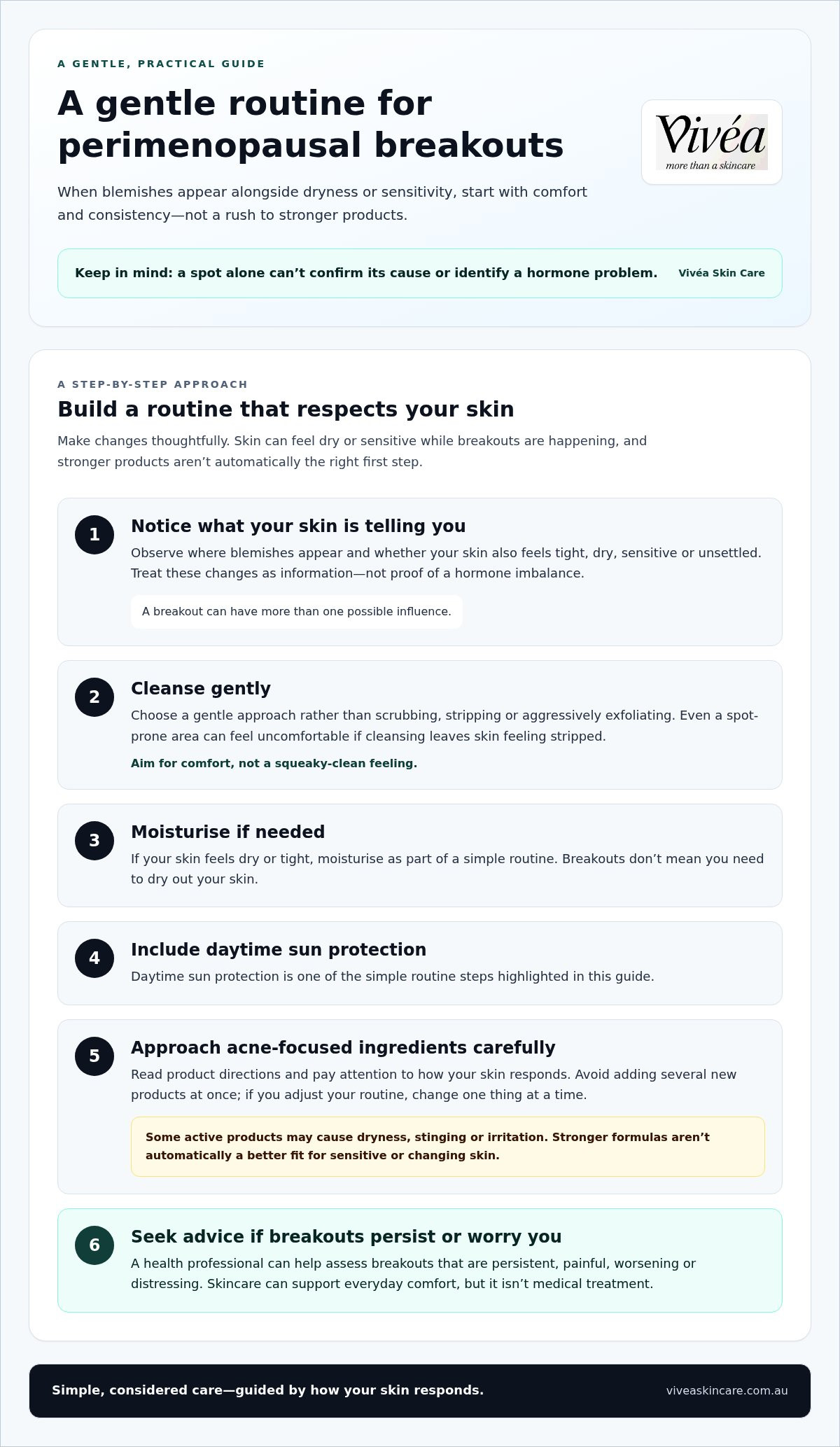
A gentle skincare routine for hormonal acne during perimenopause
A steady, uncomplicated routine can support skin comfort without promising to clear breakouts. Keep the basics flexible: cleanse gently, moisturise if your skin feels dry or tight, and use sun protection during the day. These are cosmetic skincare steps, not acne treatment, and they can sit alongside professional care if you need it.
Keep the routine clear and manageable: cleanse without stripping, moisturise for comfort, protect your skin from the sun and introduce changes one at a time.
Keep cleansing comfortable and uncomplicated
Choose a cleanser that leaves your skin feeling comfortable rather than tight or scrubbed. A non-stripping approach may feel more suitable if dryness or sensitivity is part of your experience, though everyone’s skin responds differently. Vivéa® Gentle Creamy Cleanser is a gentle cleansing option, not an acne treatment. When comparing cleansers, consider how your skin feels after use and whether the product directions suit your routine.
Moisturise and introduce changes thoughtfully
Moisturising can help your skin feel more comfortable when it seems dry or tight. It doesn’t treat acne, and you don’t need to add a moisturiser simply because a routine says so if your skin already feels comfortable. Follow each product’s directions and avoid layering several unfamiliar products at once. If you want to make a change, introduce one product and observe how your skin responds before adjusting anything else.
Daytime sun protection is another useful part of general skincare. Choose a sunscreen that suits your skin and follow its label directions. Cancer Council Australia advises using sunscreen as part of a broader approach to sun protection, rather than relying on it alone. Shade, protective clothing and limiting time in strong sun also help reduce exposure.
Keep the routine easy to assess. If your skin begins to sting, feels persistently uncomfortable or becomes more irritated after a new product, stop using it and consider seeking professional advice. A simpler routine may help you identify what feels comfortable, but ongoing or painful acne may need assessment beyond cosmetic care.
If gentle cleansing is the step you’d like to simplify, explore Vivéa Skin Care’s gentle cleansing option as part of an adaptable routine.
When to seek help for perimenopausal acne, and where gentle cleansing fits
If breakouts continue to concern you, a health professional can help work out what information may be relevant and whether further assessment is useful. You don’t need to arrive with a suspected diagnosis. A conversation may also help if you’re unsure whether a new product, an existing medicine or another change could be connected to what you’re noticing.
Signs that professional advice may be useful
Consider discussing your skin if changes affect your comfort, confidence or daily life, or if you’re unsure how to manage them. Healthdirect’s acne guidance provides general information about the condition and seeking help. Before an appointment, you may find it useful to note when the changes began, which products you use and any symptoms that accompany the breakouts. This can make it easier to describe your experience clearly.
There’s no need to wait until you’ve tried every skincare option. If you have questions about possible causes or care, a GP or another appropriate health professional can consider your circumstances and guide the conversation. Skincare can support comfort, but it can’t determine what’s causing a change in your skin.
Choosing a cleanser as one supportive routine step
A cleanser has a straightforward role: cleansing as part of an everyday routine. It isn’t a treatment for hormonal acne, and changing cleansers can’t replace professional advice about ongoing concerns. Keep your routine familiar while you’re trying to understand what’s changed, and follow each product’s directions.
Vivéa® Gentle Creamy Cleanser is a cleansing option for sensitive mature skin. It isn’t intended as acne treatment, and no cleanser can establish the cause of breakouts. If a simple cleansing step feels helpful, Explore Vivéa Skin Care and learn more about the brand’s skincare.
Let your next skincare step feel manageable
Your skin doesn’t need to fit a perfect routine to deserve thoughtful care. Choose a pace that feels comfortable and let your needs guide what comes next. A steady approach to skincare for hormonal acne perimenopause can include simple cosmetic care while leaving room to seek professional advice if breakouts continue to concern you.
Vivéa Skin Care develops menopause-specific skincare in New Zealand with a mission to help women feel understood, supported and confident during this powerful stage of life. Vivéa® Gentle Creamy Cleanser can be one cleansing step in a routine, but it isn’t acne treatment or a substitute for professional care.
Explore Vivéa Skin Care and learn more about Vivéa® Gentle Creamy Cleanser as a gentle cleansing option for your routine.
Frequently Asked Questions
Can perimenopause cause acne for the first time?
Acne can begin in adulthood, including around the years when someone is experiencing perimenopause, but timing alone doesn’t establish the cause. A new breakout may have several possible contributors, so don’t assume it confirms a hormonal change. If spots keep appearing, feel uncomfortable or worry you, a GP or another appropriate health professional can help assess what’s happening. Healthdirect’s acne information explains when professional advice may be useful.
Is hormonal acne during perimenopause different from other adult acne?
Not necessarily in a way you can identify reliably by looking at a spot. “Hormonal acne” describes acne associated with hormonal influences, but adult acne can have multiple contributing factors and appearances can overlap. The position or feel of a breakout can’t confirm its cause on its own. If you’re unsure whether a change is acne or another skin concern, describe what you’ve noticed to a health professional rather than trying to diagnose it yourself.
Can I use my usual acne products if my skin feels drier?
Possibly, but dryness or stinging can be a sign that your usual product no longer feels comfortable. Check its directions and avoid adding other unfamiliar active products at the same time, so it’s easier to notice what affects your skin. If irritation persists or worsens, stop using the product and seek advice from a pharmacist, GP or dermatologist. For people researching skincare for hormonal acne perimenopause, tolerability matters alongside the product’s intended purpose.
Should I stop moisturising if I have hormonal acne?
No, acne alone isn’t a reason for everyone to avoid moisturiser. If your skin feels dry or tight, a moisturiser that feels comfortable can be part of cosmetic care, though it won’t treat acne. If a product leaves your skin uncomfortable, stop using it and review its directions or seek advice. The American Academy of Dermatology’s moisturiser guidance discusses choosing products for acne-prone skin.
Can a gentle cleanser clear perimenopausal acne?
No. A gentle cleanser can cleanse the skin, but it shouldn’t be expected to clear acne or replace assessment and treatment when those are needed. Treat cleansing as one part of everyday skincare, not a solution to the cause of persistent breakouts. If you’re using acne products as well, follow their directions and seek professional advice if the combination leaves your skin persistently irritated or uncomfortable.
Does acne mean I have a hormone imbalance?
No, acne by itself can’t show that you have a hormone imbalance. Hormonal influences may be one factor in acne, but a breakout isn’t a hormone test or diagnosis. If you’re concerned about acne alongside other changes in your health, speak with a GP, who can consider your symptoms and history. Avoid starting supplements or making major changes to prescribed medicines based only on what you see on your skin.
Is it better to squeeze spots or leave them alone?
It’s generally better to leave spots alone. Squeezing or picking can increase irritation and may raise the risk of infection or scarring, particularly if the skin breaks. Try to keep your hands away from the area and use products only as directed. If a spot is painful, repeatedly returns or causes concern, ask a health professional for advice rather than trying to drain it yourself.


