

In the first five years after menopause, women can lose as much as 30% of their skin collagen. A post menopause facial moisturiser with hydrating ingredients such as hyaluronic acid or glycerin can help ease dryness, while ceramides support the skin barrier. Moisturiser can improve the feel and appearance of dry skin, though it can’t replace lost collagen.
If your skin feels tighter, drier or more delicate than it used to, the change is real and may call for a gentler, more nourishing routine. Choosing a post menopause facial moisturiser is less about chasing a different face and more about finding steady comfort and support for the skin you’re in.
This guide explains how menopause can affect hydration, sensitivity and firmness, which moisturiser ingredients support dry skin, and how to assess a routine over time. You’ll also learn what to look for in a daily moisturiser and when persistent or concerning skin changes warrant medical advice.
Key Takeaways
- Menopause can affect skin hydration, sensitivity and firmness; collagen loss may be most pronounced in the first five years after menopause.
- Look for moisturiser ingredients such as glycerin or hyaluronic acid for hydration, and ceramides to support the skin barrier.
- Adjust the texture of your moisturiser to suit your skin’s comfort and the conditions around you, rather than relying on one formula year-round.
- Give a consistent routine time to work: hydration may feel different sooner, while firmness changes can take 8 to 12 weeks to assess.
- Explore Vivéa Cooling Night Gel Cream for Menopause as a night-time option within a skincare routine for changing skin.
1. How does Menopause impact the skin?
Menopause can affect facial oil production, hydration and skin structure. Menopause-related changes can be associated with drier skin and reduced elasticity. Lower oestrogen is associated with lower sebum production, and postmenopausal skin may produce around half as much sebum as premenopausal skin. With less natural oil, your face may feel tighter or more easily irritated.
Collagen levels can also change. The Australian Menopause Society notes that collagen loss can affect skin firmness; women may lose as much as 30% of skin collagen during the first five years after menopause. This structural change can contribute to thinner skin, reduced elasticity and more visible wrinkles. Moisturiser can support comfort and the appearance of dryness, but it doesn’t replace collagen.
Falling oestrogen can affect the skin’s ability to retain ceramides and water. Ceramides are fatty components that help the skin barrier hold moisture. If your skin feels tight or sensitive, choose a moisturiser that supports hydration and normal barrier function. A gentle routine can also help avoid irritation from harsh cleansing or unnecessary active ingredients.
For Australian shoppers, popular facial moisturisers for mature skin are sold at varied price points. Cost depends on the product, its ingredients and the retailer, so compare labels and choose a formula that suits your needs rather than assuming a higher price means a better fit.
Postmenopause facial moisturisers are available from Australian retailers and online. Choose one labelled for facial use, then consider whether its texture suits your skin’s dryness or sensitivity.
Introduce a new moisturiser gradually. Test it on a small area first, following the product’s patch-test directions. Add one new product at a time so you can notice how your skin responds before changing the rest of your routine.
Moisturisers can ease the appearance and feeling of dryness, soften the look of fine wrinkles and support the skin barrier. They don’t restore lost collagen. Retinoids may help with skin texture and fine lines, but can cause dryness or irritation. Discuss persistent or concerning skin changes with a doctor.
For overnight care, cleanse your face and apply moisturiser as the final step. A night-time layer can help replenish moisture and support the skin barrier. Choose a comfortable texture, and avoid exfoliation or other active ingredients if your skin is already irritated.
2. Expected timeframes for hydration and firmness changes
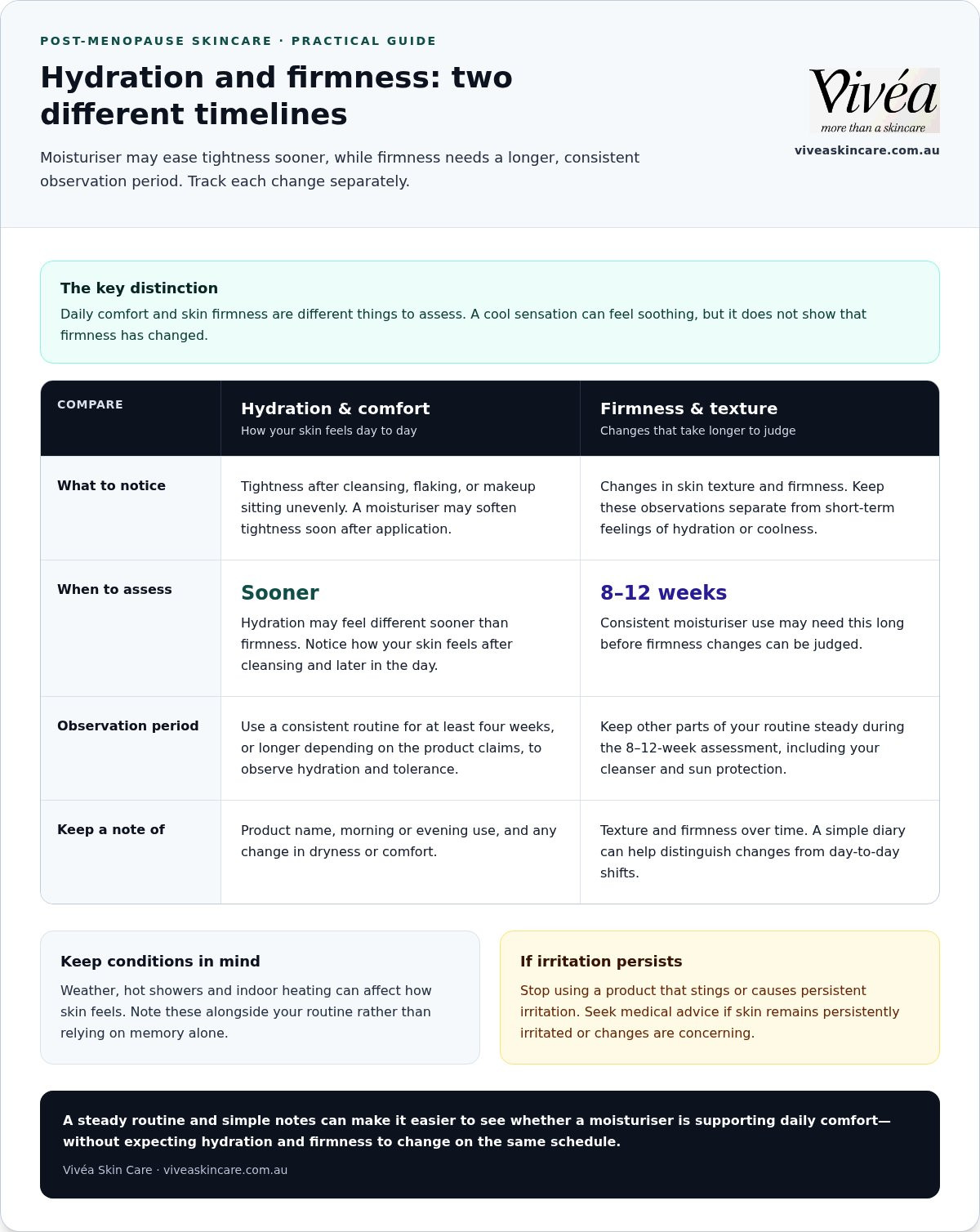
Hydration and firmness change on different schedules. A moisturiser can soften tightness soon after application, while changes in skin texture need longer observation. Falling oestrogen levels affect moisture retention, so comfort may also shift with climate, cleansing habits and the formula you use. Track these separately rather than expecting one product to address every concern at once.
For a practical comparison, note how your skin feels after cleansing and later in the day. Record tightness, flaking or makeup sitting unevenly, then follow the same routine consistently. The skincare trial period was a minimum of four weeks, or longer depending on the product claims. This gives you a useful window to observe hydration and tolerance instead of switching products after a few applications.
Firmness takes longer to assess. Consistent moisturiser use may require 8 to 12 weeks before firmness changes can be judged. Keep other parts of your routine steady during that period, including cleanser and sun protection. A simple diary can help distinguish changes in texture from day-to-day shifts caused by weather, hot showers or indoor heating.
For dry, sensitive, mature skin, choose a moisturiser that supports hydration and feels comfortable, without leaving your skin tight or irritated. Glycerin or hyaluronic acid can help attract water, while a richer cream may feel more cushioning at night. Introduce one formula at a time so you can identify which change suits your skin.
Hyaluronic acid is a humectant, meaning it attracts water to the skin’s surface. Apply a moisturiser containing it to slightly damp skin, then use a cream that helps reduce moisture loss. This simple sequence can make hydration feel more comfortable. If a product stings or causes persistent irritation, stop using it rather than layering more skincare over it.
A gentle routine can include a mild cleanser, a hydrating moisturiser and sunscreen in the morning. At night, cleanse and apply moisturiser as the final step. For example, if your cheeks feel comfortable after cleansing but become tight by afternoon, review your morning formula and how much you apply before adding new active ingredients.
Cooling products can offer a soothing sensory experience, while moisturisers address dryness through hydration and barrier support. These are different benefits: a cool feeling doesn’t itself show that skin firmness has changed. Assess hydration by comfort and surface texture, and reserve firmness judgements for the longer 8 to 12-week observation period.
Keep your notes simple: product name, morning or evening use, and any change in dryness or texture. This record makes it easier to see whether a moisturiser is improving daily comfort, rather than relying on memory alone. If your skin remains persistently irritated, seek medical advice instead of extending a trial that feels uncomfortable.
3. Choosing a moisturiser for Australian climate conditions
Choose a moisturiser based on how your skin feels in its usual setting, then adjust when conditions change. Dry air, humidity and air-conditioned rooms can each affect comfort differently. A light lotion may feel pleasant on a humid morning, while a cream may feel more comfortable after time in a heated or cooled indoor space. The best texture is one you can use consistently.
In warm, humid weather, a lighter formula can feel less heavy beneath sunscreen. Apply a thin layer after cleansing and let it settle before adding other products. If your cheeks still feel tight, apply a little more to those areas rather than using a thick layer across your whole face. This keeps your routine adaptable without changing every product at once.
Dryness can feel more noticeable after time in air conditioning, heating or a dry environment. For example, if your face feels comfortable at breakfast but tight by afternoon, apply moisturiser after your morning cleanse and consider a more cushioning texture at night. A moisturiser can support the skin barrier and improve the appearance of dryness, but it doesn’t replace sun protection.
Keep sunscreen as a separate step in your morning routine. Apply it after moisturiser, following the label directions. If your moisturiser already feels rich, use a lighter layer underneath rather than skipping sunscreen during daytime exposure.
Sensitive skin often benefits from a simple routine with fewer active ingredients at once. Choose a moisturiser that leaves your skin comfortable, and avoid layering several new products together. If you use a potentially drying active product, such as a retinoid, introduce it cautiously and keep moisturiser in your routine. Visible flaking or persistent stinging is a reason to pause the new product.
Seasonal changes don’t require a complete skincare overhaul. Keep your usual cleanser and sunscreen steady, then adjust your moisturiser’s texture when your skin’s needs shift. For instance, use a lighter layer during humid weather and a richer cream when indoor heating leaves your cheeks tight. Make one adjustment at a time so you can tell what has an effect.
Pay attention to comfort, not just finish. A moisturiser that absorbs quickly may suit daytime use, while a creamier texture may feel more protective before bed. If a formula leaves a sticky film in warm weather, reduce the amount or reserve it for drier areas. If your skin remains tight, review your cleansing as well as moisturising, since a drying cleanser can undermine your routine.
Across Australia, changing weather and indoor conditions can make the same moisturiser feel different from one day to another. Keep a straightforward morning and evening routine, then adjust texture according to dryness, sensitivity and comfort. Consistent use makes it easier to judge whether your chosen formula supports your skin barrier without adding unnecessary steps.
4. Humectants, emollients, occlusives and barrier-supporting ingredients
A moisturiser can combine ingredients that support hydration in different ways. Humectants attract water, emollients soften dry-feeling skin, and occlusives help reduce moisture loss from the surface. For example, a formula containing glycerin and a richer protective ingredient can offer both water-attracting and moisture-sealing support. The ingredient list helps explain what a product is designed to do.
Hyaluronic acid and glycerin are humectants used in skincare for dryness. They attract water to the outer skin, helping it feel more hydrated and supple. Apply a moisturiser containing either ingredient to slightly damp skin, then layer a cream over it if dryness persists. This pairing can make your routine feel more cushioning without requiring several active products.
Emollients help smooth rough-feeling areas by softening the spaces between dry surface cells. Occlusives form a protective layer that slows water loss from the skin. A light lotion may suit morning use, while a more occlusive ointment before bed can help keep skin hydrated overnight. Choose a texture that feels comfortable in the weather and works with makeup or sunscreen.
Barrier-supporting ingredients deserve attention during perimenopause. Falling oestrogen can affect the skin’s ability to retain ceramides, fatty components that help lock in moisture. Ceramides in a moisturiser can complement the skin’s natural barrier and support a more comfortable surface. Peptides are also suggested as a gentle skincare ingredient for menopausal skin, but an ingredient mention alone doesn’t establish what a finished formula will do.
These ingredients support hydration and the appearance of dry skin; they don’t replace hormonal treatment or restore lost elasticity. A moisturiser may soften the visible look of fine lines caused by dryness, while changes in firmness involve deeper skin structure. Keep cosmetic skincare benefits distinct from medical care, particularly if dryness occurs alongside persistent irritation or a new rash.
Read the label for the ingredients and intended use. If your skin is sensitive, introduce one new formula at a time and follow its directions. Avoid combining several active ingredients at once, since that can make it harder to identify what is causing discomfort. A gentle cleanser, a suitable moisturiser and daytime sun protection form a simpler starting routine.
For example, if your cheeks feel tight after cleansing, try a moisturiser with glycerin or hyaluronic acid. If they still feel dry by evening, consider a richer final layer instead of adding another active treatment. Adjust one step, then observe comfort and texture during regular use. This helps you choose ingredients based on how your skin feels, not on a crowded list of claims.
A formula’s overall texture and ingredient combination matter more than one prominent ingredient on the front label. Humectants, emollients, occlusives and ceramides each have different roles, so look for a blend that suits your skin’s needs and feels comfortable morning and night.
Loss of collagen, firmness and bounce
Collagen provides structural support within the skin, helping it feel firm and resilient. Type I collagen makes up about 80% of skin’s total collagen, while Type III accounts for about 15%. These fibres sit within the dermis, the skin’s deeper layer. As collagen levels decrease, changes in firmness, elasticity and skin texture may become more noticeable.
After the first five years following menopause, women can lose about 2% of dermal collagen each year for the next 20 years. This gradual change may contribute to reduced bounce and more visible lines. The figures describe collagen changes, not a timetable for an individual face. Skin’s appearance also reflects hydration, sun exposure and everyday care.
Dryness can make fine lines look more pronounced because a dehydrated surface appears less smooth. A moisturiser can replenish moisture and support the skin barrier, improving the appearance and feeling of dryness. It won’t replace collagen or reverse structural changes. Set a practical goal: support comfort and surface softness rather than expecting a cream to restore firmness.
Try assessing firmness separately from hydration. After cleansing, notice whether your skin feels tight or rough, then observe its texture after moisturising. A more comfortable surface may indicate improved hydration, while deeper changes in firmness take longer to judge. Consistent moisturiser use may require 8 to 12 weeks before firmness changes can be assessed.
Sun exposure can affect collagen over time. High-SPF sunscreen of SPF 50+ can help offset sun exposure on menopausal skin. In a morning routine, apply sunscreen after moisturiser, following the sunscreen label. This supports a protective routine without suggesting that sunscreen restores collagen already lost.
Consider your full routine, not just one active ingredient. Gentle cleansing helps avoid unnecessary dryness, while a moisturiser supports the surface barrier. Retinoids may help with skin texture and fine lines, but can also cause dryness and irritation. If you’re considering an active treatment, introduce it cautiously and seek medical advice for persistent irritation or other concerns.
Peptides are suggested as a skincare ingredient for menopausal skin, but their presence doesn’t prove a finished product will change collagen levels. Read product claims carefully and focus on practical benefits such as hydration and a smoother-feeling surface. For lasting concerns about thinning, bruising or marked changes, discuss them with a doctor.
A clear takeaway: moisturiser supports hydration, softness and the skin barrier, while firmness changes involve collagen beneath the surface. Keep a consistent routine and assess comfort separately from bounce. Explore skincare for changing skin as part of a considered approach to daily care.
Vivéa Skin Care: Vivéa Cooling Night Gel Cream for Menopause
Vivéa Cooling Night Gel Cream for Menopause is a facial moisturiser for women seeking hydration and cooling relief as their skin changes. It suits an evening routine when you want a moisturiser to support comfort while addressing dryness and sensitivity associated with mature skin.
After cleansing, apply Vivéa Cooling Night Gel Cream for Menopause to your face and neck each evening, massaging it in gently. It is formulated for changing skin during perimenopause and menopause, but doesn’t treat hormonal changes or replace medical care. Keep expectations practical: a moisturiser can support hydration and improve the appearance of dry skin, but it may not address every skin change.
Explore Vivéa Cooling Night Gel Cream for Menopause and the full Vivéa Skin Care range at viveaskincare.com.au.
Build a routine that feels comfortable to return to
Your skincare routine doesn’t need to be complicated to feel supportive. Choose a few steps that suit your skin and daily habits, then give yourself time to notice what feels comfortable. A post-menopause facial moisturiser can be one part of that routine, alongside gentle cleansing and simple hydration.
For gentle cleansing, try Vivéa Gentle Creamy Cleanser for Sensitive Mature Skin. Vivéa Hydrating Cooling Mist Spray adds a cooling mist to your skincare routine. Choose products to suit the steps you want, and introduce changes gradually so your routine remains easy to follow.
Vivéa Skin Care brings together options for changing skin, including the night gel cream discussed above. Explore the range and choose the next step that feels right for you. Visit Vivéa Skin Care to learn more and continue shaping a routine with care and confidence.
Frequently Asked Questions
How does menopause impact the skin?
Menopause can contribute to drier, thinner skin and changes in elasticity. The Australasian Menopause Society describes skin changes associated with falling oestrogen, while research published in the International Journal of Women’s Dermatology discusses changes in collagen and skin moisture during menopause. These changes vary from person to person. If you notice a new or persistent skin concern, a GP can help assess whether it needs attention beyond cosmetic skincare.
How can I support my skin barrier?
A simple routine with gentle cleansing, moisturiser and daytime sun protection can support skin comfort. The Australasian College of Dermatologists advises gentle skincare for sensitive skin, including avoiding irritants and using moisturiser. Use lukewarm water, pat your face dry and apply moisturiser without scrubbing. If a product repeatedly stings or leaves your skin uncomfortable, stop using it and seek advice from a pharmacist or GP.
What can contribute to dryness and skin sensitivity?
Menopause-related hormonal changes can contribute to dryness, while environmental conditions and skincare habits may add to sensitivity. Healthdirect Australia notes that dry skin can have several causes, including environmental factors and irritating products. Notice whether discomfort follows hot showers, air conditioning or a new cleanser. Briefly noting products and changes in your skin can help you identify patterns to discuss with a health professional.
Which products or ingredients may irritate sensitive skin?
Fragrance, harsh cleansers and exfoliating or retinoid products can irritate some people, particularly when skin is already sensitive. The Australasian College of Dermatologists recommends avoiding known irritants and introducing products carefully. Try one new product at a time, following its directions for testing on a small area. Stop using it if irritation develops. Severe swelling, a painful rash or persistent symptoms warrant advice from a doctor or pharmacist.
What ingredients are best in a facial moisturiser for postmenopausal skin?
Choose ingredients according to your main concern and how your skin tolerates the formula. Glycerin and hyaluronic acid are humectants that support hydration, while ceramides help support the skin barrier. The Australasian College of Dermatologists explains that moisturisers can help dry skin by improving hydration. When comparing a post-menopause facial moisturiser, consider facial-use directions, texture and how it fits your existing routine.
Are ceramides, hyaluronic acid, glycerin and urea effective for postmenopausal skin?
These ingredients can help address dryness, though they work differently and aren’t a menopause treatment. The Australasian College of Dermatologists describes moisturisers as useful for dry skin, with each ingredient playing a different role. Ceramides support the skin barrier; glycerin and hyaluronic acid attract water, while urea is used in moisturisers for dry skin. Choose a facial product and introduce it gradually if your skin is sensitive.
Should postmenopausal skin use a separate day moisturiser with SPF and night moisturiser?
A separate moisturiser and sunscreen can make daytime care straightforward, while a night moisturiser can be chosen for comfort without needing SPF. Cancer Council Australia recommends using sunscreen as part of sun protection when the UV Index is 3 or above. Follow the sunscreen label and apply enough for the stated protection. At night, cleanse and moisturise according to your skin’s needs; a separate night cream is a personal choice.
What fragrance-free moisturisers are recommended for sensitive skin in Australia?
Look for a facial moisturiser labelled fragrance-free, then check its ingredients and directions. Fragrance-free and low-allergen fragrance describe different things. Vivéa’s fragrances are low-allergen, which doesn’t mean its products are fragrance-free. If fragrance has triggered reactions for you, choose a fragrance-free option and patch test as directed. A pharmacist or GP can advise about recurring irritation.


