

A cooling body moisturiser can leave skin feeling fresh while helping dry skin feel more comfortable. If you want a menthol cooling sensation, check the ingredient list. The cooling feel is temporary, while moisturising is a separate benefit.
It makes sense to want a lotion that feels refreshing without leaving a heavy, greasy layer. A lightweight texture can make moisturising easier to fit into your day, while hydrating ingredients support the skin beyond the initial cooling sensation.
Here, you’ll learn what to look for in a cooling lotion, how menthol creates its cooling sensation and why that feeling can fade while moisturising benefits remain. You’ll also find practical application tips to help you choose and use a formula comfortably.
Key Takeaways
- Choose a texture that absorbs comfortably and doesn’t leave a greasy film, so applying moisturiser feels easy to maintain.
- Menthol can create a cooling sensation that commonly lasts less than half an hour; this is separate from how long skin feels moisturised.
- Check the ingredient list for moisturising ingredients that suit your skin, and remember that a cooling sensation isn’t the same as lasting hydration.
- Apply lotion to clean skin and give extra attention to dry-prone areas such as the lower legs, elbows and knees.
- If you’re exploring cooling skincare for mature skin, discover how Vivéa Cooling Night Gel Cream for Menopause may fit into your routine.
Fast-absorbing, non-greasy formula
A lightweight, non-greasy feel can make body moisturising easier to fit into a morning routine. A cooling body moisturiser with this texture spreads over the skin and feels less noticeable as you get dressed. These terms describe how a lotion feels during application, not how long its moisturising effect lasts.
Try a small amount on one area first, such as your forearm. Smooth it over your skin and notice whether it spreads easily without repeated rubbing. A formula that feels comfortable after application may suit your routine better than one that leaves a heavy residue. Texture is personal, so consider how it feels on your skin rather than relying on the label alone.
Check the ingredient list as well as the texture. Some cooling lotions contain colloidal oatmeal, which you can identify on the label. Comparing ingredients helps you make a considered choice, especially if your skin is sensitive. The Australian Competition and Consumer Commission notes that using cosmetics on irritated or inflamed skin can increase the risk of side effects.
- Start with clean, dry-prone areas: Apply a modest amount, then spread it evenly over the lower legs, elbows or knees.
- Use a gentle massage: Smooth the lotion across the body instead of rubbing one small patch repeatedly.
- Let the layer settle: Give the moisturiser a moment before dressing, and notice whether fabric feels comfortable against your skin.
After sun exposure, product directions may advise patting your skin dry with a soft towel rather than rubbing. Then apply the lotion gently. Wash off sunscreen, perspiration or saltwater before moisturising. This leaves a clean surface for application, without layering lotion over those residues.
For very dry areas, some directions recommend applying extra product to places such as the lower legs, elbows and knees. This is more practical than using a thick layer everywhere. Spread moisturiser over your body first, then apply a little more to those areas. Adjust the amount to your skin and the coverage you need.
A non-greasy finish can be useful when you want to moisturise before getting dressed, and a comfortable texture may make daily use easier. Still, fast absorption is a sensory feature, not a measure of hydration. Compare the label, ingredient list and feel on your skin to find a formula that fits your routine.
How cooling lotions create a cooling sensation
Yes. Menthol and peppermint can irritate skin or cause an allergic reaction in some people. Stinging may also occur, particularly on sensitive areas, so pay attention to how your skin responds after application.
Menthol gives some lotions a cooling sensation and can help relieve itchy, dry skin. That sensory effect is separate from moisturisation. A cool feeling doesn’t show how hydrated your skin is or whether a formula suits you. Check the ingredient list when choosing a cooling body moisturiser, particularly if your skin is sensitive.
The cooling sensation is a feeling on the skin, not a change in skin temperature. You may notice it after application, then feel it fade over time. A fresh sensation doesn’t mean you need to apply more. Follow the product directions and judge the formula by how comfortable your skin feels.
The Australian Competition and Consumer Commission notes that using cosmetics on irritated or inflamed skin increases the risk of side effects. If an area is red, sore or inflamed, avoid applying cosmetic lotion there. This is especially relevant if scratching has left visible breaks in the skin.
For your first application, choose a small area of intact skin on your arm. Apply the product gently and notice how the area feels. Keep it away from your eyes, mouth and sensitive areas. If marked stinging, redness or discomfort develops, stop using it rather than applying more.
- Read the ingredient list: Look for menthol or peppermint if you want to identify potential cooling ingredients.
- Follow the label: Use the product only as directed, including its cautions.
- Start with a small area: Apply to intact skin before using it more widely.
- Notice your skin’s response: Stop if discomfort or irritation develops.
A stronger cooling feeling doesn’t mean better care. Sensation can vary across your body, so a formula may feel different on your elbow than elsewhere. Apply it only to areas allowed by the product directions, and don’t use extra lotion to intensify the effect.
Peppermint on an ingredient list doesn’t guarantee a gentle experience for everyone. Individual skin responses vary, and a cooling sensation alone can’t tell you whether a product suits you. Read the label, use the lotion as directed and pay attention to your skin after application. These steps help you choose thoughtfully rather than relying on sensation alone.
After sun exposure, wash off sunscreen, perspiration and saltwater before applying body cooling lotion. Product instructions may recommend patting sun-exposed skin dry with a soft towel instead of rubbing it. Some lotions are intended for daily use to hydrate dry, sensitive skin. Even if a lotion is described as non-greasy and fast-absorbing, follow its directions and monitor your skin’s response.
Moisturisation duration
How long skin feels moisturised depends on the formula, the amount applied, your skin’s condition and your daily routine. A lotion may feel different after showering, swimming or washing your hands. Dry-prone areas may also feel less comfortable than other parts of your body, even after the same application.
Assess the moisturising feel separately from the product’s initial sensory effect. Notice whether your skin feels comfortable later in the day, rather than judging the application by its first impression. A cooling body moisturiser can be part of daily care, but its cooling sensation doesn’t tell you how long your skin will feel moisturised.
A consistent routine makes it easier to observe your skin. Apply lotion after bathing as directed, then notice how your lower legs, elbows or knees feel later. If an area feels dry again after washing or getting dressed, consider whether it received an even layer. Comparing areas can help you focus your application.
Everyday activities can affect how your skin feels. Repeated handwashing, time outdoors or a shower after exercise may change your routine and which areas need moisturising. Notice what happened before discomfort returned. This can help you decide whether to apply lotion as directed or give dry-prone areas extra attention.
Use a few simple observations to compare how your skin feels:
- Water exposure: Notice how your skin feels after showering, swimming or washing your hands.
- Coverage: Consider whether you spread lotion evenly over the areas that feel dry.
- Different areas: Compare a rough elbow with skin that feels comfortable.
- Daily routine: Note whether an activity or clothing changes how your skin feels.
For example, apply lotion after your evening shower and notice how your skin feels before bed and the next morning. Repeat the same routine another day. Comparing similar routines can help you decide whether the amount and coverage suit your skin, without relying on a set time expectation.
The lotion directions described in this article advise daily application, with extra product on very dry areas. Follow the directions rather than automatically adding layers when dryness returns. Applying an even layer consistently, as directed, gives you a practical way to assess how the formula fits your routine.
Your skin can feel different as the day unfolds. After outdoor activity, bathing or handwashing, notice which areas need attention and adjust your routine according to the label. This helps you assess your moisturising routine by how comfortable your skin feels, where dryness returns and whether your application reaches those areas.
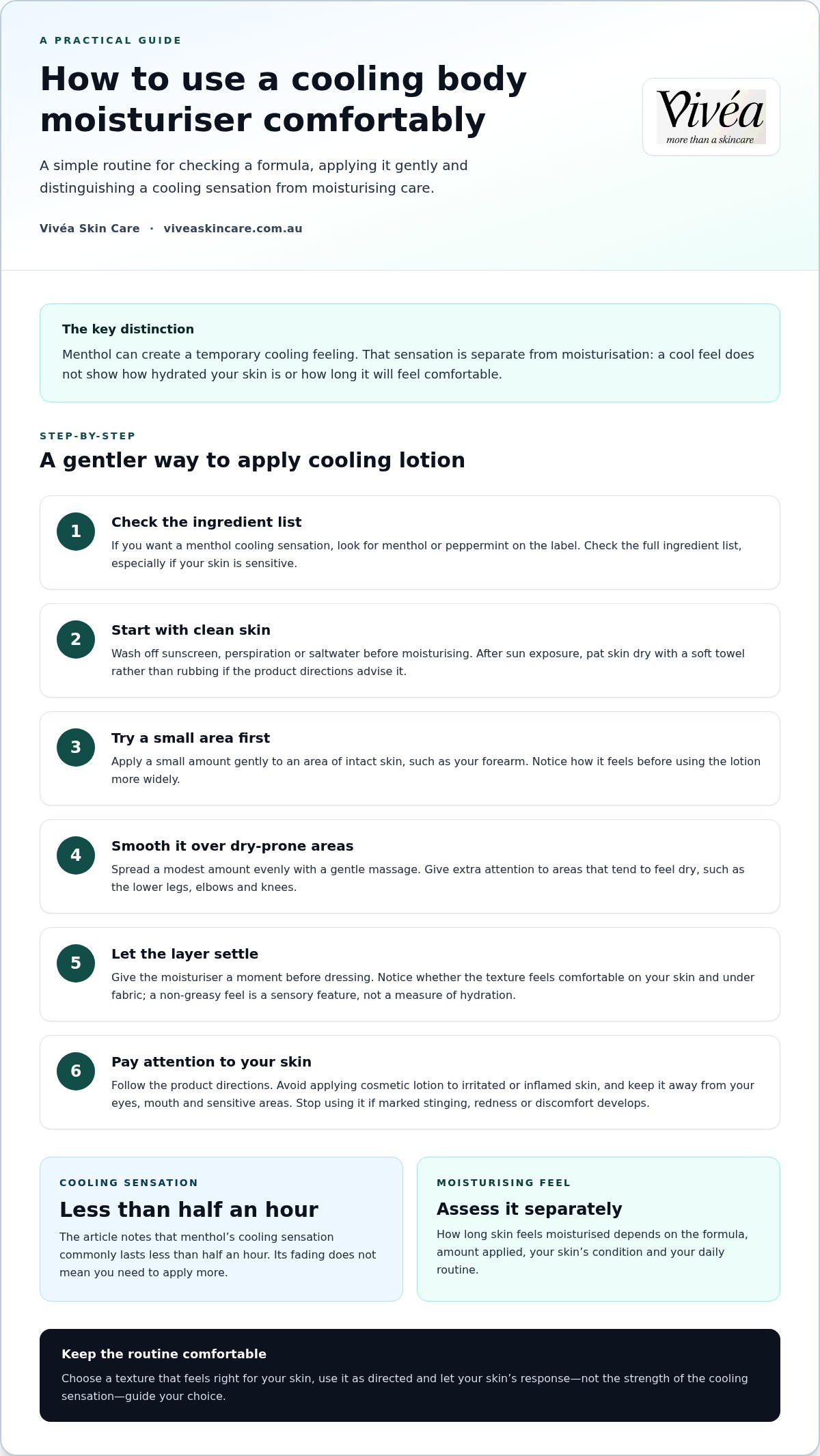
Cooling action from menthol
Menthol creates the cool sensation in some body moisturisers and can help relieve itchy, dry skin. It may also sting on sensitive areas, so a cooling feel won’t be comfortable for every part of your body. Peppermint and menthol aren’t interchangeable descriptions: check the ingredient list to see what the product contains.
Can menthol or peppermint in body moisturiser irritate skin or cause allergic reactions? Menthol may sting, particularly on sensitive areas, and cosmetics can cause unwanted reactions. The Australian Competition and Consumer Commission says using cosmetics on irritated or inflamed skin increases the risk of side effects. This doesn’t mean a particular product will cause an allergy.
Pay attention to where you apply the product. Its directions may advise keeping it away from your eyes and mouth, open or cut skin, and sensitive areas because it can sting. For example, don’t apply it to skin scratched raw. Choose intact skin and follow the label’s application guidance.
A fresh sensation can be part of the experience, but don’t treat stinging or discomfort as evidence that the product is working. If you notice an uncomfortable response, stop applying it to that area. Don’t add more to intensify the cooling effect, and keep the product away from areas named in its warnings.
- Read the ingredient list: Identify menthol and any other listed ingredients before use.
- Check the directions: Note the application areas and warnings on the product label.
- Choose intact skin: Avoid cuts, open skin, inflamed patches and sensitive areas.
- Notice your response: Stop applying the product where it causes discomfort.
If your skin is already irritated or inflamed, leave that area out of your cosmetic routine. The ACCC’s guidance makes the skin’s condition relevant, not just the ingredient list. For example, a lotion you usually tolerate may feel uncomfortable on a patch made sore by scratching.
Menthol’s cooling action is a sensory feature, while product directions may also describe relief for itchy, dry skin. Keep those points distinct when choosing a cooling body moisturiser. The cool sensation doesn’t show whether your skin is moisturised or whether the product suits every area. Read the label, apply only as directed and let your skin’s comfort guide you.
Some lotions contain menthol, which creates a cooling sensation and may help relieve itchy, dry skin. When deciding whether to use one, separate its stated purpose from whether the sensation feels pleasant to you. Cooling doesn’t require you to tolerate discomfort, and it isn’t a reason to apply more than the label directs.
Choose cautiously by checking the label, selecting an appropriate area of intact skin and noticing how it feels after application. If the cooling sensation feels unwelcome, don’t apply the lotion there rather than interpreting discomfort as a benefit. A product’s stated purpose may include relief for itchy, dry skin, but that doesn’t guarantee every application will feel comfortable.
Cooling body moisturiser
A cooling lotion can add a fresh sensation to everyday body care while moisturising dry skin. For comfortable use, follow the directions and consider your skin’s condition first.
Safe application
Read the label, then apply the lotion as directed to clean, intact skin. Keep it away from your eyes and mouth, cuts, open skin and sensitive areas, where it may sting. If you’re trying a formula for the first time, start on a small area and notice how your skin responds before applying it more widely.
Spread the lotion gently over the areas you want to moisturise. For example, smooth it over your arms and legs, then apply extra to dry-prone areas if the product directions advise it. Don’t add more just to intensify the cooling sensation. Follow the label’s guidance on where and how often to apply it.
Use after exercise, sun exposure or hot weather
After exercise, wash away perspiration before applying lotion. Once your skin is clean, follow the product directions. In hot weather, a cooling body moisturiser may feel refreshing on dry skin, but it moisturises skin rather than replacing ways to manage heat or maintain hydration.
After sun exposure, wash off sunscreen, perspiration and saltwater first. Pat your skin dry with a soft towel rather than rubbing, then follow the lotion’s directions for sun-exposed skin. Apply only to intact skin, avoiding cuts, open skin and sensitive areas.
Consider what your skin has been exposed to before applying a cooling body moisturiser. After a beach swim, for instance, rinse away saltwater and sunscreen before using lotion. After a walk on a warm day, wash off sweat first. These steps leave your skin clean and can make application more comfortable.
Some product directions allow use in the morning and evening after a bath or shower, or as an aftersun on sun-exposed skin. Follow the label for the specific formula you’re using. A cooling sensation is temporary, so use the product for moisturising rather than expecting it to lower your body temperature.
- After exercise: Wash away perspiration, then apply lotion as directed.
- After sun exposure: Remove sunscreen, sweat and saltwater, then pat skin dry.
- In hot weather: Use lotion for skin moisturisation, not as a substitute for other ways of staying comfortable.
If your skin feels tender after being outdoors, take a moment to assess it before applying anything. Use the product only as directed, and avoid areas that are cut, irritated or sensitive. Choosing based on the label and your skin’s condition helps keep body care simple and considered.
Vivéa Skin Care: Vivéa Cooling Night Gel Cream for Menopause
Vivéa Cooling Night Gel Cream for Menopause is an option for women seeking cooling hydration in an evening skincare routine. Vivéa Skin Care’s range is designed to support skin experiencing dryness, sensitivity and other changes through perimenopause and menopause.
If you’re choosing body care specifically, consider whether the product’s intended use matches your needs. A night gel cream is a different choice from a body moisturiser, so follow its directions and use it as described. Vivéa Skin Care also offers a gentle creamy cleanser and a hydrating cooling mist for other skincare steps.
For details about the range and which product suits your routine, visit viveaskincare.com.au.
Choose a routine that feels right for you
Your body-care routine can be simple and responsive to what your skin needs each day. When choosing a cooling body moisturiser, look beyond the first sensation: consider the texture you enjoy, the areas you want to moisturise and whether the product is intended for those areas.
For skincare through perimenopause and menopause, Vivéa Skin Care offers options for different steps, including Vivéa Cooling Night Gel Cream for Menopause, Vivéa Gentle Creamy Cleanser for Sensitive Mature Skin and Vivéa Hydrating Cooling Mist Spray. Choose according to the role you want each product to play in your routine, and follow its directions.
If you’d like to explore the range or ask about the next step in your skincare routine, you’re welcome to contact Vivéa Skin Care. Take your time choosing care that feels comfortable, considered and suited to you.
Frequently Asked Questions
What Ingredients Should You Look for in a Cooling Lotion?
Look for ingredients that match the feel and care you want from a lotion. Menthol provides a cooling sensation, while colloidal oatmeal appears in some cooling moisturiser formulas. Check the full ingredient list rather than relying on front-of-pack wording alone. If your skin is sensitive, introduce a new product carefully and avoid applying it to areas that are already irritated or broken.
What is a cooling body moisturiser and how does it work?
A cooling body moisturiser is a lotion designed to moisturise the body while giving skin a fresh, cool sensation. In formulas containing menthol, that ingredient creates the cooling feel; moisturising serves a separate purpose. For example, you might choose one for body care that feels refreshing as well as hydrating. Follow the label’s directions to use it as intended.
What ingredients create a cooling effect in body moisturisers?
Menthol creates a cooling sensation in some body moisturisers. If that sensory effect matters to you, look for menthol in the ingredient list. Formulas differ, so don’t assume every lotion labelled “cooling” contains the same ingredients. Check the directions and cautions too, particularly if you’re choosing a formula for sensitive skin or an uncomfortable area.
What is the difference between cooling body moisturiser, after-sun lotion and cooling gel?
A cooling body moisturiser moisturises while providing a cooling sensation, and some lotions can also be used as an aftersun on sun-exposed skin. Pat your skin dry and wash off sunscreen, perspiration and saltwater before applying.


