

Could your morning and evening cleanse feel gentler without making your routine more complicated? If your skin feels tight or uncomfortable after washing, it may help to adjust how often you cleanse, how you use your cleanser and which product you choose. A cleanser for dry menopausal skin should fit your routine and feel comfortable to use.
Skin can feel different during perimenopause and menopause, and a routine that once suited you may no longer feel comfortable. You don’t have to change everything at once or follow a one-size-fits-all rule about cleansing in the morning and at night.
This guide covers how to cleanse gently, how to think about your morning and evening routine, and what to review if dryness continues. You’ll also find guidance on choosing a cleanser and when ongoing irritation or discomfort may be worth discussing with a health professional.
Key Takeaways
- Choose a cleanser for dry menopausal skin by how comfortable your skin feels afterwards, not by dramatic promises on the label.
- Check the full ingredient list against sensitivities you already know, and follow the cleanser’s directions.
- Keep cleansing gentle: wet your skin, cleanse as directed, rinse carefully and pat dry.
- If dryness continues, review how often you cleanse and any recently introduced products, changing one thing at a time.
- Consider whether Vivéa® Gentle Creamy Cleanser fits your routine, and check its product details before choosing.
Why dry menopausal skin may need a gentler cleansing routine
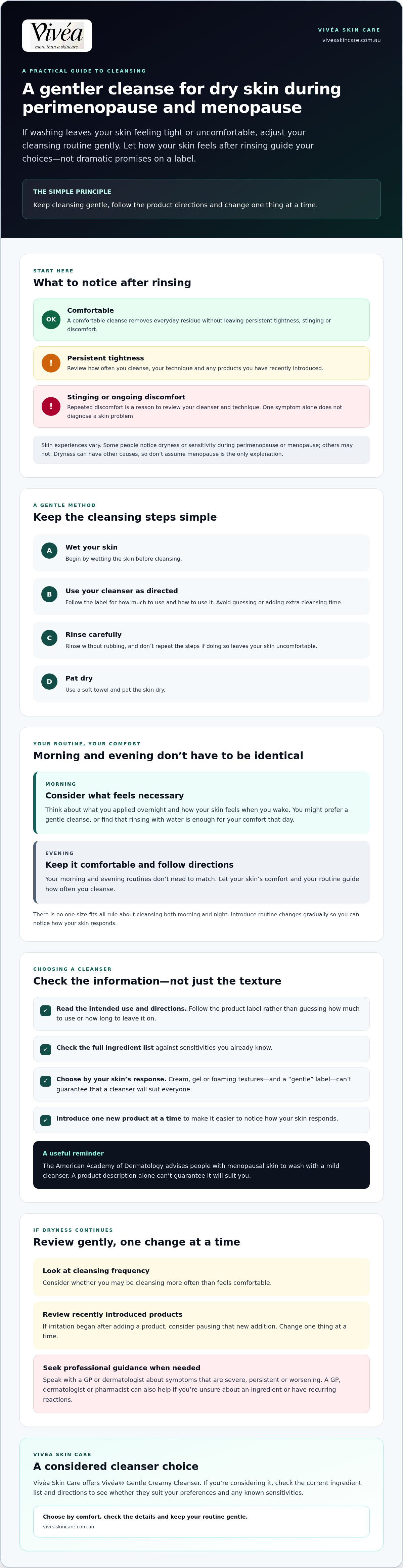
If your skin feels dry or uncomfortable after washing, try a gentler approach and notice how it feels after rinsing. A comfortable cleanse removes everyday residue without leaving persistent tightness, stinging or discomfort. Choosing a cleanser for dry menopausal skin is personal, so pay attention to how your skin responds rather than relying on dramatic promises.
Skin doesn’t respond to perimenopause or menopause in one universal way. Some people notice dryness or sensitivity, while others may not. The American Academy of Dermatology’s menopause skincare guidance discusses dryness and recommends a mild cleanser. Dryness can have other causes too, so avoid assuming menopause is the only explanation.
What can change in skin during menopause?
Some people find their skin feels drier or more sensitive during this stage of life. The skin barrier is the outer layer that helps limit moisture loss and protect against everyday irritants. If your skin feels different, a gentle cleansing method may be worth trying, while remembering that individual experiences vary.
How can you tell your cleansing routine feels too harsh?
Notice whether tightness, stinging or discomfort continues after rinsing. One symptom doesn’t diagnose a skin problem, but repeated discomfort is a reason to review your cleanser and technique. If irritation begins after adding a product, consider pausing that new addition. Speak with a GP or dermatologist about symptoms that are severe, persistent or worsening.
How to choose a cleanser for dry menopausal skin
Choose a cleanser by checking its product information and noticing how your skin feels during and after use, rather than relying on dramatic promises or texture alone. A cleanser for dry menopausal skin should suit your preferences and have clear directions you can follow. No cleanser type or ingredient is automatically right for everyone.
What should you look for on a cleanser label?
Before trying a new cleanser, read its intended use, directions and complete ingredient list. Check the ingredients against sensitivities you already know, and follow the label rather than guessing how much to use or how long to leave it on. The American Academy of Dermatology advises people with menopausal skin to wash with a mild cleanser, though a label describing a product as “gentle” can’t guarantee it will suit everyone.
If you’ve had recurring reactions to skincare or aren’t sure about an ingredient, ask a GP, dermatologist or pharmacist for guidance. Introducing one new product at a time can make it easier to notice how your skin responds.
Should you choose a cream, gel or foaming cleanser?
Texture can help you decide what feels pleasant to use, but it can’t reliably predict how your skin will respond. A creamy cleanser may feel comfortable to one person, while another may prefer a different texture. Even a formula that looks or feels rich isn’t automatically suitable for every skin type.
Compare how your skin feels as you rinse and after cleansing. Notice whether there’s persistent tightness, stinging or discomfort, and consider the full formula and its directions, not just whether it’s labelled cream, gel or foam. For more guidance, look for Gentle Cream Cleanser for Mature Skin: A Thoughtful Guide on Vivéa Skin Care.
Vivéa Skin Care offers Vivéa® Gentle Creamy Cleanser. If you’re considering it, review the product’s current ingredient list and directions to see whether they suit your preferences and any known sensitivities. You can explore Vivéa Skin Care’s cleanser information as part of your decision.
How to cleanse dry menopausal skin without overdoing it
A gentle routine can be simple: wet your skin, use your chosen cleanser according to its directions, rinse without rubbing and pat dry with a soft towel. Follow the product’s instructions for how much to use and how to use it. There’s no need to add extra cleansing time or repeat the steps if that leaves your skin uncomfortable.
Morning and evening routines don’t have to be identical. The American Academy of Dermatology offers dermatologist-recommended tips for menopausal skin, including using a mild cleanser. Let your skin’s comfort and your routine guide how often you cleanse. Introduce changes gradually so you can notice how your skin responds.
A gentle morning cleanse
In the morning, consider whether cleansing feels necessary. Think about what you applied overnight and how your skin feels when you wake. You might prefer a gentle cleanse, or find that rinsing with water is enough for your comfort that day. Neither approach is right for everyone.
Use water that feels comfortable and handle your skin lightly. Avoid scrubbing or trying to make your face feel “squeaky clean”. If your cleanser leaves your skin feeling persistently tight or irritated, review its directions and whether it suits your routine.
A gentle evening cleanse
In the evening, use a cleanser that suits your preferences to remove the day’s residue, following its directions. Move your fingertips lightly over your skin, rinse gently and pat dry rather than rubbing. If you wear products that need more thorough removal, follow their instructions, but avoid repeated rounds of cleansing if your skin feels uncomfortable afterwards.
Keep the rest of your routine steady while you assess a change. Introducing several new products at once can make it harder to tell what your skin is responding to. Change one part of your routine at a time, then observe how your skin feels.
Vivéa Skin Care offers Vivéa® Gentle Creamy Cleanser as an option to consider. Check the current product information and directions to decide whether it fits your routine. You can explore Vivéa Skin Care’s cleanser information.
What to adjust if your skin still feels dry after cleansing
Dryness after washing doesn’t automatically mean your cleanser is unsuitable. Skin can feel dry for several reasons, and cleansing is only one part of your routine. Before replacing your cleanser or adding extra products, review how you’re using it and whether anything else has changed.
Which routine changes are reasonable to try first?
Start with the basics. Check that you’re following the cleanser’s directions, including how to use and rinse it. Consider whether you’ve increased how often you cleanse, begun rubbing more firmly or introduced another skincare product around the time the dryness appeared.
If several steps are new, simplify where you can and change one thing at a time. For example, pause a recently added product if you suspect it may be contributing to discomfort, while keeping the rest of your routine familiar. Notice how your skin feels over time, but don’t expect a particular result or assume one product is responsible. Adding exfoliants or several new products can make it harder to work out what suits you.
A cleanser for dry menopausal skin still needs to suit your preferences and sensitivities. If it causes ongoing discomfort despite careful use, stop using it and consider asking a health professional what to try next.
When should you seek professional advice?
Speak with a GP or dermatologist if dryness or irritation persists, becomes painful, worsens or leaves you unsure what’s causing it. Seek advice sooner if symptoms are concerning or interfering with everyday comfort. A professional can assess your individual situation; general skincare guidance can’t diagnose a skin condition or replace medical care.
If you’ve been prescribed treatment or advised to follow a particular skincare routine, check with the professional who recommended it before making changes. A cosmetic cleanser is for cleansing, not a substitute for prescribed care.
If you’re considering a different cleansing option, take time to review its directions and complete ingredient list. Explore Vivéa Skin Care’s cleanser information to consider whether Vivéa® Gentle Creamy Cleanser may fit your routine.
A considered next step: choose a cleanser that fits your routine
A thoughtful choice comes down to three things: clear directions, an ingredient list you can review and how comfortable your skin feels during and after cleansing. A cleanser for dry menopausal skin doesn’t need to promise dramatic results. It needs to be an option you can use as directed and assess as part of a manageable routine.
Texture and marketing language can offer clues about a product’s intended use, but neither can guarantee how your skin will respond. Check the complete ingredient list against sensitivities you already know, and pay attention to persistent tightness or irritation. If you’re unsure about a recurring reaction, a GP or dermatologist can offer advice suited to your circumstances.
How to assess the Vivéa® Gentle Creamy Cleanser
Vivéa Skin Care offers Vivéa® Gentle Creamy Cleanser for mature, sensitive skin. Before deciding whether it belongs in your routine, check the official product page for its full ingredient list, intended use and directions. These details can help you compare the cleanser with your preferences and known sensitivities.
Vivéa® skincare is a menopause-specific range made in New Zealand, with low-allergen scent and mood-balancing fragrances. The range is described as clinically tested and dermatologically approved for safety and efficacy. Check the cleanser’s own product information for its ingredients and directions, and don’t assume that it will suit every individual. Treat it as a cosmetic cleansing option, not as treatment for menopause or a skin condition. If you’ve been given professional advice about your skincare, follow that guidance when considering any change.
Build a simple routine around what feels comfortable
Keep your routine straightforward while you assess a cleanser. Use it according to its directions, avoid introducing several new products at once and notice how your skin feels after washing. If you’re changing your routine, make one adjustment at a time so it’s easier to recognise what feels comfortable for you.
For broader reading, the guide Gentle Cream Cleanser for Mature Skin: A Thoughtful Guide may be useful.
If you’d like to consider Vivéa® Gentle Creamy Cleanser, review the product details and directions to decide whether it fits your routine.
Make your next cleanse a comfortable one
A gentle cleansing routine doesn’t need to be complicated. Choose a cleanser by checking its directions and ingredients, then notice how your skin feels during and after use. Whether you cleanse in the morning, evening or both can depend on your routine and comfort. If dryness continues, review one step at a time rather than assuming the cleanser is the only cause.
Vivéa Skin Care offers Vivéa® Gentle Creamy Cleanser. Check its current product information for specific ingredients and directions before deciding if it suits your preferences. The menopause-specific skincare range is made in New Zealand and includes low-allergen scent and mood-balancing fragrances. A cleanser for dry menopausal skin is a considered choice, not a promise of treatment; seek professional advice if irritation persists or worsens.
Explore Vivéa® Gentle Creamy Cleanser and the menopause-specific skincare range at Vivéa Skin Care. Review the product details at your own pace and choose a cleanser that fits your routine.
Frequently Asked Questions
Is a cream cleanser good for dry menopausal skin?
A cream cleanser may suit dry menopausal skin, but its texture alone can’t tell you whether it will feel comfortable. Check the intended use, directions and full ingredient list, especially if you know you’re sensitive to particular ingredients. Follow the product directions and notice how your skin feels after rinsing. If tightness or irritation continues, consider reviewing your routine or asking a health professional for advice.
How often should I cleanse dry menopausal skin?
Cleanse as often as feels comfortable for your skin and suits your routine. You may prefer to cleanse in the evening to remove the day’s residue, while your morning routine could involve a cleanser or simply a water rinse. There’s no single schedule that suits everyone. Follow your cleanser’s directions, avoid repeated washing if it leaves your skin uncomfortable and adjust gradually so you can observe how your skin responds.
Can menopause make your skin drier or more sensitive?
Skin can feel drier or more sensitive during perimenopause and menopause, although these changes aren’t universal. Hormonal changes may be one factor, but dryness or sensitivity can have other causes too. Notice when the change began and whether it coincided with a new product or routine adjustment. If the concern persists or worsens, a GP or dermatologist can help assess what may be contributing.
What should I avoid when cleansing dry, sensitive skin?
Avoid vigorous rubbing, rough cloths and repeated cleansing if these leave your skin feeling uncomfortable. Be cautious about adding several new products at once, as that can make it harder to identify what your skin tolerates. Check directions rather than guessing how long to cleanse or how much product to use. If a new product seems to trigger irritation, consider pausing it and seek advice if symptoms continue.
Should I wash my face in the morning if my skin is dry?
You don’t have to use a cleanser every morning if your skin feels more comfortable with a water rinse. Consider what you applied overnight and how your skin feels when you wake, then choose the gentler-feeling option for you. If you do cleanse, use the product as directed and handle your skin lightly. There’s no universal morning rule for dry skin.
When should I get help for dry skin during menopause?
Speak with a GP or dermatologist if dryness or irritation persists, becomes painful, worsens or leaves you uncertain about what to do. A professional can assess your individual concerns; general skincare information can’t diagnose or treat a skin condition. If you’re following prescribed care, don’t replace it with a cosmetic cleanser. Ask the professional who recommended your care before changing that routine.


