

Your skincare probably hasn’t stopped working because your skin has become immune to it. If you’re wondering, “why is my skincare not working anymore?”, a more likely explanation is that your skin’s needs have shifted, even if your routine hasn’t.
It can feel unsettling when familiar products no longer ease dryness, tightness or sensitivity as they once did. Perimenopause and menopause can be part of the picture, while over-exfoliating, layering several active ingredients or applying products inconsistently may also leave skin feeling less comfortable. You don’t necessarily need to replace everything or add more steps.
This guide will help you review what might have changed and reassess your routine calmly, one step at a time. We’ll look at how to simplify and support your skin, when to give a routine more time, and which persistent or concerning symptoms are best discussed with a health professional. The aim is a considered reset, not a rushed overhaul.
Key Takeaways
- If you’re asking “why is my skincare not working anymore?”, changing skin needs, routine habits, product condition or surroundings may all be worth considering.
- Perimenopause and menopause can be part of the picture when skin feels drier or more sensitive, but they aren’t the only possible explanation.
- Review product order and consistency before adding more products, and consider whether exfoliation or active ingredients may be contributing to discomfort.
- Reassess calmly: note what has changed, simplify where helpful and adjust one routine step at a time.
- Learn how a menopause-specific moisturiser such as Vivéa® Cooling Night Gel-Cream may fit into a routine focused on cooling comfort and hydration.
Why your skincare routine may stop working as it once did
Your skincare routine can feel less effective because your skin, habits, products and surroundings can all change. A familiar moisturiser may no longer leave your skin as comfortable, or a product that once felt soothing may now sting. That can be frustrating, but it doesn’t mean you’ve done anything wrong or need to replace everything.
Changing skin needs, routine habits, product age or storage, and shifts in weather or daily surroundings can all make familiar skincare seem less effective. These are possibilities to review, not a diagnosis.
What does it mean when skincare seems less effective?
Sometimes the change is subtle: your skin still feels fine, but a benefit you used to notice, such as softness after moisturising, is less obvious. Daily conditions, product condition and how regularly you use a product may all influence your experience. Skin can also change over time, so what once felt comfortable may not feel the same now.
Perimenopause and menopause can also be relevant. You might notice more dryness, tightness or sensitivity than before, although these stages won’t explain every change. A less noticeable cosmetic result is different from new or worsening discomfort. Burning, persistent redness or ongoing irritation deserves more attention than simply feeling that a product is doing less.
Describe the difference plainly. “My cheeks feel tight by lunchtime” gives you a more useful starting point than “nothing works”. It helps distinguish a change in appearance or feel from a reaction that may need professional advice.
How can you tell a routine needs a review?
Begin by observing, rather than immediately adding another product. Note what has changed in your skin’s appearance and comfort, when you first noticed it, and whether it comes and goes or stays. You could record whether your skin feels dry after cleansing, looks more flushed, or becomes uncomfortable after a particular step.
Then consider the timing. Did the concern begin after you introduced a new product, changed how often you use an existing one, or altered another part of your routine? Has it appeared alongside a change in weather, indoor heating or time spent outdoors? A connection isn’t proof of a cause, but it can help you decide what to review first.
If the concern is mild and your skin otherwise feels comfortable, a calm review may be a reasonable first step. If symptoms persist, become severe, or worry you, seek advice from a GP or dermatologist. Stop using a product that appears to trigger a reaction, and get professional guidance rather than trying to cover ongoing discomfort with more skincare.
How changing skin can alter what your skincare needs
A routine may feel different when your skin’s comfort, dryness or sensitivity changes. Products that once left your skin feeling comfortable may no longer seem to meet its current needs, even if the products themselves haven’t changed. That doesn’t automatically mean they’ve stopped working; it may mean the fit between your routine and your skin has shifted.
Routine fit means how well your skincare products suit your skin’s needs and comfort at this point in time. Those needs can evolve with life stage, environment and everyday circumstances, so a routine that worked well in the past may not always feel right.
Could perimenopause or menopause change how your skin feels?
It can be one possible context. Some people notice their skin feels drier or more sensitive during perimenopause or menopause, while others notice little change or experience it differently. There’s no single timeline or pattern. The Menopause and skin changes page provides information about menopause and its symptoms, but a skin concern on its own can’t confirm that menopause is the cause.
Topical skincare can support cosmetic needs such as moisture and comfort, but it doesn’t balance hormones or treat menopause. If a change is persistent or concerning, a health professional can help you consider possible causes.
Why past results may not predict what suits you now
A product can remain the same while your skin’s needs change. A routine that once felt comfortable may now leave your skin feeling less at ease, or the result you valued may be less noticeable. That difference doesn’t prove your skin has become immune to the product. It may simply be a mismatch between what the routine offers and what feels supportive now.
Focus on your present experience rather than judging the routine by how it worked in the past. Ask yourself what you’d like your skin to feel like today: comfortable after cleansing, less tight through the day, or calm when you apply your usual products. This gives you a practical way to assess routine fit without assuming every change is hormonal or that you need a complete reset.
If you’re exploring skincare designed around changing comfort and hydration needs, Vivéa Skin Care’s menopause-specific range is one option to consider. Its products are cosmetic skincare, not a treatment for menopause or a substitute for professional advice.
Is your skin used to your products? Check these routine pitfalls
If you’re asking “why is my skincare not working anymore?”, it’s tempting to assume your skin has simply become used to a product. That doesn’t account for every change. Inconsistent use, several routine changes at once, product condition and everyday surroundings can all affect how your skin feels. A little detective work may be more useful than adding another step.
Could inconsistency, layering or product condition be involved?
Think about how your routine has looked in practice. Have you skipped a step more often, changed the order, or started several new products around the same time? If multiple things shifted together, it can be difficult to tell what may be affecting your skin. Product acclimatisation is sometimes suggested as a reason results seem to plateau, but it shouldn’t be treated as a proven explanation for every change.
Review your routine as it is, rather than trying to compensate with extra products. Check each product’s packaging for directions, storage guidance and information about its condition. Avoid relying on a general shelf-life rule, as instructions may differ between products.
A simple check-in can help you spot a pattern:
- Note whether you’ve been using each product as directed.
- Record any new products or changes in how you layer them.
- Look for packaging guidance on storage and product condition.
- Notice whether discomfort follows a particular step, rather than assuming the whole routine is at fault.
Keeping the routine steady while you observe can make it easier to understand what’s changed. If a product causes new irritation, don’t keep applying it in the hope that your skin will adjust.
Can seasons and daily conditions affect how a routine feels?
Yes. Weather and your surroundings can influence skin comfort and the way products feel on your skin. A routine may feel different during a cooler, drier spell, in heated indoor spaces, or after more time outdoors. Conditions vary across Australia, so your own recent experience is more useful than assuming the same seasonal effect applies everywhere.
Consider whether the change began alongside a shift in your daily conditions. Has the air felt drier? Have you been spending more time in air conditioning or heating? These details may be relevant, but they don’t establish a single cause. They’re useful context as you review your routine.
Routine factors and irritation aren’t the same thing. If you develop persistent redness, burning, swelling or worsening discomfort, avoid experimenting with additional products and seek advice from a GP or dermatologist. A new or ongoing reaction may need professional assessment rather than another routine adjustment.
How to reassess your skincare routine without changing everything
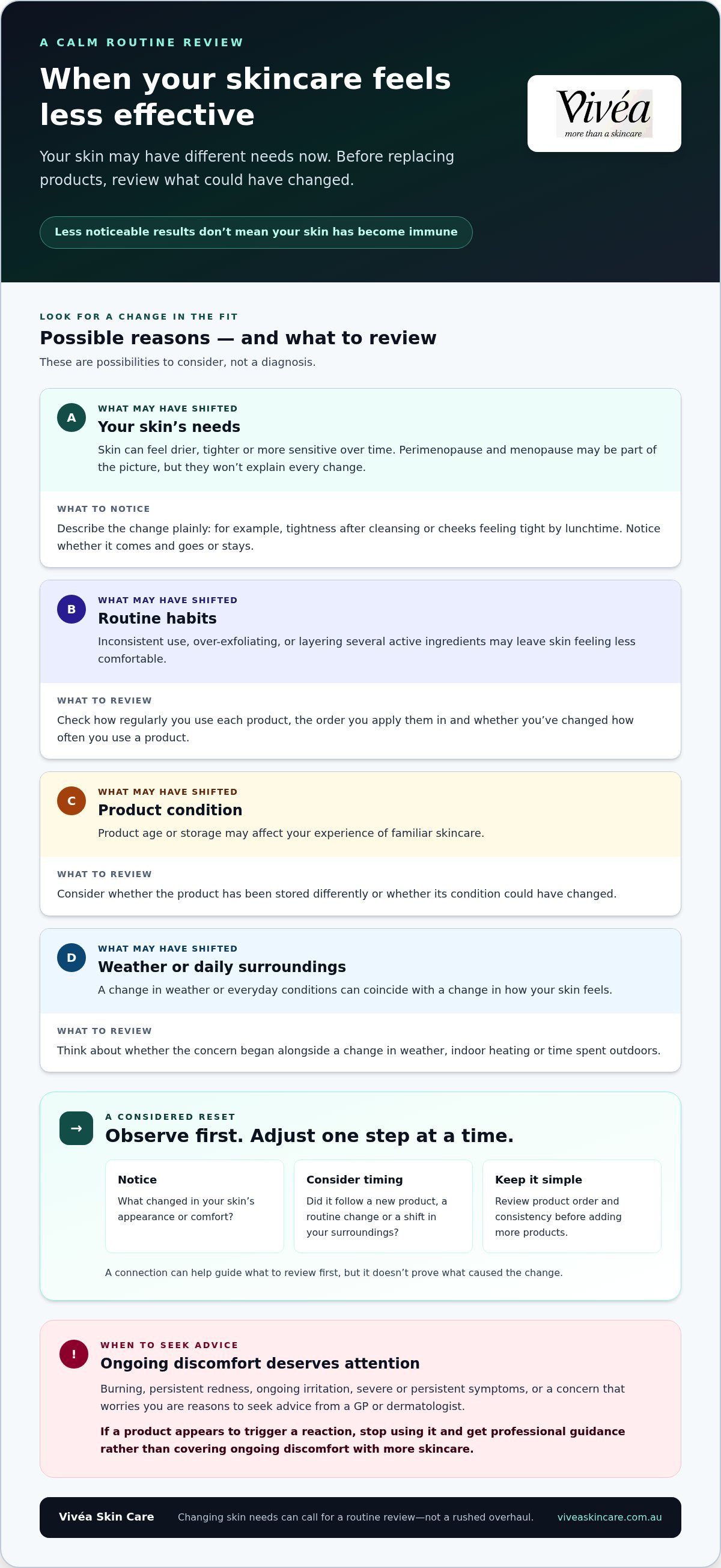
A calm review can help you work out what may have changed without putting your skin through a complete routine overhaul. If you’re still wondering “why is my skincare not working anymore?”, begin with what you’ve noticed, then look for a possible connection before adjusting a step. Where practical, change one variable at a time so you can observe how your skin responds.
A gentle step-by-step routine review
Use these steps as an observation guide, not a personalised treatment plan. Keep familiar steps that feel comfortable steady while you review the concern and any relevant changes.
- Name the concern. Write down what feels different, such as tightness after washing, dryness during the day or a product that now stings. Note when you first noticed it and whether it comes and goes.
- Look back at recent changes. Consider products you’ve added or stopped, changes in how often you use them, product storage and shifts in your daily environment. If several things changed together, record them rather than guessing at one cause.
- Simplify with care. Keep the routine focused on familiar, comfortable steps. If cleansing seems relevant, a gentle approach may be worth considering; Vivéa Skin Care’s guide to cleansing mature, sensitive skin explores that topic.
- Reassess one adjustment. If you decide to change something, choose one relevant step rather than replacing several products at once. Note what you changed and what you observe, so your next decision is based on your experience rather than guesswork.
There’s no need to force a product to work through discomfort. If a particular step appears to trigger irritation, pause it rather than adding more products to cover the reaction. Check its directions and storage guidance, and note when the discomfort occurs. If you’re unsure what to change, keeping a record can help you explain the pattern to a health professional.
When should you seek professional advice?
Speak with a GP or dermatologist if symptoms persist, become severe or feel worrying, particularly if irritation is worsening rather than settling. Skincare advice cannot diagnose the cause, and cosmetic products don’t replace medical care. Seek professional guidance instead of repeatedly trialling products when your skin is uncomfortable or a new concern isn’t improving.
A review is about gathering useful clues, not finding fault with yourself or your routine. If you’re considering skincare options for changing comfort and hydration needs, explore Vivéa Skin Care’s menopause-specific skincare.
Choosing menopause-specific skincare when your routine no longer feels right
Once you’ve reviewed your routine, you may decide that a product better suited to your current comfort and hydration needs is worth considering. Menopause-specific skincare can be one option, not a universal answer. Start with what you’ve noticed, such as skin that feels dry or less comfortable, rather than a promise to change everything.
What to look for in a menopause-specific skincare option
Focus on the cosmetic support you’re looking for and the feel you prefer. A lightweight moisturiser may appeal if you want a less rich texture; a cooling feel may be welcome if warmth or discomfort is part of your experience. These preferences can help narrow your options, but they don’t establish why your skin has changed.
Skincare can support cosmetic needs such as hydration and comfort. It doesn’t treat menopause, balance hormones or replace care from a health professional. If you’re asking why your skincare is no longer working, choosing a menopause-specific product may be one thoughtful adjustment to explore, rather than a fix for every possible cause.
Explore a considered night-time option
For someone reassessing night-time skincare, Vivéa® Cooling Night Gel-Cream is a lightweight, cooling, moisturising, barrier-supporting gel-cream. Vivéa Skin Care’s range features low-allergen scents and mood-balancing fragrances. These details may help you consider how a product fits your preferences, though individual experiences can differ.
Product information reports visible improvement in hydration, comfort and skin barrier within 2-4 weeks. This is not a guaranteed result, and it shouldn’t be taken as evidence that the product treats menopause or a skin condition. If your symptoms persist or concern you, seek professional advice rather than relying on a cosmetic product alone.
If you’re weighing up what you want from a night cream, Vivéa Skin Care’s cooling night cream guide for menopause offers further product-choice context. Take your time, keep your priorities clear, and consider one relevant change at a time.
Explore Vivéa Skin Care’s menopause-specific skincare if you’d like to consider an option for your night-time routine.
Let your next skincare step feel considered
You don’t need to solve every change in one evening. Let your next step come from what you want your skin to feel like now, then give yourself space to notice how that choice fits into your routine. If you’re still asking “why is my skincare not working anymore?”, remember that a change in results isn’t a personal failure or a reason to rush into a full reset.
For those considering menopause-specific skincare, Vivéa Skin Care was developed and created in New Zealand. The range is clinically tested and dermatologically approved for safety and efficacy, and features low-allergen scents and mood-balancing fragrances. These details can inform your choice, though no skincare option is right for everyone or a replacement for professional care when symptoms persist or concern you.
Choose at a pace that feels comfortable, with your current needs in mind. Explore Vivéa Skin Care’s menopause-specific skincare as you consider what may suit your routine. A gentle, thoughtful adjustment is a worthwhile place to begin.
Frequently Asked Questions
Why is my skincare suddenly not working?
There may be several reasons, and “why is my skincare not working anymore” doesn’t have one answer for everyone. Your skin’s needs, routine consistency, product condition and daily environment may all play a part. Think about what changed just before you noticed a difference, such as starting a new product or spending more time in heated rooms. A familiar product seeming less effective doesn’t automatically mean your skin has become immune to it.
Can your skin get used to skincare products?
It’s sometimes suggested that skin gets used to a product, but that shouldn’t be the default explanation for changing results. Your routine itself may have shifted, for example if you’re using a serum less regularly than before. Keep a brief note of which products you use and when, rather than introducing several new ones together. That record can help you spot patterns and choose a considered next step.
How long should I use skincare before deciding it is not working?
There isn’t one timeframe that suits every product or concern. Follow the product directions and consider whether you’ve used it consistently, but let comfort guide your decision too. If a moisturiser feels comfortable but its cosmetic effect is subtle, you might keep observing rather than changing several steps. If a product appears to cause a concerning reaction, don’t continue using it just to reach a particular timeframe. A GP or dermatologist can advise if you’re uncertain.
Should I stop using all my skincare if it is not working?
Usually, stopping every product at once makes it harder to identify what may be affecting your skin. If your familiar cleanser and moisturiser remain comfortable, you may prefer to keep those steps steady while reviewing other recent changes. If one product seems linked to irritation, pause that product rather than replacing the whole routine. Seek professional advice if discomfort is severe, persistent or worrying, and avoid layering several new products during the review.
Can menopause make my skincare routine feel less effective?
Perimenopause and menopause can be relevant if you notice changes such as increased dryness or sensitivity, but experiences vary and those signs don’t establish a cause. You might find that a texture you previously enjoyed no longer feels comfortable, for example. Consider your current preferences and routine separately from assumptions about hormones. Cosmetic skincare can support the skin’s appearance and comfort, but it doesn’t treat menopause. Discuss persistent or concerning changes with a health professional.
Can expired or poorly stored skincare stop working?
Product condition and storage may affect how skincare performs or feels. Check the packaging for product-specific directions, and take notice if its smell, appearance or texture changes unexpectedly. For instance, a formula that has separated may not feel as it did when first opened. Don’t apply a product that seems altered or causes discomfort. There isn’t one shelf-life rule for every formula, so use the information provided with that product.
When should I see a dermatologist about skincare that is not working?
Consider seeing a GP or dermatologist if a skin concern is persistent, severe, worsening or worrying, or if products appear to trigger ongoing irritation. Bring a note of when the change began and which products you’ve used; this can make it easier to describe what you’ve noticed. Cosmetic skincare can’t diagnose the cause or replace medical assessment. Seek urgent medical care for urgent symptoms rather than waiting for a routine skincare change to help.


