

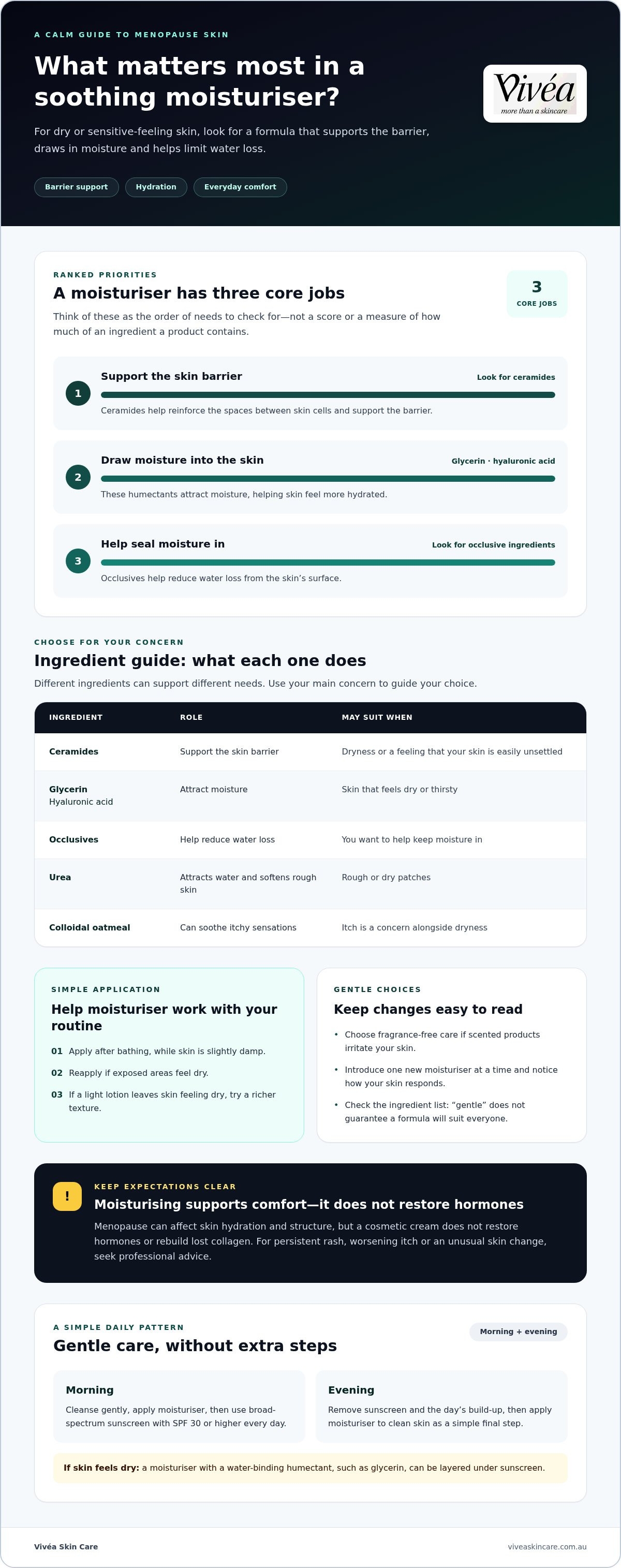
A soothing cream for menopause skin needs to support the barrier as well as add moisture. Look for ceramides to help limit water loss, humectants such as glycerin or hyaluronic acid to draw moisture into the skin, and an occlusive layer to help seal it in. Together, these ingredients can offer comfort when skin feels dry, tight or easily unsettled.
If your skin feels more sensitive or thirsty than before, the change can be frustrating. Menopause can affect the skin’s ability to retain moisture, so a gentle, consistent routine may be more manageable than a complicated one.
This guide explains how menopause can affect skin, which ingredients support hydration and the skin barrier, and how to build a soothing routine for dry or sensitive skin. You’ll also find practical tips for applying moisturiser and introducing products gently, so daily care feels calm and manageable.
Key Takeaways
- Look for moisturisers with barrier-supporting ingredients such as ceramides, alongside ingredients that help draw in and retain moisture.
- Menopause can leave skin feeling drier or more sensitive, so a gentle, consistent routine can help support everyday comfort.
- Use a mild cleanser, apply moisturiser after bathing, and keep sun protection in your daily routine.
- Learn how urea, hyaluronic acid and glycerin each support hydration, and which may suit your skin’s needs.
- Introduce new skincare gently, and choose soothing creams that fit the way your skin feels rather than adding unnecessary steps.
1. Which ingredients help repair a “leaky” skin barrier?
For dry, easily irritated skin, choose a moisturiser that supports hydration and the skin barrier. Ceramides help reinforce the spaces between skin cells, while glycerin and hyaluronic acid attract moisture. Occlusive ingredients can help reduce water loss from the skin’s surface. The Australasian College of Dermatologists explains that moisturisers support the skin barrier and help reduce dryness.
Menopause can leave skin feeling drier or more sensitive. The Australasian Menopause Society explains that changing oestrogen levels can affect skin, including its collagen and moisture. A cosmetic cream does not restore hormones or rebuild lost collagen. Instead, apply moisturiser after bathing, while skin is slightly damp, and reapply if exposed areas feel dry.
How do ceramide, colloidal oatmeal and urea creams compare? Ceramides support the skin barrier, colloidal oatmeal can soothe itchy sensations, and urea attracts water and softens rough skin. Choose based on your main concern, whether dryness, itch or rough patches, and follow the product directions.
Which fragrance-free soothing creams are available in Australia? Fragrance-free moisturisers for dry or sensitive skin, including formulas with ceramides, glycerin or colloidal oatmeal, are available through Australian pharmacies and skincare retailers. The Australasian College of Dermatologists advises people with sensitive skin to choose fragrance-free products to reduce potential irritation. Check the ingredients, as a “gentle” label does not guarantee a formula will suit everyone.
Read the full ingredient list, especially if scented products have caused discomfort before. Introduce one new moisturiser at a time so you can notice how your skin responds. Even a fragrance-free formula can contain ingredients that irritate you, so take care when applying it to sensitive areas.
At night, moisturiser can be a simple final step after cleansing. Apply it evenly to clean skin, choosing a richer texture if a light lotion leaves your skin feeling dry. Avoid layering several new products at once; a short routine makes it easier to identify what feels comfortable.
Can topical oestrogen or hormone therapy improve skin symptoms? Hormone therapy affects the body’s oestrogen levels, but it is not a cosmetic moisturiser or a treatment to start independently for skin concerns. The Australasian Menopause Society advises discussing its suitability and risks with a health professional, based on symptoms and personal health history.
2. Menopause-related skin changes
Dryness, itch and sensitivity can become more noticeable during the menopause transition. The Australasian Menopause Society explains that changing oestrogen levels can affect skin, including its hydration and structure. This may leave skin feeling tight or uncomfortable, though experiences differ. If your usual body lotion no longer feels sufficient, note which areas feel dry and whether symptoms change after bathing or using a particular product.
Dry skin can feel rough, flaky or tight, especially on the arms and legs. Itch may accompany dryness, and scratching can add irritation. The Australasian College of Dermatologists recommends gentle skin care for dry skin. Try holding a cool, damp cloth against an itchy patch instead of scratching, and pat the area dry after washing rather than rubbing it with a towel.
Skin may also react differently to products or fabrics that once felt comfortable. The Australasian College of Dermatologists advises people with sensitive skin to choose fragrance-free products to help reduce exposure to a common source of irritation. If a scented body wash or lotion seems to precede a rash, pause using it and note where and when the reaction appears.
Dryness doesn’t rule out breakouts. Hormonal changes can coincide with blemishes while other areas feel dry or sensitive. Avoid treating all your skin as though it has the same needs: for example, don’t apply a drying blemish product to dry arms or legs. Cleanse gently and avoid repeatedly washing or scrubbing a blemish, which can further irritate the surrounding skin.
Look for patterns rather than changing several products at once. Note whether itching follows a shower, a new laundry product or a change in clothing. For example, irritation beneath a waistband may relate to friction, while widespread tightness after bathing suggests a different trigger. These observations can help you clearly describe the timing and location of symptoms during a health appointment.
For everyday comfort, wear soft clothing over itchy areas and avoid hot showers if they leave your skin feeling tight. Apply a moisturiser that feels comfortable, and choose fragrance-free care if scented products irritate you. Menopause can coincide with other skin concerns, so seek professional advice for a persistent rash, worsening itch or an unusual change rather than repeatedly trying new products.
3. Skincare routines before, during and after menopause
A simple routine can adapt as skin changes through perimenopause, menopause and post-menopause. Before changes arise, focus on gentle cleansing, moisturising and daily sun protection. During a hormonal transition, adjust the texture or frequency of moisturiser if skin feels drier. After menopause, keep the steps that feel comfortable rather than adding products simply to address age-related changes.
In the morning: cleanse gently, apply moisturiser, then use broad-spectrum sunscreen with SPF 30 or higher every day. If your skin feels dry, choose a moisturiser with a water-binding humectant, such as glycerin, and layer it under sunscreen. Sun protection helps limit ongoing exposure that contributes to changes in skin texture and elasticity.
In the evening: Remove sunscreen and the day’s build-up with a mild cleanser rather than soap. Apply moisturiser while your skin feels comfortable, choosing a richer cream if a light lotion leaves it feeling tight. Moisturiser can support normal barrier function and improve the appearance of dry or fragile skin, but it won’t restore hormones or replace medical care.
Humectants and occlusives have different roles. Glycerin and hyaluronic acid attract water to the outer skin, while an occlusive layer helps slow water loss. Combining them can support a routine for dry skin. For example, apply a water-binding moisturiser, then use a cream with a more protective feel if dryness persists.
Keep changes measured. Introduce retinoids or acids at a low frequency, starting with use 2–3 times per week, and reduce use if irritation develops. Exfoliate fragile menopausal skin once or twice a week in the evening, not daily. Avoid gritty physical scrubs, which can aggravate delicate skin, and don’t introduce multiple active ingredients together.
Bathing habits also shape your routine. Choose lukewarm rather than hot showers, which can strip the skin’s natural oils, and avoid alcohol-based toners that may worsen dryness or itching. If fragrance tends to irritate your skin, choose fragrance-free products and introduce new items one at a time. Keeping a simple record of products and reactions can help identify patterns.
Skin needs differ across the face and body, so tailor application to each area. Use a lighter lotion where richer textures feel uncomfortable, and a more protective cream on persistently dry patches. Keep sunscreen as a daily morning step, even if your evening routine includes moisturiser or other topical skincare.
4. Urea and hyaluronic acid for hydration
Urea, hyaluronic acid and glycerin support hydration in different ways, making them useful ingredients to recognise in moisturisers for dry menopausal skin. Urea attracts water and can soften rough, flaky areas. Hyaluronic acid binds water at the skin’s surface, while glycerin draws moisture into the outer layer. These ingredients support comfort but don’t change the hormonal factors behind menopause-related dryness.
Consider the texture and condition of the area you’re moisturising. A cream with urea may suit rough patches on elbows, shins or hands, while a hyaluronic acid formula can feel lighter on the face. Urea also softens dead surface skin, so it may suit roughness as well as dryness. If skin is cracked or stinging, choose a plain, gentle moisturiser instead.
Glycerin is a practical ingredient for everyday care because it attracts moisture into the epidermis, the skin’s outer layer. A moisturiser containing glycerin or hyaluronic acid can help when skin feels tight after washing. Apply it to slightly damp skin, then follow with a cream that helps reduce water loss. This combination supports the barrier without requiring a long routine.
For itchy dryness, focus on consistent application rather than layering several active ingredients. After a shower, pat your skin gently with a towel and smooth on moisturiser while it still feels slightly damp. Reapply to dry areas as needed. A soothing cream with humectants may ease the discomfort of dryness by improving hydration, though it won’t treat the underlying cause of persistent itch.
Hydration can also soften the appearance of fine lines and wrinkles caused by surface dryness. This visible change is different from rebuilding collagen or reversing hormonal changes. Vitamins and moisturising ingredients each have their own role, and neither should be confused with hormone therapy. Keep the goal clear: support skin moisture and the barrier with care that feels comfortable.
Read the ingredient list and introduce one new moisturiser at a time. If urea feels uncomfortable, stop using that product and choose a simpler formula with glycerin or hyaluronic acid. Skin can respond differently across the face, hands and body, so a texture that feels right on dry legs may be too rich elsewhere. Choose a product you can apply comfortably and consistently.
5. Menopause skincare products and creams
Choose care products for the concern you want to address, such as dryness, sensitivity, flushing or chapped lips. A plain moisturiser can support comfort when skin feels dry, while a cooling product may feel pleasant during a flush. Neither changes hormone levels. Match the product’s texture and intended use to the area, and keep the rest of your routine simple.
For sensitive skin during menopause, start with gentle, fragrance-free care. Synthetic fragrance can trigger contact dermatitis in reactive skin, and alcohol-containing products may worsen dryness or itching. Read the ingredient list, especially when a product is labelled “soothing” or “natural”. Those words don’t guarantee every ingredient will suit your skin.
Introduce active ingredients carefully. High-strength retinols can cause peeling or irritation, particularly when skin feels fragile. If you use an active product, introduce it separately from new moisturisers and pause if discomfort develops. Colloidal oatmeal is used in moisturisers to soothe itchy or prickly sensations.
Flushing and sensitivity may call for different steps. A cool, damp cloth can offer immediate surface comfort during a hot flush, while a mild cleanser and moisturiser support everyday dryness. For chapped lips, apply a simple lip balm regularly, including before bed, and avoid licking your lips, which can worsen dryness. Keep facial and lip products separate unless their labels indicate they’re suitable for both.
Before applying a new cream across your face, patch-test it for 24–48 hours on a small area. Stop if the test area becomes uncomfortable or irritated. Introduce one new product at a time, so you can identify a possible trigger more easily. This is especially helpful when your usual skincare suddenly feels different.
Menopause skincare product testing can involve different methods and timeframes. One trial recruited 500 perimenopausal, menopausal and postmenopausal women, with products tested for a minimum of four weeks. Those details describe that trial, not every cream on the shelf. Ingredient research also doesn’t prove that a finished product will have the same effect.
Are there Australian guidelines or product-label rules for creams claiming to treat menopause symptoms? Read the stated purpose, ingredients and directions carefully. Words such as “hydrating” or “soothing” describe skincare aims; they don’t establish that a cream treats menopause symptoms or changes hormones.
What are the prices and sizes of popular soothing creams in Australia? Prices and pack sizes vary by brand, formula and retailer. Compare the amount in the pack, intended use and ingredients to decide which option fits your needs.
What ingredients can irritate sensitive menopausal skin? Synthetic fragrance and alcohol-containing products may aggravate reactive or dry skin, while high-strength retinol can cause peeling. A patch test can help you assess a new product before wider use.
Look for gentle, fragrance-free moisturisers containing colloidal oatmeal, which is used to soothe itchy or prickly sensations. Check the ingredient list and patch-test a new cream before applying it more widely.
Vivéa Skin Care: Vivéa Cooling Night Gel Cream for Menopause
Vivéa Cooling Night Gel Cream for Menopause offers a cooling, hydrating option for an evening routine when dry skin needs gentle comfort. Apply it as a practical final step after cleansing to care for skin that feels tight or dry before bed. It’s cosmetic skincare, not a treatment for menopause or a substitute for medical care.
For a simple routine, cleanse gently and apply moisturiser to clean skin. If you prefer a lighter texture, choose a product that feels comfortable and easy to use consistently. Vivéa Skin Care also offers Vivéa Gentle Creamy Cleanser for Sensitive Mature Skin.
Explore the product details at viveaskincare.com.au if Vivéa Cooling Night Gel Cream for Menopause feels suited to your routine.
Make your next skincare step a considered one
Let comfort guide what you keep in your routine. A soothing cream for menopause skin can be part of everyday care, but your skin’s response matters more than adding extra steps. Notice whether a product feels comfortable throughout the day, and make changes gradually so you can tell what suits you.
For a gentle routine, explore Vivéa Gentle Creamy Cleanser for Sensitive Mature Skin, Vivéa Hydrating Cooling Mist Spray and Vivéa Cooling Night Gel Cream for Menopause. Choose the step that best fits your routine rather than feeling you need to use everything at once. If skin remains persistently uncomfortable or changes unexpectedly, seek advice from a health professional.
Explore the product details or contact Vivéa Skin Care to take a calm, informed next step. Your skincare routine can evolve with you, one comfortable choice at a time.
Frequently Asked Questions
Which ingredients help repair a “leaky” skin barrier?
Barrier-supporting ingredients can help, but the finished formula and your skin’s response matter too. For example, if your hands feel uncomfortable while your legs feel fine, choose a product intended for the affected area rather than applying one formula everywhere. Compare labels with ingredients you know your skin tolerates, and keep your choice simple enough to use consistently.
Are These Products Suitable for Sensitive Skin?
Sensitive skin can respond differently to the same product, so consider its intended use and how your skin feels. A face cream and a body cream aren’t automatically interchangeable. If your skin feels unsettled, avoid introducing several new products together. A short, consistent routine makes it easier to notice whether a particular texture or formula feels comfortable.
Can These Products Help with Itchy Skin?
A cooling moisturiser may feel pleasant on dry, itchy skin, but it can’t identify every cause of itching. Consider whether the sensation follows a flush, clothing friction or a change in your routine. If a product’s cooling feel becomes uncomfortable, rinse it off and stop using it. Skincare can support comfort, while persistent or unusual symptoms may need a different kind of attention.
How do I offset the effects of Menopause on my skin?
Build supportive habits beyond topical skincare. The article’s research guidance recommends aiming for 7–9 hours of quality sleep per night to support skin repair. Keep bedtime and wake-up routines as regular as practical, and notice whether disrupted sleep coincides with changes in how your skin feels. These habits complement skincare; they don’t replace treatment or advice for menopause symptoms.
What ingredients should a soothing moisturiser for menopausal skin contain?
There’s no single ingredient everyone needs. Start by deciding what you want the product to do, such as comfort dry patches or soften rough skin. Then choose a leave-on moisturiser labelled for that area, and compare its full ingredient list with formulas you’ve tolerated before. A pleasant texture can also make regular use easier.
How often should you apply moisturiser to soothe menopausal skin?
Follow the product directions, then assess whether its texture and amount leave your skin comfortable between applications. If you repeatedly layer a light lotion, a richer cream may be more practical for that area. Don’t exceed label directions or apply more simply because itching persists. Changing the product texture may be more useful than adding extra applications.
Which fragrance-free soothing creams are available in Australia for menopause-related dry skin?
Fragrance-free moisturisers for dry or sensitive skin, including formulas with ceramides, glycerin or colloidal oatmeal, are available at Australian pharmacies and skincare retailers. Check the ingredient list, as even fragrance-free products may not suit everyone.


