

Can a cream cleanser leave your skin clean without that tight, uncomfortable feeling? If cleansing often leaves your face dry or unsettled, it makes sense to wonder whether a softer formula will feel better. Choosing a gentle cream cleanser mature skin can tolerate is less about age alone and more about your skin’s needs, the product’s directions and how your skin responds.
Skin can feel drier or more sensitive over time, including during perimenopause and menopause, so a cleanser that once felt fine may no longer be as comfortable. A creamy texture may appeal if your skin feels tight after washing, but texture alone doesn’t guarantee a particular result. “Gentle” on the label is a starting point, not a promise of suitability.
This guide explains how cleansing relates to skin comfort and the skin barrier, what to check when assessing a cream cleanser, and how to notice whether it suits your routine. You’ll also find practical steps for introducing a new cleanser without changing everything at once. The aim is to help you choose with confidence, without adding unnecessary steps or relying on broad claims.
Key Takeaways
- A gentle cream cleanser may suit skin that feels dry or tight after washing, but age alone doesn’t determine which cleanser will feel comfortable.
- Cleansing is part of everyday care. Your product, washing habits and skin’s current needs can all affect how your skin feels afterwards.
- Look beyond labels such as “gentle” or “cream”: read the directions and ingredient list, and check any product-specific claims.
- Try a new cleanser according to its label, introduce it without changing several other products at once, and notice how your skin feels.
- Vivéa® Gentle Creamy Cleanser is one option to consider. Review its product information and decide whether it aligns with your preferences and routine.
Why mature skin may appreciate a gentler cream cleanser
A gentle cream cleanser may suit skin that feels dry or tight after washing, but age alone doesn’t determine your skin type or which cleanser you’ll prefer. Skin comfort can change over time, and people respond differently to products. If your current cleanser leaves your face uncomfortable, trying a different formula or texture may help you find one that feels better. It’s more useful to assess your own needs than to assume every mature complexion needs the same product.
What changes can affect how skin feels after cleansing?
Dryness, tightness and sensitivity are experiences some people notice, not universal features of mature skin. Changes around perimenopause and menopause may coincide with differences in how skin feels. The NHS includes dry or itchy skin among possible menopause symptoms, though experiences vary. These changes may be part of life for some people; they are not a sign that ageing needs to be corrected.
What does a cream cleanser do?
A cream cleanser is a facial cleansing product with a creamy texture. Like other cleansers, it is used to remove everyday residue from the skin. Check the product directions to see how to apply and remove it, as instructions can differ between products. A cleanser is removed according to its label, unlike a leave-on moisturiser or treatment product.
The word “cream” describes texture, not a guaranteed result. It doesn’t tell you which ingredients a particular cleanser contains, how it will feel on your skin or how effectively it will remove the residue you want to wash away. Similarly, a “gentle” label alone can’t establish that a product will suit everyone. A general overview of cleansers explains their role in skincare, but the product’s own ingredient list and directions are more useful when assessing a specific formula.
Start by using a cleanser as directed and noticing how your skin feels afterwards. If discomfort persists or you experience a reaction that concerns you, stop using the product and seek advice from a health professional. You don’t need to choose a cleanser based on age alone; let your skin’s needs and the product information guide your decision.
How cleansing and the skin barrier relate to comfort
Cleansing helps remove sweat, excess oil, sunscreen and other residue from the skin’s surface. That doesn’t mean every cleanser damages the skin barrier. How your skin feels can depend on the product, how you use it and what your skin needs at the time.
What the skin barrier does during everyday cleansing
The stratum corneum is the outermost layer of skin. It forms a barrier that helps limit water loss and protect the surface from external irritants. The National Institute on Aging explains that skin can become drier and more fragile with age, and recommends gentle cleansing as part of skin care. You can read its guidance on Skin Care and Aging.
The product is only one part of the cleansing experience. Vigorous rubbing, very hot water or washing more often than your skin needs may leave some people feeling less comfortable. Tightness or dryness after washing is useful personal feedback. It may be a reason to review your product or routine, but it doesn’t diagnose a damaged barrier or a skin condition.
Why comfort matters more than age-based rules
There isn’t one cleanser that suits everyone over a particular age. Skin may feel dry, sensitive or oily, and those qualities can vary between people and over time. Perimenopause and menopause may coincide with changes in skin comfort, but experiences differ. Rather than treating age as a skin type, pay attention to how your skin responds to a product used as directed.
If you’re considering a gentle cream cleanser mature skin might find comfortable, assess the product itself rather than relying on its texture or age-related wording alone. Read the directions and ingredient list, and notice how your skin feels after cleansing. A creamy formula isn’t automatically suitable for everyone, and a cleanser is cosmetic care, not a treatment for a medical skin concern.
One option to assess is Vivéa Skin Care’s gentle creamy cleanser. Review its product information alongside your own preferences before deciding whether to try it.
How to assess a gentle cream cleanser beyond its label
Use the label as a starting point, not a promise. Words such as “gentle” and “cream” don’t guarantee how a cleanser will feel, what it contains or how well it will remove the residue you want to cleanse away. When choosing a gentle cream cleanser mature skin may respond well to, check product-specific information and consider your own sensitivities and priorities.
Which cleanser details are worth checking?
Read the full ingredient list and the manufacturer’s directions. If fragrance is relevant to your personal sensitivities, look for clear information about it rather than assuming a creamy cleanser is fragrance-free. A suitability statement can provide useful context, but it can’t promise a product will suit everyone. Research about an individual ingredient also doesn’t establish how a finished cleanser will feel or perform.
| Label detail | Question to ask | What it doesn’t confirm |
|---|---|---|
| Directions | How should I use and remove it? | Whether it will feel comfortable for me. |
| Ingredient list | Can I identify anything I prefer to avoid? | How my skin will respond to the full formula. |
| Fragrance information | Is this clear enough for my needs? | That the product is fragrance-free unless stated. |
| Suitability or benefit claims | Does the claim address my concern? | A guaranteed result or individual suitability. |
How to compare cleanser claims with your own needs
Begin with the reason you’re considering a change. If your concern is tightness after washing, look for clear product information relevant to gentle cleansing, then assess your comfort when using the cleanser as directed. If your main goal is removing everyday residue, check how the label says to apply and remove the product. The American Academy of Dermatology’s face-washing guidance recommends a gentle, non-abrasive cleanser and lukewarm water.
Treat broad claims as prompts to look for details, not proof that a formula will meet your needs. If irritation continues, becomes uncomfortable or you have a skin concern you’re unsure about, pause use and seek advice from a health professional. A product label can help you make an informed choice, but it can’t diagnose or resolve a medical concern.
How to try a cream cleanser and assess your skin’s response
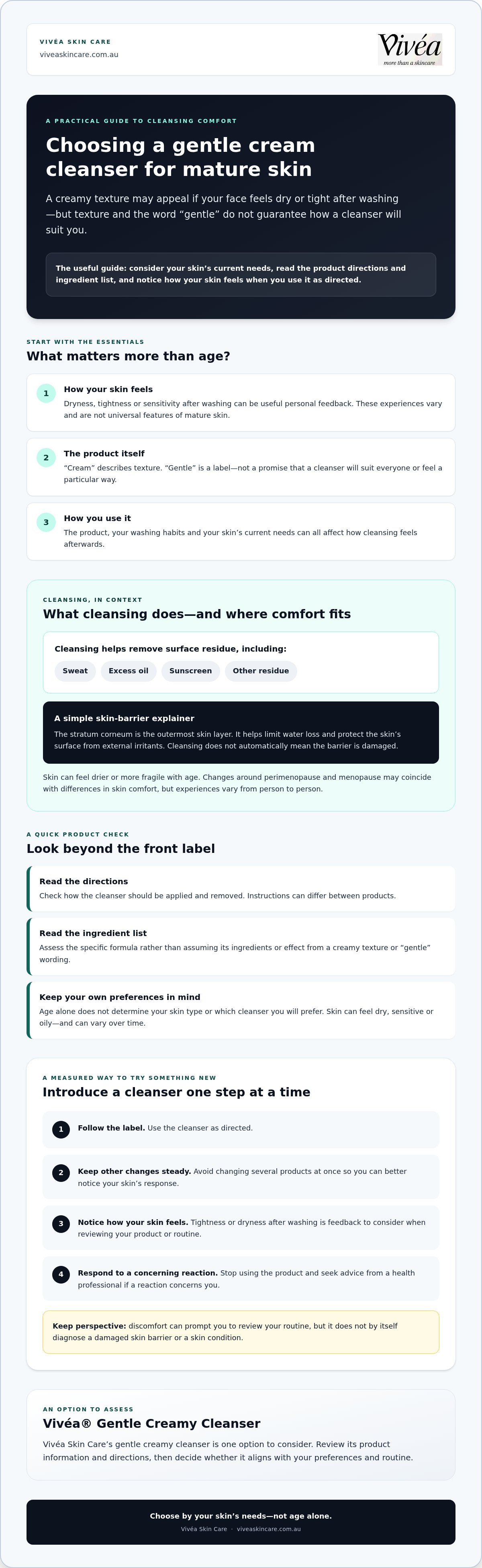
You don’t need to overhaul your routine to find out whether a cleanser feels comfortable. Introduce it thoughtfully, use it according to its directions and pay attention to how your skin feels. Choosing a gentle cream cleanser mature skin may tolerate is a personal process; another person’s experience can’t predict yours.
A simple way to introduce a new cleanser
Use this straightforward approach, while remembering that products can have different directions and aren’t necessarily intended for the same time of day:
- Check the label. Read the manufacturer’s instructions for applying and removing the cleanser. Follow them rather than relying on a generic routine.
- Keep other changes steady. Where practical, introduce one new routine product at a time. This makes it easier to notice which change may be linked to a difference in how your skin feels.
- Cleanse gently. Use the product as directed without vigorous rubbing or adding steps that aren’t on the label.
- Notice your skin afterwards. Pay attention to comfort, tightness, dryness or irritation. Jotting down what you observe can help if your skin’s response varies from day to day.
There’s no universal timeframe in which a cleanser should feel right. Follow its directions and consider your experience over time. If it continues to feel uncomfortable, reassess whether it suits your routine.
What your skin’s response can and cannot tell you
A comfortable cleansing experience tells you that the product and routine feel acceptable to you at that time. It can’t prove that a cleanser treats a skin condition or that your skin barrier has a particular issue. Likewise, a brief change in how your skin feels isn’t enough to identify a cause or make a diagnosis.
Skin responses are individual. A formula that feels fine for someone else may not suit you, and a reaction doesn’t automatically mean every cream cleanser will feel the same. If you notice significant or persistent irritation, stop using the product and seek suitable advice from a health professional. Ongoing or concerning symptoms deserve proper assessment rather than trialling more products in search of an answer.
If you’d like to review product information before deciding whether to try it, explore Vivéa Skin Care’s gentle cleanser.
Where Vivéa® Gentle Creamy Cleanser may fit in a mature-skin routine
Vivéa® Gentle Creamy Cleanser is an option to consider if you’re looking at cream cleansers for a mature-skin routine. Vivéa® is a New Zealand-developed skincare brand with products designed for women experiencing perimenopause and menopause. Its range is made with natural ingredients and features low-allergen scent and mood-balancing fragrances. Those range-wide details don’t tell you exactly how this cleanser is formulated or how your skin will respond, so check the cleanser’s own product information before deciding.
What to verify before describing this cleanser
Check the current official product page and packaging for the cleanser’s full ingredient list, directions, specific benefits and availability. These details help answer practical questions, such as how the manufacturer says to use it and whether any listed ingredients raise personal concerns. If you know you have sensitivities, compare the information with what you already know about your skin.
Don’t assume a claim applies to this cleanser just because it appears in information about the wider range. For example, claims such as “Clinically Tested” or “Dermatologically Approved” should be relied on for this product only if they’re explicitly confirmed for it. The same care applies to fragrance information and suitability: don’t infer either from the words “gentle” or “creamy”.
Vivéa® focuses on skincare for women experiencing perimenopause and menopause. That focus may make the range relevant to your interests, but it doesn’t predict how your skin will respond to an individual product. Keep verified cleanser details separate from general information about skincare and life-stage changes.
A considered next step for readers
If you’re looking for a gentle cream cleanser mature skin may find comfortable, compare the current product information with your own priorities. You might check the directions, review the ingredients for anything you prefer to avoid, and see whether the stated product details match your cleansing preferences. If you choose to try it, follow the label and pay attention to your own response.
There’s no need to decide based on age alone or on a product name. Review the available cleanser information from Vivéa Skin Care and decide whether it seems like a considered option for your routine.
Choose a cleansing routine that feels right for you
A gentle cream cleanser mature skin may find comfortable is a personal choice, not an age-based rule. Look beyond words like “gentle” or “cream”: check the ingredient information and directions, then notice how your skin feels when you use the product as directed. Dryness or tightness can be useful feedback, but it doesn’t diagnose a skin condition or identify what caused the sensation.
Vivéa® Gentle Creamy Cleanser is one option to explore. Review its current official product information, including its ingredients and directions, before deciding whether it suits your preferences. Check any cleanser-specific benefits or testing claims on the product information rather than assuming they apply from broader statements about the range.
Thoughtful cleansing doesn’t need to mean a complicated routine. Paying attention to your skin’s comfort and the details on the label can help you make a calmer, more informed choice. Explore Vivéa® Gentle Creamy Cleanser and review its product details for your routine.
Frequently Asked Questions
Is a gentle cream cleanser good for mature skin?
A gentle cream cleanser may suit skin that feels dry or tight after washing, but age alone doesn’t determine the right cleanser. Skin type, sensitivities and preferences differ, and can change over time. Look beyond the words “gentle” and “cream”: check the product’s directions and ingredient information, then pay attention to how your skin feels when you use it as directed.
Can a cream cleanser clean skin without leaving it feeling tight?
It can, but a creamy texture can’t guarantee how your skin will feel. The formula, directions and your personal response all matter. Use the cleanser as directed and notice whether your skin feels comfortable afterwards, rather than assuming a cream cleanser will prevent tightness. If discomfort continues, consider stopping use and seeking advice from a health professional.
How do I know if my cleanser is too harsh for my skin?
Repeated tightness, dryness, stinging or irritation after cleansing may be a reason to reassess your product or washing habits. These sensations are useful personal feedback, but they don’t diagnose a damaged skin barrier or a specific condition. Follow the cleanser’s label and avoid vigorous rubbing. If irritation is significant, persistent or concerning, stop using the product and seek appropriate health advice.
Should mature skin be cleansed in the morning and at night?
There isn’t one schedule that suits everyone, and mature skin doesn’t automatically need cleansing twice a day. Consider your skin’s current needs and follow the cleanser’s official directions rather than applying a general rule. If your skin feels uncomfortable with your routine, review how often and how gently you cleanse. A health professional can advise you if ongoing skin concerns need assessment.
What should I check on a cream cleanser ingredient list?
Read the full ingredient list and the manufacturer’s directions, and look for ingredients you already know you prefer to avoid. If fragrance is a personal concern, check whether the product clearly states its fragrance information rather than assuming it’s fragrance-free. Research about an individual ingredient doesn’t prove how a finished cleanser will feel or perform, so consider the complete formula and your own response.
Can skin become more sensitive during perimenopause or menopause?
Some people notice changes in skin comfort during perimenopause or menopause, while others may not. Dryness or sensitivity can have different causes, so a change in how your skin feels doesn’t by itself identify a hormonal cause or a skin condition. If symptoms persist, worsen or concern you, seek advice from a health professional. Cosmetic skincare can support a routine but doesn’t treat menopause or diagnose skin concerns.
Is Vivéa® Gentle Creamy Cleanser suitable for sensitive skin?
The product name indicates that it is intended for sensitive mature skin, but that can’t guarantee it will suit every individual. Check the current official product page for its ingredients, directions and any cleanser-specific suitability or testing claims. Don’t assume it is fragrance-free or suitable for everyone. If you have known sensitivities, compare the product information with your preferences and seek professional advice if you’re unsure.


