

A richer cream isn’t automatically the most comfortable choice for sensitive menopause skin. If your face feels dry, tight or easily unsettled, choosing a sensitive skin moisturiser for menopause means balancing hydration with a texture you enjoy wearing.
It’s understandable to feel cautious, especially if fragrance or other ingredients have caused discomfort before. A lightweight gel-cream may feel fresh and easy to layer, while a richer cream may suit skin that prefers a more cushioned finish. The right fit is personal, so compare how a product feels rather than relying on the biggest promise on the label.
This guide explains how to compare moisturiser textures, read product details and build a simple, gentle routine. You’ll find practical points to consider around fragrance and ingredients, plus a measured way to introduce a new product. We’ll also look at a menopause-specific option from Vivéa Skin Care as you decide what feels manageable for your skin.
Key Takeaways
- Choose a moisturiser that feels comfortable and supports hydration, rather than relying on bold promises.
- Read the full ingredient list and consider your fragrance preferences. “Natural” doesn’t automatically mean a product will suit your skin.
- Compare gel-creams and richer creams by their texture, finish and cooling feel. Neither is best for everyone.
- Introduce one product at a time and notice how your skin feels.
- Use a simple checklist to compare texture, ingredient information and realistic cosmetic claims.
Why Sensitive Skin Can Need a Different Moisturiser During Menopause
Choose a moisturiser that feels comfortable and supports hydration. If your skin feels dry, tight or easily unsettled, a sensitive skin moisturiser for menopause should suit your everyday routine, not just sound appealing on the label. There isn’t one texture or formula that suits everyone, so consider how your skin responds and whether you enjoy using the product consistently.
What sensitive menopause skin may feel like
Some people notice dryness, tightness, stinging or redness; others experience occasional flushing or sensitivity to products they previously used without concern. These are experiences, not diagnoses, and they don’t happen to everyone. Skin can feel different from one week to the next, or vary across the face, with dry cheeks and other areas feeling comfortable.
These changes don’t point to one certain cause. A product, the weather or other personal factors may affect how skin feels, and individual triggers vary. Make a simple note of when discomfort appears and which products you’ve used. This can help you spot patterns without changing several things at once. For broader background, see this overview of menopause and skin changes.
What a moisturiser can and cannot do
A facial moisturiser is a cosmetic product intended to support everyday hydration and comfort. A texture that feels pleasant and leaves your skin feeling less dry may make a routine easier to maintain. However, moisturisers don’t feel equally comfortable for everyone. A cooling sensation or rich finish is a matter of preference, not proof that a product is right for your skin.
Cosmetic skincare can’t balance hormones or treat a medical condition. Read packaging claims in that context: “hydrating” describes a cosmetic purpose, not a promise to resolve persistent irritation or a diagnosed skin concern. A “natural” label alone also can’t tell you whether a formula will suit you. Your preferences and sensitivities still matter.
As you compare options, consider how each feels during application and afterwards. Does it feel comfortable, or leave your skin tight, sticky or unsettled? A suitable product is one you can apply without dreading the sensation. While you assess a new moisturiser, keep the rest of your routine familiar.
Persistent, painful or worsening symptoms call for professional advice rather than repeated product experimentation. A health professional can help assess what may be happening and whether you need care beyond cosmetic skincare. You don’t need to identify the cause yourself before seeking support.
How to Assess Moisturiser Ingredients and Sensitivity Claims
When choosing a sensitive skin moisturiser for menopause, look beyond the front label. Words such as “gentle”, “natural” or “for sensitive skin” describe how a product is positioned, but they don’t tell you everything about its formula or whether it will feel comfortable on your skin. The full ingredient list and your own known sensitivities are more useful starting points.
How to read ingredient and fragrance information
Read the complete ingredient list, not just the highlighted ingredients on the packaging. If you know an ingredient has caused discomfort before, look for it in the list and consider whether you want to avoid it. Keep the packaging or take a photo so you can compare products more easily.
“Natural” describes an ingredient’s origin, not how your skin will respond. Botanical ingredients can still be unsuitable for some people, just as a synthetic ingredient isn’t automatically a problem. Your own experience and preferences matter more than a broad label.
Fragrance is personal, too. Some people prefer a routine with little or no noticeable scent; others enjoy a gentle fragrance. Neither preference is wrong. If fragrance has bothered your skin before, look for clear scent information and consider whether you feel comfortable using a scented formula. “Low-allergen scent” doesn’t guarantee that nobody will react, and it doesn’t mean a product is fragrance-free or hypoallergenic.
How to interpret testing and ingredient claims
Vivéa Skin Care’s menopause-specific range is clinically tested and dermatologically approved for safety and efficacy. These range-level statements aren’t a promise that every person will find every formula comfortable. Read the product information and consider your own sensitivities.
Research about an individual ingredient is not the same as evidence about a finished moisturiser. A study may examine an ingredient on its own, while a product contains a complete formula. Ingredient information can be useful context, but it doesn’t prove that the finished product will deliver the same result.
A cosmetic claim describes a product’s intended skincare role; it isn’t proof that the product medically treats a condition. Claims about hydration or skin feel should be understood as cosmetic, not as evidence that a moisturiser treats a skin disorder or changes menopause-related processes.
Vivéa Skin Care’s menopause-specific range features low-allergen scent and mood-balancing fragrances. These descriptors explain the brand’s approach to scent, while your own preferences and sensitivities remain important. If a product causes a persistent reaction, or discomfort continues, seek advice from a qualified healthcare professional instead of repeatedly trying new products. Explore Vivéa Skin Care’s menopause-specific skincare to review the range.
Gel-Cream or Richer Cream: Compare What Sensitive Skin Needs
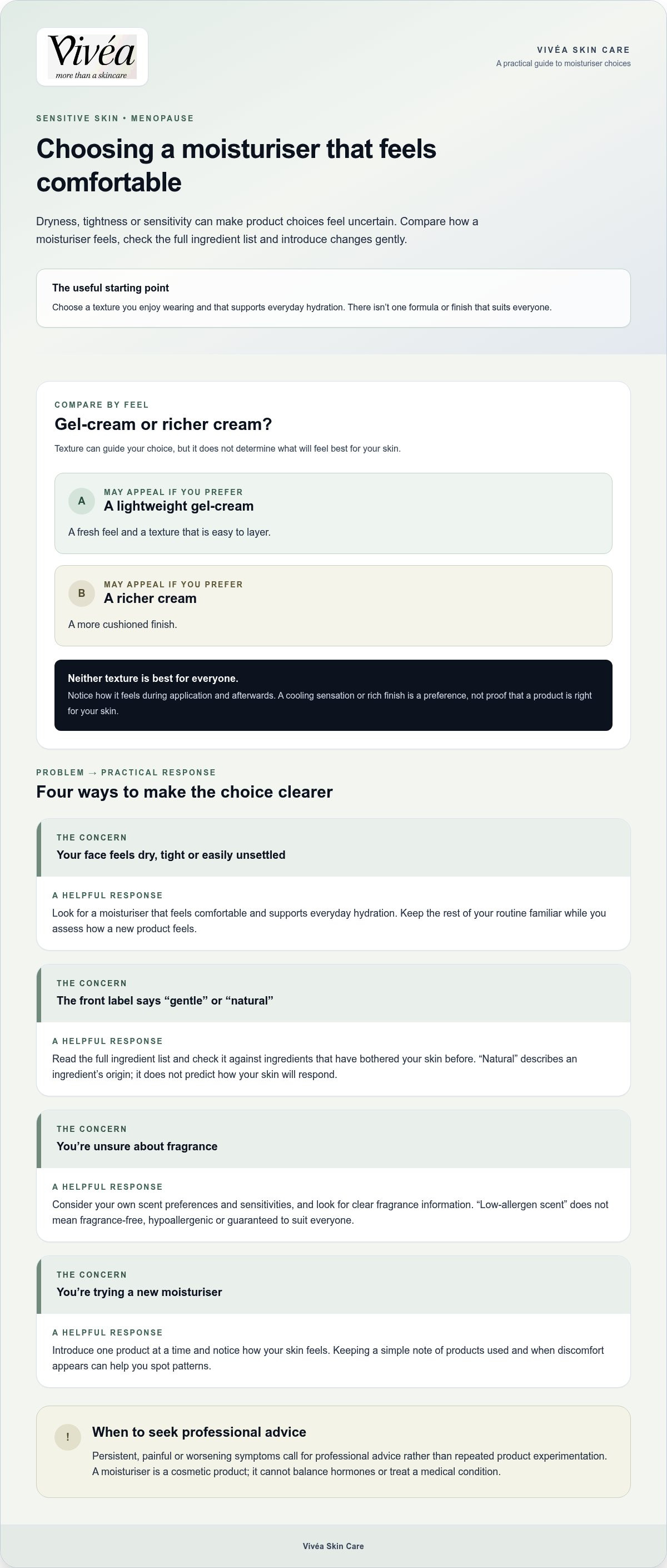
A gel-cream and a richer cream can feel quite different, but texture alone doesn’t tell you which will be more comfortable or hydrating for you. Compare the finish, cooling feel and scent, then consider how each fits your routine. The most suitable texture is the one you find comfortable to use.
| What to compare | Lightweight gel-cream | Richer-feeling cream |
|---|---|---|
| Texture | Often feels light and spreadable. | May feel more substantial or cushioned. |
| Finish | Notice whether it settles comfortably or leaves a feel you dislike. | Consider whether the finish feels reassuring or too heavy for daytime. |
| Cooling feel | Some gel-creams are described as cooling; check the product details. | Cooling isn’t determined by richness alone, so look for a clear product description. |
| Scent | Check each product’s scent information separately. Texture doesn’t indicate whether a moisturiser is scented or how noticeable its scent will feel. | |
| Personal preference | Think about your skin’s comfort, the finish you enjoy and how the product fits your routine. | |
When a lightweight gel-cream may appeal
A lightweight texture may suit you if you prefer a fresh, less substantial feel during the day. Vivéa Skin Care’s gel-creams are lightweight, cooling, moisturising and barrier-supporting, with low-allergen scent and mood-balancing fragrances. These range-level descriptions aren’t a guarantee that every person will find the texture or scent comfortable. Use them as a starting point and weigh them against your preferences when choosing a sensitive skin moisturiser for menopause.
Vivéa® Cooling Day Gel-Cream is the range’s daytime gel-cream. Consider its product information alongside your preferences for texture and scent.
When to consider a richer-feeling moisturiser
If your skin tends to feel dry or you prefer a more cushioned finish, compare a richer cream with a gel-cream. Focus on how each feels after application and whether the finish sits comfortably through your usual morning routine. A richer texture isn’t automatically more effective, and a lightweight one isn’t automatically more suitable for sensitive skin.
Think about when you’ll use it, too. You might prefer a lighter feel in the morning and a richer one at another time, or choose one texture for both. There’s no need to follow a set rule. For evening texture considerations, a guide to cooling night creams for menopause can help you compare options for that part of your routine.
How to Introduce a New Moisturiser to Sensitive Skin
Keep a routine change simple: read the directions, introduce one new product, notice how your skin feels, and pause if irritation develops. This approach can’t predict exactly how your skin will respond, but it can make it easier to identify what feels comfortable.
A cautious way to make a routine change
- Read the product directions. Follow the instructions on the packaging or official product information. Don’t assume that the amount, timing or application method for another moisturiser will suit this one.
- Change one thing at a time. Keep your familiar products in place while introducing the new moisturiser. If you start a new cleanser, mist and cream together, it can be difficult to tell which product may be affecting how your skin feels.
- Notice comfort and visible changes. Pay attention during application and afterwards. Note whether your skin feels comfortable, unusually tight, warm or unsettled, and whether you see a change in its appearance. A brief note on your phone can help you remember what you used without expecting a particular result by a set date.
- Pause if irritation develops. If the new product causes discomfort or a visible reaction, stop using it for now rather than applying more to see whether the feeling passes. Let your routine settle before making another change.
Observing your skin at home isn’t the same as a medical assessment, and there’s no single patch-testing routine that should override a product’s directions. Follow any specific guidance provided. Otherwise, introduce the product cautiously and seek professional advice if you’re unsure how to proceed.
Keep cleansing gentle as you make the change. If you’re considering a new cleanser, make that a separate adjustment rather than adding it at the same time as your moisturiser. A cleanser’s feel can influence how comfortable your skin feels after washing, so consider each step on its own.
When a reaction needs more than a product swap
Simply disliking a product’s feel is different from ongoing irritation. If discomfort is persistent, painful or worsening, or you notice unexplained skin changes, speak with a qualified healthcare professional. Recurring reactions may need more than trying another cosmetic product, and a moisturiser can’t diagnose or treat the cause.
There’s no need to push through discomfort to make a new routine work. When choosing a sensitive skin moisturiser for menopause, let the product directions and your comfort guide a gradual introduction. For a daytime option, explore Vivéa Skin Care’s menopause-specific skincare and review the product information before use.
Choosing a Menopause Moisturiser That Fits Your Routine
A useful choice comes down to fit, not a promise on the front of the pack. Before settling on a sensitive skin moisturiser for menopause, use this checklist to compare options:
- Texture: Does it feel comfortable during application and once it settles?
- Ingredient information: Can you review the full ingredient list and consider any personal sensitivities?
- Scent: Does the product’s scent suit your preferences?
- Claims: Are the benefits described in realistic cosmetic terms?
- Routine: Does it fit the way you like to care for your skin during the day?
There’s no need to choose the richest cream or lightest gel-cream simply because it sounds more suitable. Look for clear product information and a texture that works for your routine.
Where Vivéa Skin Care may fit
If you’re considering a daytime gel-cream, Vivéa® Cooling Day Gel-Cream is designed for that part of your routine. Compare its product information with your preferences, paying attention to texture and scent rather than assuming one format will suit every sensitive skin type.
Vivéa Skin Care focuses on menopause-specific skincare and emotional wellbeing. Its all-natural range is made in New Zealand, with a mission to help women feel understood, supported, and confident during this powerful stage of life. Skincare can be a considered part of your routine without being expected to resolve every concern.
A considered next step for your skincare routine
Think about how each step works alongside the others. If you’re choosing a cleanser, review its directions and product information separately, and introduce one change at a time. Vivéa® Gentle Creamy Cleanser is an option to consider alongside your moisturiser.
Take your time deciding what feels manageable. Explore menopause-specific skincare from Vivéa Skin Care and compare the product details with the texture and routine preferences you’ve identified.
Make Your Next Skincare Choice Gently
Your routine doesn’t need a complete reset to feel more comfortable. Treat your next choice as a small, considered step: decide what you want your daytime moisturiser to feel like, check the product information, then give yourself time to notice how it fits. The right sensitive skin moisturiser for menopause is one that feels manageable for you, not one chosen to meet someone else’s idea of perfect skin.
If a cooling gel-cream appeals, Vivéa Skin Care offers a menopause-specific range created with skincare and emotional wellbeing in mind. Explore the product details at your own pace and consider how the texture and scent align with your preferences.
Explore menopause-specific skincare from Vivéa Skin Care and take a gentle next step towards a routine that feels like your own.
Frequently Asked Questions
What is the best moisturiser for sensitive skin during menopause?
The best option is one that feels comfortable, suits your preferences and fits your routine. When choosing a sensitive skin moisturiser for menopause, compare the full ingredient list, scent information and texture rather than choosing by a “best” label alone. If a heavy finish bothers you, a lighter texture may feel more pleasant. If a product stings or leaves your skin uncomfortable, stop using it and reconsider.
Can menopause make your skin more sensitive?
Skin can feel drier or more reactive during the menopause transition, although experiences vary. You might notice a familiar product feels different, or that sensitivity comes and goes. That doesn’t establish menopause as the only cause. Consider whether anything else has changed, such as another skincare product or your routine, and seek professional advice if the change persists or concerns you.
Is a gel moisturiser suitable for sensitive menopause skin?
A gel moisturiser may suit sensitive menopause skin if you find its feel comfortable; the gel texture alone can’t predict how your skin will respond. You might prefer a lightweight gel-cream under makeup, while someone else may prefer a more cushioned finish. Check the product’s directions and ingredient information, then introduce it without changing several other parts of your routine at once.
How can I tell whether a moisturiser is irritating my skin?
Possible signs include new stinging, persistent redness, itching or swelling after application. Notice when the sensation starts and whether it continues after you stop using the product; reactions don’t always appear immediately. If you suspect a moisturiser is responsible, pause its use rather than reapplying to test the reaction. Seek professional advice if symptoms persist, worsen or cause significant discomfort.
Should I avoid fragrance if I have sensitive skin?
You don’t need to avoid fragrance automatically, but if scented products have bothered your skin before, pay close attention to fragrance information. Preferences differ: some people choose products with little or no noticeable scent, while others are comfortable with a scented formula. “Natural” fragrance doesn’t guarantee suitability, and a low-allergen scent doesn’t mean nobody can react. Let your own experience guide your choice.
Can a moisturiser improve the skin barrier during menopause?
A moisturiser can support everyday hydration and skin comfort, but a cosmetic product shouldn’t be treated as a guaranteed repair for a skin concern. Vivéa Skin Care’s gel-creams are described as moisturising and barrier-supporting. This range-level description doesn’t establish that every product will suit every person or treat a medical condition.
When should I seek advice about persistent skin sensitivity?
Seek advice from a qualified healthcare professional if sensitivity is persistent, painful, worsening or accompanied by unexplained changes. This is especially sensible if discomfort keeps returning despite pausing products that seem to trigger it. A moisturiser can support a cosmetic skincare routine, but it can’t diagnose the cause or replace professional care. You don’t need to identify the reason for the change before asking for help.


