

A non stripping cleanser for sensitive skin can remove everyday residue without leaving your face feeling tight or dry. A foamy lather isn’t a measure of how well a cleanser works, and that just-washed tightness isn’t something you need to aim for.
If your skin feels uncomfortable after cleansing, look at both the product and how you use it. Your skin may also feel different at different stages of life, including during perimenopause and menopause. A simple, gentle routine makes it easier to notice what feels comfortable for you.
This guide explains what non-stripping cleansing means, how to use cleanser gently and what to consider when comparing products. It also covers common cleansing myths and when ongoing discomfort may be a reason to seek professional advice.
Key Takeaways
- A non-stripping cleanse removes everyday residue while aiming to leave skin comfortable. No formula is guaranteed to suit everyone.
- A tight or squeaky-clean feeling doesn’t prove that your skin has been cleansed more effectively or gently.
- When choosing a non stripping cleanser for sensitive skin, consider the product directions, your preferred texture and how your skin feels after use.
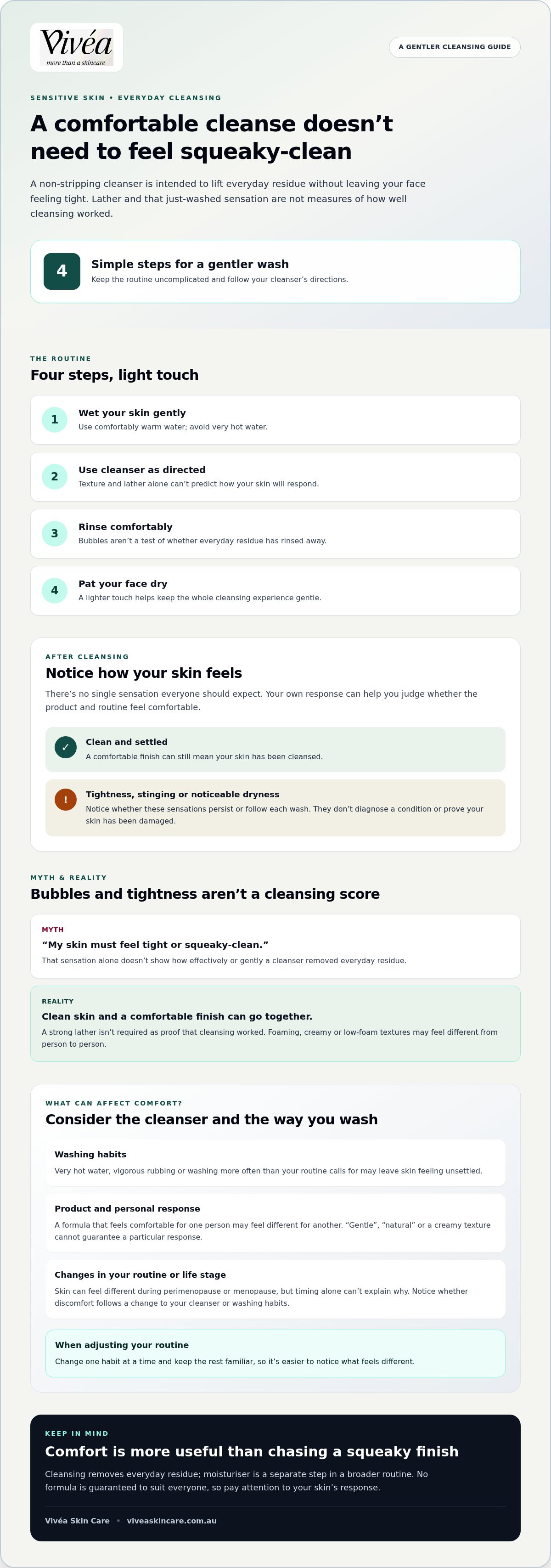
- Keep cleansing simple: wet your skin gently, use the cleanser as directed, rinse and pat dry.
- Words such as “natural” and “gentle” don’t guarantee that a product will suit you. Pay attention to your skin’s response.
What does a non-stripping cleanser for sensitive skin actually do?
A non-stripping cleanser for sensitive skin is intended to remove everyday residue, such as sweat, excess oil and grime, without leaving your face feeling uncomfortable. “Non-stripping” describes the intended cleansing experience. It doesn’t guarantee that a product will suit every person or prevent sensitivity.
Cleansing and moisturising are different steps. A cleanser washes away residue; moisturiser is used afterwards as part of a broader routine. Skin feeling comfortable after cleansing doesn’t mean the cleanser has done nothing, or that your skin has received all the moisture it needs. For a basic overview of cleanser types and their purpose, see Facial cleanser.
What should sensitive skin feel like after cleansing?
There’s no single sensation everyone should expect. You may find your skin feels clean and settled, without an immediate urge to reach for moisturiser. Persistent tightness, stinging or noticeable dryness are worth noticing, especially if they follow each wash. These sensations don’t diagnose a condition or prove that your skin has been damaged, but they can help you assess whether your routine feels comfortable.
Does “non-stripping” mean a cleanser cannot clean properly?
No. A cleanser can lift ordinary daily grime without leaving your face tight or producing a strong lather. Bubbles aren’t a test of whether residue has rinsed away, and a tight finish doesn’t prove a cleanser has worked better. Clean skin and a comfortable finish can go together.
Texture and personal response matter, too. You might prefer a creamy cleanser, while someone else prefers a different feel. Neither preference predicts how well a product will suit another person. If your skin feels unsettled after washing, consider the cleanser’s directions and your washing habits rather than assuming every cleanser should feel the same.
Why can cleansing leave sensitive skin feeling tight or uncomfortable?
The feeling after washing can depend on the cleanser, your washing habits and your individual response. A formula that feels comfortable for one person may feel different for another. Texture and lather alone can’t predict how your skin will respond.
Notice how you wash, too. Hot water, vigorous rubbing with a face cloth or washing more often than your routine calls for may affect how comfortable cleansing feels. Try comfortably warm water and a lighter touch. If you’re adjusting your routine, change one habit at a time so you can better notice what makes a difference.
Can washing habits make a gentle cleanser feel less comfortable?
They can affect the overall experience. Repeated washing or scrubbing may leave your skin feeling unsettled, even if the cleanser itself feels pleasant. Avoid very hot water, use light pressure and follow the product’s directions. Gradual adjustments make it easier to observe your skin’s comfort without changing your whole routine at once.
Why might skin feel different during perimenopause or menopause?
If your skin feels different, the timing alone can’t tell you why. Consider whether you’ve changed a cleanser, washing habit or another part of your routine, and notice whether discomfort follows a particular change. Other circumstances may be relevant, too. For a broader look at cleanser choices, see Gentle Cream Cleanser for Mature Skin: A Thoughtful Guide.
Dermatologist Dr Davin Lim’s guide to choosing the right cleanser offers further reading. If you prefer a creamy texture, explore Vivéa® Gentle Creamy Cleanser and its product information to decide whether it suits your preferences.
Myth-busting: a squeaky-clean finish does not prove a cleanser is gentle
The myth: your skin must feel tight or squeaky-clean for cleansing to have worked. That sensation alone doesn’t show how effectively a cleanser removed everyday residue or how gently it did so. A strong lather and a tight finish aren’t proof of a better cleanse.
Instead, consider the whole experience. Did the cleanser rinse away as directed? Does your face feel comfortable afterwards, or do you notice persistent tightness, stinging or dryness? These observations can help you decide whether a product and your washing routine feel suitable. They aren’t a universal score: one person’s response may differ from another’s.
Is a foaming cleanser automatically too harsh for sensitive skin?
No. Foam alone isn’t enough to judge whether a cleanser suits your skin. Consider how it feels during use, whether it rinses comfortably and how your skin feels afterwards. A foaming product won’t necessarily be unsuitable, just as a low-foam product isn’t automatically a good match. Your own experience matters more than the bubbles.
Fragrance alone doesn’t establish how a cleanser will feel on your skin, either. Read the product information, follow its directions and notice your skin’s response. This is more useful than relying on lather, scent or a squeaky finish as a shortcut to finding a non stripping cleanser for sensitive skin.
Does a creamy texture guarantee a non-stripping result?
No. Creaminess can help you choose a texture you enjoy, but it can’t guarantee how your skin will respond. The same goes for labels such as “gentle” or “hydrating”: they don’t promise that everyone will find a product comfortable. When introducing a new cleanser, keep the rest of your routine familiar and pay attention to how your skin feels during and after use. Where practical, change one thing at a time so you can tell what suits you.
A calm, comfortable finish is a more helpful guide than chasing a tight, just-scrubbed sensation. Give your skin time to show you what works for it.
How to use a sensitive-skin cleanser more gently
A simple routine can make cleansing feel more considered. Wet your skin gently with comfortably warm water, use the cleanser as directed on its product instructions, rinse it away and pat your skin dry with a soft towel. Avoid unnecessarily hot water and vigorous rubbing. Your face doesn’t need scrubbing to feel clean.
Keep the rest of your routine steady while you get used to a cleanser. Adding several new products at once can make it harder to work out which one may be affecting your skin’s comfort. A non stripping cleanser for sensitive skin is one part of your routine, so give yourself time to notice how it feels alongside the products you already use.
What is a gentle way to cleanse without over-washing?
Use a light touch and follow the product’s directions rather than washing repeatedly or extending the routine to chase a particular finish. If you’re unsure how to approach cleansing for dry skin, see Cleanser for Dry Menopausal Skin: Gentle Step-by-Step Guide. It’s a focused companion to this simple sequence, without adding unnecessary steps.
What should you notice when trying a different cleanser?
Pay attention to how your skin feels as you apply and rinse the cleanser, and afterwards. Notice whether the experience feels comfortable or whether you develop stinging, persistent tightness or marked dryness. These are observations, not a diagnosis, but they can help you decide whether to continue.
Introduce one new product at a time and keep other routine changes to a minimum, where practical. That gives you a clearer sense of how your skin responds. If a product causes a concerning reaction, stop using it and seek appropriate advice from a qualified health professional. Ongoing, worsening or worrying discomfort also deserves professional guidance, particularly if you’re unsure what might be contributing to it.
If you’d like to explore a creamy cleanser, take a look at Vivéa® Gentle Creamy Cleanser. Its product information can help you decide whether it suits your preferences and routine.
Choosing a non-stripping cleanser for sensitive skin with confidence
Choosing a cleanser is less about finding a formula that suits everyone and more about finding one that fits your preferences and feels comfortable for your skin. Use this checklist as a starting point:
- Comfort: Notice how your skin feels during washing and after rinsing.
- Clear directions: Look for instructions you can follow easily, and use the product as directed.
- Preferred texture: Creamy, milky and foaming textures are personal preferences, not proof of gentleness.
- Product information: Read the details provided so you understand what you’re choosing.
Words such as “natural” and “gentle” may describe a product, but they can’t guarantee it will suit everyone. Your own response is a more useful guide than a broad label. If your skin feels more sensitive than usual, keeping your routine simple may help you notice how it responds.
What details matter when comparing cleansers for sensitive skin?
Start with the product directions and information, then consider whether the texture is one you’ll enjoy using. Notice how your skin responds during cleansing and afterwards, rather than relying on foam, creaminess or a “gentle” claim to predict the result. This practical approach can help you choose a non stripping cleanser for sensitive skin without expecting one product to suit everyone.
Where does Vivéa® Gentle Creamy Cleanser fit?
Vivéa® Gentle Creamy Cleanser is part of the Vivéa Skin Care range, developed and created in New Zealand. Product choice is personal, so read the cleanser’s product information and consider whether it aligns with your preferences and routine. It is a cosmetic cleanser, not a treatment or a guaranteed solution for sensitivity.
Explore Vivéa® Gentle Creamy Cleanser on the Vivéa Skin Care website and consider whether it may suit your cleansing routine.
Make comfort your guide to cleansing
A gentle cleanse can remove everyday residue without leaving your skin feeling tight. A squeaky-clean finish, strong lather or creamy texture doesn’t prove a cleanser is more effective or suitable for everyone. Notice how your skin feels during and after washing, and keep your routine simple while you work out what feels comfortable.
Use comfortably warm water, handle your skin gently and follow the cleanser’s directions. If you’re trying a different product, introduce it on its own so you can better observe your skin’s response. Persistent discomfort or a concerning reaction is a reason to seek advice from a qualified health professional.
Vivéa® Gentle Creamy Cleanser is part of the Vivéa Skin Care range, developed and created in New Zealand. It’s one option to explore as you consider your preferences, without expecting any cleanser to suit every person.
Explore Vivéa® Gentle Creamy Cleanser and take a calm, considered approach to finding a non stripping cleanser for sensitive skin that feels right for you.
Frequently Asked Questions
What is a non-stripping cleanser for sensitive skin?
A non-stripping cleanser removes everyday residue while aiming to leave skin feeling comfortable afterwards. The term describes the intended cleansing experience, not a guarantee that a product will suit everyone or prevent all sensitivity. Consider the product directions, your texture preference and how your skin feels during and after washing. A tight or squeaky-clean finish isn’t necessary to show that cleansing has worked.
Does a foaming cleanser strip sensitive skin?
Not necessarily. Foam alone doesn’t tell you whether a cleanser will feel comfortable or suit your skin. Consider how it feels as you wash, whether it rinses away as directed and how your skin feels afterwards. A foaming product may suit some people, while others prefer a creamy texture. Don’t rely on lather as a measure of cleansing effectiveness or gentleness.
Should my face feel tight after cleansing?
Your face doesn’t need to feel tight after cleansing. That sensation doesn’t prove your skin has been cleansed more effectively, nor does it diagnose skin damage. Pay attention to your comfort, including any persistent tightness, stinging or noticeable dryness. If discomfort continues or concerns you, consider simplifying your routine and seeking advice from a qualified health professional.
Can a creamy cleanser clean sensitive skin effectively?
Yes. A creamy cleanser can remove everyday residue; its texture doesn’t mean it cleans less effectively. Creaminess may be a personal preference, but it can’t guarantee that a formula will suit everyone. Follow the product’s directions and notice how your skin feels after rinsing. Vivéa® Gentle Creamy Cleanser is one creamy cleanser option. Review its product information to see whether it suits your preferences.
How often should I cleanse sensitive skin?
There isn’t one cleansing frequency that suits everyone. Consider your routine, how much residue you need to remove and how your skin feels, while avoiding unnecessary repeated washing. Follow the cleanser’s directions rather than assuming more washing means cleaner skin. If you’re unsure, keep your routine simple and observe how your skin responds. Ongoing discomfort is a reason to seek guidance from a qualified health professional.
Can menopause make skin more sensitive to cleanser?
A change in how your skin responds to a cleanser doesn’t, by itself, establish menopause as the cause. Consider other factors, such as a recently changed product or washing habit, and notice whether discomfort follows a particular change. If sensitivity persists, worsens or concerns you, seek advice from a qualified health professional. They can help assess your situation and advise whether further care is appropriate.


