

Could skin that once felt comfortable suddenly seem dry, reactive or prone to flushing? If you’re wondering what happens to skin during menopause, hormonal changes are one possible influence. As oestrogen levels decline, skin may hold less moisture and become more sensitive. Changes in its structure can also affect how firm or elastic it feels.
These shifts can feel unsettling, especially when familiar products no longer seem to suit you. They aren’t a sign that you’ve done anything wrong, and your experience may differ from someone else’s. Understanding what might be contributing can help you choose care that feels comfortable, rather than adding more steps or stronger ingredients.
This article explains why dryness, sensitivity, flushing and breakouts may occur, and offers gentle everyday habits to support skin comfort, including mild cleansing, moisturising and sun protection. It also covers when a persistent or concerning change is worth discussing with a health professional, so you can care for your skin with greater understanding and confidence.
Key Takeaways
- Learn what happens to skin during menopause and why changes can differ from person to person.
- Understand how hormonal shifts may relate to hydration, skin structure and sensitivity, alongside other influences.
- Find out which changes may benefit from professional assessment rather than assuming they’re simply part of menopause.
- Build a flexible routine around gentle cleansing, moisturising and daytime sun protection. Introduce new products one at a time.
- Use a practical checklist to decide whether menopause-specific skincare suits your comfort and preferences.
What happens to skin during menopause? Common changes explained
Hormonal changes can coincide with shifts in skin hydration, texture, sensitivity and breakouts. You might notice tightness after washing, a rougher feel, facial flushing or blemishes that are new for you. These experiences vary: not everyone notices the same changes, and skin symptoms can have causes unrelated to menopause.
Perimenopause is the transition leading up to menopause, when menstrual patterns and hormone levels may fluctuate. Menopause is reached after 12 consecutive months without a menstrual period, when there isn’t another medical explanation. Post-menopause refers to the years after that point. Healthdirect Australia’s menopause overview explains these stages. Timing and symptoms differ from person to person.
Why can skin feel drier or less comfortable?
Oestrogen plays a role in skin hydration and the maintenance of its structure. As levels change during the menopause transition, some people find their skin feels drier, tighter or more easily irritated. Ageing, climate, products and health conditions can also affect how skin feels, so dryness alone can’t confirm its cause.
The skin barrier is the protective outer layer that helps hold moisture in and shield skin from irritants. If it’s less effective, skin may feel less comfortable or react more readily to products that were once familiar. This isn’t a diagnosis. Persistent irritation or a rash deserves individual assessment.
Can menopause change skin texture, firmness or appearance?
Skin structure and appearance can change with age as well as across the hormonal transition. Changes to collagen, which helps support skin’s structure, may contribute to thinner-feeling skin, reduced firmness or fine lines. The American Academy of Dermatology discusses skin changes during menopause, including possible dryness and changes in firmness.
Some people notice increased sensitivity, flushing or breakouts, while others see little change. These signs don’t prove that menopause is the cause, and they shouldn’t be dismissed if they’re persistent, uncomfortable or changing. Treating yourself gently and noting what has changed can help you decide what to adjust and when to seek professional advice.
How hormonal changes may affect hydration, skin structure and sensitivity
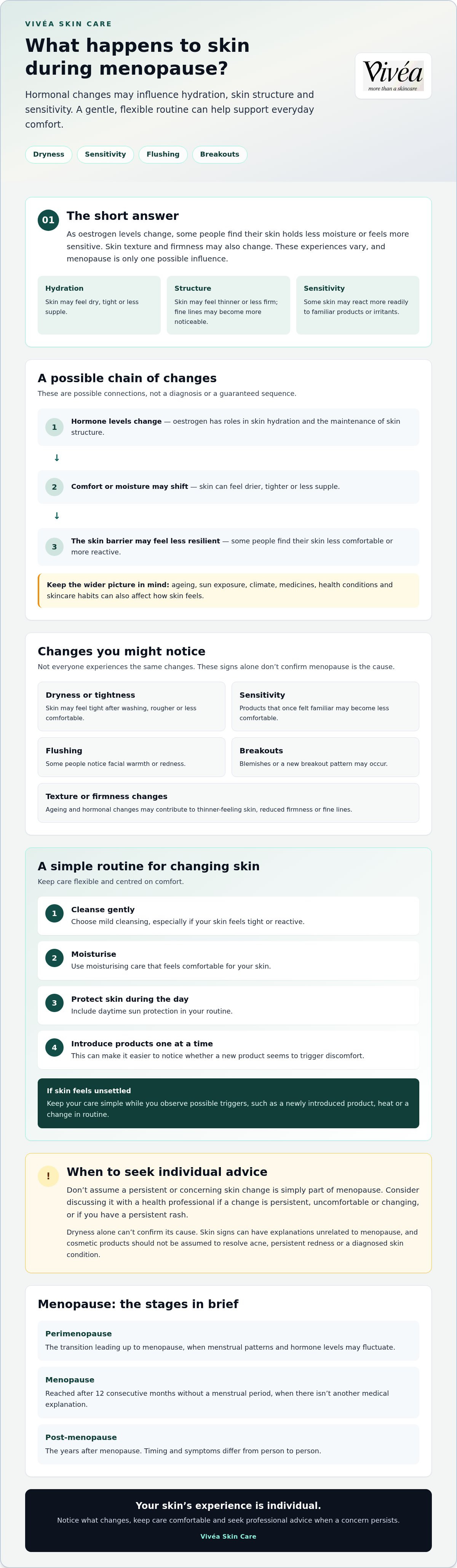
Menopause can be one influence on skin, but it isn’t the only one. Ageing, sun exposure, climate, medicines, health conditions and changes in skincare habits can all affect how your skin feels. The patterns below describe possible connections, not a way to diagnose the cause of an individual skin concern.
Oestrogen, hydration and the skin barrier
Oestrogen has roles in skin hydration and structure. As hormone levels change, some people notice more dryness or tightness. The skin barrier, its protective outer layer, helps limit moisture loss and shield skin from irritants. If it’s less effective, skin may feel rough or become less tolerant of products that were previously comfortable.
A simple way to understand the possible connections is:
- Changing oestrogen levels may coincide with changes in the skin’s moisture and supportive structures.
- Reduced comfort or moisture can leave skin feeling tight, dry or less supple.
- A disrupted protective barrier may make some skin more reactive to everyday products or environmental irritants.
These are associations, not a guarantee that hormones explain every change. Research on a skincare ingredient may suggest a potential role, but it doesn’t prove that a finished product containing it will deliver a particular clinical result. A product’s effect depends on its complete formulation and evidence for that specific product.
Sensitivity, flushing and hormonal breakouts
Skin may feel more sensitive during the transition, and facial flushing or breakouts may also change. Flushing can appear as warmth and redness, while a breakout might look like familiar blemishes or a new pattern. Hormonal shifts could be one factor, but these signs can have other explanations. On their own, they don’t confirm menopause-related skin changes.
Notice what seems to trigger discomfort, such as a newly introduced product, heat or a change in routine. Keep your care simple while you observe, and don’t assume a cosmetic product can resolve acne, persistent redness or a diagnosed skin condition. The American Academy of Dermatology’s Caring for your skin in menopause guidance also discusses practical skincare choices.
If symptoms are persistent, painful, unusual for you or worsening, seek advice from a health professional rather than attributing them to menopause. For a gentle cosmetic option focused on cooling moisture and barrier support, you can explore Vivéa Skin Care’s menopause-specific skincare. Keep in mind that no product suits everyone.
Menopause skin changes: what is expected and what deserves attention?
Dryness, sensitivity, texture changes, flushing and breakouts may occur during perimenopause or menopause, but not everyone experiences them, and they don’t automatically point to a hormonal cause. Ageing, sun exposure, weather, skincare products, medicines and other health factors can also affect how skin looks and feels. “Menopause-related” describes a possible connection, not a diagnosis.
Which skin changes may occur during menopause?
Some people notice that skin feels tighter or drier, reacts more readily to products, or looks different in texture. Flushing or blemishes may also become more noticeable. These changes can be gradual or come and go, and their pattern varies. The American Academy of Dermatology outlines some changes to your skin and hair that occur in menopause, while recognising that individual experiences differ.
If you’re asking what happens to skin during menopause, observe what’s changed without assuming every new symptom is part of this life stage. A brief note of when a concern began, how it feels and whether anything seems to trigger it can help you describe it clearly if you seek advice.
When should you ask a health professional?
Consider speaking with a GP or another qualified health professional if a skin change is persistent, painful, unusual for you, rapidly changing, severe or worrying. They can assess your individual symptoms and consider possible causes. This article is educational and can’t diagnose a skin condition. If you have questions about treatment, discuss them with a qualified clinician.
| Changes you might notice | When individual advice may help |
|---|---|
| Dryness, tightness or a rougher-feeling texture | Discomfort continues, worsens or affects your day-to-day comfort |
| Skin that feels more reactive, or occasional flushing | Symptoms are persistent, painful, unusual or concerning to you |
| Breakouts or other changes in appearance | The change is severe, rapidly changing or not settling |
This comparison can help you decide whether to seek advice, but it can’t determine what’s causing a symptom. You don’t need to wait for a change to become severe before asking a health professional about it. An individual assessment can help you understand what may be contributing and what next steps are appropriate.
How to care for changing skin during menopause
A steady, simple routine can make it easier to notice what feels comfortable for your skin. It doesn’t need to be complicated: cleanse gently, moisturise, and protect your skin from the sun during the day. Choose textures and frequency that suit your skin, and follow each product’s current directions.
A gentle routine for dry or sensitive-feeling skin
In the morning, rinse or cleanse gently, apply a moisturiser if your skin feels dry, then use a broad-spectrum sunscreen according to its label. In the evening, cleanse away sunscreen and the day’s build-up, then moisturise. If your skin feels unsettled, avoid changing several products at once. Keep the routine familiar while you work out what feels soothing.
Introduce one new product at a time and check its ingredient list, especially if you know you’re sensitive to particular ingredients. Follow the product’s directions rather than adding extra applications or combining products in ways the label doesn’t recommend. If irritation develops, stop using the product. Seek professional advice if the reaction persists or concerns you.
Cooling and moisturising without overpromising
A cooling sensation may feel pleasant when skin is warm or uncomfortable, while moisturising products can provide cosmetic hydration. Neither sensation nor a skincare product treats the hormonal transition or replaces assessment of a skin concern. Comfort is personal, so choose a texture and feel you’re happy to use, and stop if a product irritates your skin.
If overnight moisturising and a cooling feel appeal to you, Vivéa® Cooling Night Gel-Cream is described as a lightweight, cooling, moisturising, barrier-supporting gel-cream. As with any skincare, read the current product information and directions, and consider whether its ingredients and feel suit your preferences.
A short note on your routine and symptoms may also help you spot patterns. Record when a change began, which products you’re using, and anything you suspect may trigger discomfort. You can share these observations with a GP or qualified health professional if you seek advice. Cosmetic skincare can support everyday comfort, but it can’t diagnose or treat a medical condition.
For a menopause-specific option for overnight cosmetic care, explore Vivéa Skin Care’s night moisturiser.
Choosing menopause-specific skincare for comfort and overnight care
Menopause-specific skincare can be a helpful starting point if your needs or preferences have shifted, but the label alone can’t tell you whether a product will suit your skin. Since what happens to skin during menopause varies from person to person, let your comfort, product information and skin response guide your choice.
What to look for in a menopause skincare product
Before choosing a night moisturiser or changing your routine, consider a few practical details:
- Texture: Would you prefer a light gel-cream or a richer-feeling moisturiser?
- Comfort: Does the product feel pleasant on your skin, including when it feels dry or sensitive?
- Ingredients: Read the ingredient list and consider any sensitivities or preferences you already know about. “Natural” doesn’t automatically mean suitable for everyone.
- Directions: Check how the product is intended to be used and follow its current instructions.
- Your skin’s response: Introduce one new product at a time so you can notice whether it feels comfortable or causes irritation.
Think of these as prompts, not rules. Menopause-specific positioning may reflect the needs a product is designed to consider, but it doesn’t guarantee that its ingredients, scent or feel will be right for everyone. If a product irritates your skin, stop using it and seek professional advice if the reaction continues or concerns you.
How Vivéa® Cooling Night Gel-Cream fits this discussion
For overnight care, Vivéa® Cooling Night Gel-Cream is a menopause-specific gel-cream developed and created in New Zealand. It’s described as lightweight, cooling and moisturising, with barrier support as part of its cosmetic skincare role. Its cooling feel may appeal if you enjoy a fresh sensation, while its texture may suit those looking for a lighter alternative to a richer cream. Personal preference matters, so check the current product information and directions before use.
Across the Vivéa Skin Care range, the brand describes its scents as low-allergen and its fragrances as mood-balancing. These descriptions don’t guarantee that a product will suit sensitive skin, so consider your own preferences and ingredient sensitivities.
If you’d like to compare considerations before choosing, look for the related guide, Cooling Night Cream for Menopause: A Considered Buying Guide. You’re also welcome to explore Vivéa® Cooling Night Gel-Cream as one option for gentle overnight cosmetic care.
Choose skin care that feels comfortable for you
So, what happens to skin during menopause? Changes in hydration, texture and sensitivity may occur, but they’re not the same for everyone and can have more than one influence. A gentle routine built around cleansing, moisturising and daytime sun protection can offer a steady place to start. Introduce new products gradually, and seek advice from a GP or qualified health professional about persistent, painful or worrying changes.
If overnight cooling moisture appeals to you, Vivéa® Cooling Night Gel-Cream is a menopause-specific option developed and created in New Zealand. Vivéa Skin Care describes its range as clinically tested and dermatologically approved for safety and efficacy. These qualities don’t guarantee a particular result or mean every product will suit every person.
Explore Vivéa® Cooling Night Gel-Cream and consider whether its lightweight, cooling, moisturising feel fits your preferences. Your skin’s needs may evolve, and a calm, thoughtful approach can help you care for it with confidence.
Frequently Asked Questions
What happens to your skin during menopause?
During menopause, some people notice changes in hydration, texture, firmness, sensitivity or breakouts. Changing oestrogen levels may contribute, but ageing, sun exposure, climate, skincare products and other health factors can also influence skin. Experiences vary, and a new symptom isn’t automatically caused by menopause. A gentle routine and attention to how your skin responds can help you decide whether to adjust your care or seek professional advice.
Does menopause make your skin dry?
Menopause may be associated with drier-feeling skin, but it doesn’t affect everyone in the same way. Changing oestrogen levels can influence skin hydration, while environmental conditions, cleansing habits, medicines and other factors may also play a part. If your skin feels tight or uncomfortable, consider gentle cleansing and moisturising according to product directions. Persistent or worsening dryness is worth discussing with a GP or qualified health professional.
Can menopause cause acne or breakouts?
Breakouts can occur during the menopause transition, but they don’t confirm that hormones are the cause. Skin changes, products, medicines and other factors may contribute, and acne can begin or continue at different life stages. Keep your routine simple and introduce new products one at a time so you can notice how your skin responds. For persistent, painful or concerning breakouts, ask a health professional about suitable next steps.
Why does my skin feel more sensitive during menopause?
Some people find their skin becomes more reactive during the menopause transition, possibly alongside changes in hydration and the skin’s protective barrier. However, sensitivity can also relate to a new product, weather, an existing skin condition or another health factor. Check ingredient lists and pause products that appear to irritate your skin. If discomfort persists, worsens or comes with a rash, seek advice from a qualified health professional.
Can menopause change your skin texture or firmness?
Skin texture or firmness may change with age and across the menopause transition. Changes in skin structure can contribute to a different feel or appearance, but the extent varies from person to person. Sun exposure and other influences also matter. These changes aren’t a personal failing, and no cosmetic routine can guarantee that they’ll be prevented or reversed. A moisturiser may support skin comfort without changing the underlying transition.
Can skincare reverse menopause-related skin changes?
Skincare can’t reverse menopause or guarantee that related skin changes will disappear. A gentle cleanser, moisturiser and daytime sun protection can support everyday skin comfort and care. Choose products based on their directions, ingredients and how they feel on your skin, and introduce one new product at a time. Cosmetic products don’t treat medical conditions or replace professional advice. If a concern persists, a clinician can discuss assessment and care options.
When should I see a doctor about skin changes during menopause?
See a GP or qualified health professional if a skin change is persistent, painful, unusual for you, severe, rapidly changing or worrying. Skin symptoms can have causes beyond menopause, so an individual assessment can help clarify what may be happening. Note when the change began and any products or possible triggers. If you have treatment questions, discuss them with a qualified clinician rather than changing prescribed care on your own.


