

What if your skin needs a gentler routine, not another active ingredient? During perimenopause, dryness can leave skin feeling tight, rough or unexpectedly sensitive, and products that once felt comfortable may now sting. Skincare for perimenopause dryness often starts with a simple shift: cleanse gently, moisturise regularly and give your skin barrier time to settle.
If your usual routine no longer feels right, you’re not imagining the change. Hormonal fluctuations may affect skin hydration and comfort, but that doesn’t mean you need to overhaul every step or chase a complicated routine. Start by noticing when your skin feels uncomfortable, then make one change at a time.
This guide explains why dryness may happen during perimenopause and how to build a calm, barrier-first routine for everyday care. You’ll learn which basics to prioritise, what to pause if your skin feels reactive, and when persistent or unusual symptoms are worth discussing with a health professional.
Key Takeaways
- Hormonal shifts may contribute to changes in skin hydration, but dryness can have more than one cause.
- The skin barrier helps protect against moisture loss, and dryness and irritation can sometimes overlap.
- Build skincare for perimenopause dryness around gentle cleansing and moisturising, adding steps only if they feel comfortable and useful.
- Keep daytime care simple, with sun protection as appropriate, and avoid introducing several new products at once.
- Menopause-specific skincare is an optional choice. Seek professional advice if symptoms persist or seem unusual.
Why can perimenopause make skin feel drier and less comfortable?
Skin that once felt settled may begin to feel tight, rough or more easily irritated. That shift can be unsettling, but it doesn’t mean you’ve done anything wrong or that every change has one simple explanation. Hormone levels change during perimenopause, and skin comfort may change too. The NHS includes dry and itchy skin among possible menopause symptoms, though experiences vary from person to person.
Dry skin describes a surface that feels short of moisture, perhaps tight after washing or rough to the touch. It’s a description of how skin feels, not a medical diagnosis. Weather, cleansing habits, other products and skin conditions can also play a part, so it’s best not to assume hormones are the only cause. The NHS overview of menopause symptoms provides further context on changes that may occur during this transition.
What dry skin can feel like during perimenopause
Dryness may show up as tightness, rough patches, fine flaking or sensitivity to products that previously felt comfortable. Some people notice discomfort after cleansing; others see little change. These experiences aren’t universal, and a dry-feeling surface alone can’t confirm a skin condition or identify its cause.
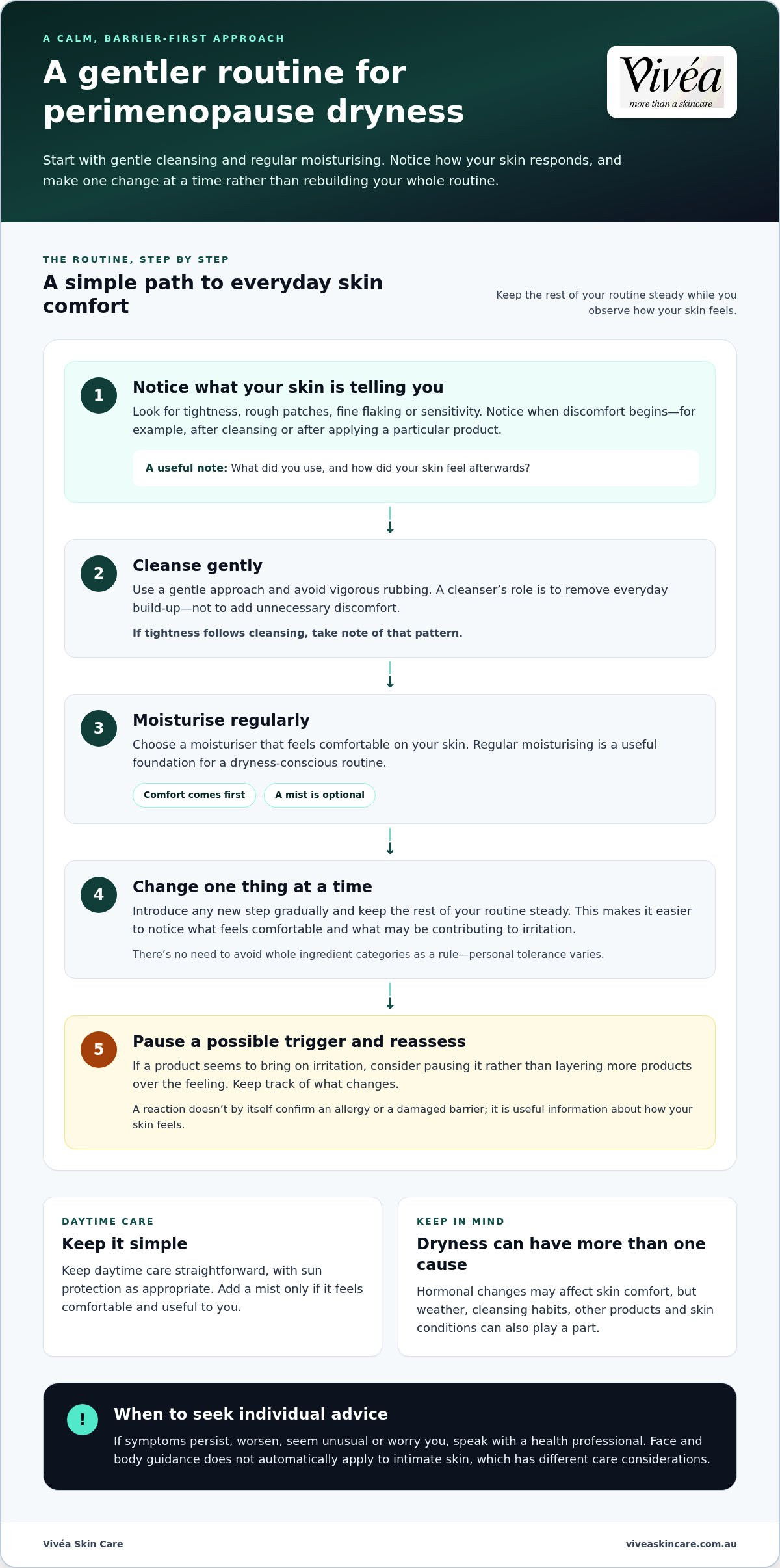
Notice when discomfort appears and whether a particular routine step seems to make it worse. For example, note whether tightness follows cleansing or begins after applying a particular product. This can help you make measured adjustments rather than replacing everything at once. If symptoms persist, worsen or seem unusual, a health professional can help assess whether something beyond everyday dryness may be involved.
When intimate dryness needs separate skincare guidance
Intimate skin has different care considerations from the face and body, so advice for external skin shouldn’t automatically be applied to intimate areas. This guide focuses on face and body comfort, rather than intimate care or product directions. For information specifically about intimate dryness, see Vivéa Skin Care’s intimate balm guidance for perimenopause.
Keeping these topics distinct makes skincare for perimenopause dryness easier to approach: first recognise what you’re feeling, then consider gentle care for the skin area involved. Persistent or concerning changes deserve individual attention rather than guesswork.
How the skin barrier relates to perimenopause dryness
The skin barrier is the outermost protective layer of skin, helping keep moisture in and irritants out, as the American Academy of Dermatology Association explains. Think of it as a natural boundary between your skin and the surrounding environment. It doesn’t need to be damaged for skin to feel dry, but when this protective layer is less comfortable or more easily irritated, dryness and sensitivity may overlap.
Dryness can leave the surface feeling less supple, while irritation may make everyday products feel uncomfortable. That can create a frustrating cycle: skin feels dry, you try extra products, and one of those steps doesn’t suit you. This isn’t proof of barrier damage or a diagnosis. Skin responds differently to hormonal shifts, weather, cleansing habits and individual products.
Gentle cleansing and regular moisturising are useful foundations because they help avoid unnecessary disruption while supporting skin comfort. Dermatology guidance from the American Academy of Dermatology Association recommends gentle care and moisturiser for dry skin. In practice, cleanse without vigorous rubbing, then apply a moisturiser that feels comfortable rather than adding several new steps at once. These habits support cosmetic care; they don’t diagnose or treat a skin condition.
Why a simpler routine may feel more comfortable
A pared-back routine makes it easier to notice how your skin responds. If you replace your cleanser, moisturiser and other products together, it’s difficult to tell which change feels soothing and which may be contributing to discomfort. You don’t need to avoid whole ingredient categories as a rule; personal tolerance varies.
Introduce changes gradually, one at a time, and give yourself a chance to observe how your skin feels. Keep the rest of your routine steady while you try a new product, so it’s easier to identify a pattern. Consistency matters more than collecting extra steps.
Dryness, sensitivity and the products already in your routine
Pay attention to timing. Does tightness, stinging or discomfort start soon after a particular product, or does it appear at another point in your day? A simple note of what you used and how your skin felt may help you spot a pattern. One uncomfortable application doesn’t confirm an allergy or a damaged barrier, but it’s useful information.
If a product seems to trigger irritation, consider pausing it rather than layering more products over the feeling. If discomfort continues, becomes more pronounced or worries you, seek advice from a health professional. This is a practical way to observe your skin, not a method of self-diagnosis.
For skincare for perimenopause dryness, a gentle, steady routine can be a reassuring place to begin. If you’re exploring options for external skin comfort, you can discover Vivéa Skin Care.
How to choose gentle skincare for perimenopause dryness
A useful routine doesn’t need to be elaborate. Think about what each step is for: a cleanser removes everyday build-up, a moisturiser supports skin comfort, and a mist is an optional sensory step. Choose according to what feels comfortable on your skin and fits easily into your day, rather than looking for a universally superior product.
Texture matters because a product you enjoy using is easier to use consistently. You might prefer a light gel feel, a creamier texture or no mist at all. Consider known sensitivities and pay attention to how your skin feels after applying something new. Product labels and personal experience can guide your choices, but a cosmetic routine isn’t a diagnosis or treatment for a skin condition.
Choosing a cleanser and moisturiser for dry-feeling skin
For cleansing, look for a gentle step that leaves your face feeling comfortable, not uncomfortably tight. A moisturiser then provides a straightforward way to care for skin that feels dry. There’s no need to choose a particular ingredient based on perimenopause alone; individual needs and tolerances differ. Vivéa Skin Care’s gentle cream cleanser guide for mature skin offers more context when considering a cleanser.
When a cooling texture or mist may suit your preferences
A cooling texture may simply feel pleasant as part of your routine. It shouldn’t be treated as a way to change hormones or address the cause of dryness. A face mist can be an optional, refreshing-feeling step, but it isn’t a substitute for moisturiser. If you enjoy using one, consider how it fits into your routine rather than adding it because you feel you must.
Before adding anything, take stock of what you already use. A practical way to make a considered choice is to ask:
- Does my skin feel comfortable after cleansing, or tight and unsettled?
- Do I prefer a lighter or creamier moisturiser texture?
- Have I noticed a reaction to a product or a particular fragrance before?
- Would an optional mist make my routine more pleasant, or simply add another step?
Make changes gradually, one product at a time, so you can notice how your skin responds. If you have known sensitivities, use that knowledge when reading product information; “gentle” or “natural” doesn’t automatically mean a product will suit every person. If a product seems to cause persistent discomfort, stop using it and seek professional advice if the concern continues.
For skincare for perimenopause dryness, a few well-chosen steps that feel comfortable can be more useful than a crowded shelf. Choose a cleanser, moisturiser and any optional extras according to your preferences, then keep the routine steady enough to see how your skin feels.
How to build a simple routine for perimenopause dryness
A steady morning and evening rhythm can make skincare feel manageable without adding a stack of steps. Use this simple sequence as a starting point, then adjust it to what feels comfortable for your skin:
- Cleanse gently, or rinse with water in the morning if that suits your skin.
- Apply a moisturiser that feels comfortable.
- During the day, use suitable sun protection when appropriate.
- In the evening, gently remove daily products and moisturise again if that feels right for you.
This is a flexible routine, not a prescription. Skin needs can vary from day to day, so take note of how your face feels rather than trying to follow a rigid schedule. If you’re changing products, make one adjustment at a time and observe how your skin responds before adding another step.
A calm morning routine
Start with a gentle cleanse if your skin needs it, or a simple rinse if cleansing first thing leaves your face feeling less comfortable. Pat skin dry rather than rubbing, then apply a moisturiser that sits comfortably in your routine. You don’t need to add extra layers simply because skin feels dry.
For daytime, include sun protection suited to your needs and the conditions. Cancer Council Australia advises using sun protection when the UV Index is 3 or above. Follow the product directions, and consider other SunSmart measures such as shade and protective clothing. Sun protection supports protection from UV exposure; it isn’t a treatment for dryness.
A gentle evening routine and sensible adjustments
In the evening, remove makeup, sunscreen and other daily products with a gentle approach. Avoid vigorous scrubbing, and don’t introduce several unfamiliar products at once. After cleansing, apply moisturiser as part of a simple routine, adjusting the steps to your comfort rather than aiming for a particular number of layers.
Changes may take time to assess, so keep the routine steady and notice whether tightness or irritation eases, stays the same or worsens. If symptoms persist, become more uncomfortable or seem unusual, seek advice from a health professional. Skincare can support everyday comfort, but it can’t establish the cause of symptoms or replace professional care.
In short: cleanse gently, moisturise, protect skin from the sun during the day, and keep the evening routine calm. If you’re considering menopause-specific skincare, Vivéa Skin Care’s range is developed and created in New Zealand, with low-allergen scent and mood-balancing fragrances. Explore Vivéa Skin Care’s menopause-specific skincare for cosmetic care focused on external skin comfort, not treatment for hormonal changes.
How menopause-specific skincare can fit a dryness-conscious routine
Once you have a simple routine, you may want to choose products designed with changing skin comfort in mind. Vivéa Skin Care offers menopause-specific skincare developed and created in New Zealand. The range is described as moisturising and barrier-supporting, with low-allergen scent and mood-balancing fragrances. It’s an optional cosmetic skincare choice, not a way to treat menopause or alter hormonal changes.
There’s no need to replace everything you already use. Consider which routine step you’d like to make more comfortable, then look at a product format that fits that role. A cleanser belongs in the cleansing step; a gel-cream is a moisturiser format. Choosing one relevant product at a time can keep your routine familiar while you notice how your skin responds.
Matching a product format to your routine
If you’re considering a cleanser, Vivéa® Gentle Creamy Cleanser is one option in the range. For moisturising, you could consider Vivéa® Cooling Day Gel-Cream or Vivéa® Cooling Night Gel-Cream. These are optional formats, not prescribed steps, and the product names alone shouldn’t be taken as a promise of a particular individual result.
Keep your own preferences at the centre of the decision. A cooling gel-cream may appeal if that texture feels pleasant to you, while someone else may prefer to stay with a familiar moisturiser. Read the product information, take known sensitivities into account and avoid adding several unfamiliar products at once. A menopause-specific label doesn’t mean every product will suit every person.
A considered next step for dry-feeling skin
Cosmetic skincare can form part of a routine focused on external skin hydration and everyday comfort, but it doesn’t treat hormonal changes, diagnose a skin concern or replace professional care. If dryness or irritation is persistent, worsening or unusual for you, seek advice from a health professional rather than relying on a product to explain or resolve it.
Vivéa Skin Care reports visible improvement in hydration, comfort and the skin barrier within 2-4 weeks. This is a brand-reported result, not a guarantee, and individual experiences can vary. Keep expectations realistic and pay attention to how your skin feels as you use a routine consistently.
Skincare for perimenopause dryness can remain simple: choose products that suit the steps you already follow, introduce changes thoughtfully and let comfort guide your choices. If you’d like to consider menopause-specific cosmetic skincare for your routine, explore Vivéa Skin Care.
Let comfort guide your next step
Your routine can evolve with you. Rather than expecting your skin to feel the same every day, treat comfort as useful feedback: keep the steps that feel supportive, and make changes gently when your needs shift. That patient approach can make skincare for perimenopause dryness feel more personal and less like another set of rules to follow.
If you’d like to explore a menopause-specific option for external skin care, Vivéa Skin Care’s range is developed and created in New Zealand. Vivéa describes its products as clinically tested and dermatologically approved for safety and efficacy. Cosmetic skincare can support a considered care routine, but it doesn’t treat hormonal changes or replace professional advice.
Explore the range and choose a product format that fits your routine and preferences. Explore Vivéa Skin Care for menopause-specific skincare for perimenopause dryness. Small, thoughtful choices can help make daily care feel more comfortable and more your own.
Frequently Asked Questions
Can perimenopause dryness affect skin all over the body?
Yes, dry-feeling skin can occur in different areas, but it doesn’t affect everyone in the same way. You might notice roughness on your hands or legs while your face feels unchanged. This guide focuses on face and body care; intimate skin has separate considerations. If dryness persists, feels uncomfortable or appears alongside other changes, speak with a qualified health professional rather than assuming perimenopause is the only explanation.
Should I exfoliate if my skin feels dry during perimenopause?
Not necessarily; exfoliation isn’t essential in a basic routine for dry-feeling skin. Scrubbing or starting several active products together may feel uncomfortable for some people, though individual responses vary. If you’re considering a change, avoid combining multiple new steps so you can notice what suits you. Pause an approach that seems to increase irritation, and seek advice from a qualified health professional if discomfort continues or worsens.
Can I use the same moisturiser on my face and body?
It depends on the product’s directions and how it feels on each area. For example, a product labelled for hands and body shouldn’t automatically be treated as a facial moisturiser. Check the intended use on the label and follow its directions rather than assuming products are interchangeable. If an application causes persistent discomfort, stop using it and seek appropriate professional advice, particularly if the reaction is severe or getting worse.
How long does perimenopause-related skin dryness last?
There isn’t one timeline that applies to everyone, and dryness may have causes unrelated to perimenopause. You could note whether it changes after a new product, a shift in weather or another change in your routine, without treating those observations as a diagnosis. If dryness persists, becomes painful, or comes with a rash or other concerning symptoms, ask a qualified health professional for guidance.
Can a cooling gel-cream moisturise dry-feeling skin?
A cooling gel-cream may suit you if you prefer a lighter moisturiser texture, but the feel of a product can’t predict exactly how your skin will respond. For skincare for perimenopause dryness, check the product’s intended use and directions, then introduce it thoughtfully rather than changing your whole routine at once. Cooling skincare is cosmetic care; it doesn’t treat hormonal changes or a medical skin condition.
When should I seek professional advice about dry skin during perimenopause?
Seek advice if dryness persists, worsens, becomes painful or appears with a rash or other symptoms that concern you. This is especially sensible if the change is sudden or interfering with everyday comfort. A qualified health professional can assess possible causes and discuss appropriate care. Skincare guidance can help you make routine choices, but it can’t identify the cause or replace medical assessment when symptoms need attention.


