

Up to 80 per cent of women experience hot flashes during menopause, and skin can also become drier, more sensitive or itchy. A cooling gel moisturiser for menopause may help hydrate dry skin and offer a refreshing sensation, but it doesn’t treat hot flashes or the hormonal changes behind them. Gentle, consistent skincare can support everyday comfort as your skin changes.
If your usual moisturiser suddenly feels too heavy, or your skin feels less comfortable than before, you’re not imagining it. Perimenopause and menopause can change how skin holds moisture and responds to products, so a lighter, soothing routine may feel more comfortable.
This article explains skin changes that can occur during perimenopause and menopause, why dryness and itching may arise, and what to look for in a cooling gel moisturiser for menopause. You’ll also find practical guidance for applying moisturiser as part of a calm daily routine.
Key Takeaways
- Menopause can change skin’s moisture and oil balance, making dryness, sensitivity or itching more noticeable.
- Learn which hydrating ingredients and lightweight product formats may suit skin that feels dry or easily unsettled.
- A cooling moisturiser can add hydration and a refreshing sensation, but it doesn’t treat hot flashes.
- Build a gentle daily routine by applying moisturiser to clean skin and adjusting use to what feels comfortable.
- Patch test a new product first, especially if your skin is sensitive or you have known ingredient sensitivities.
1. How can menopause affect my skin?
During perimenopause and menopause, you may notice changes in how your skin feels or responds to products. The Australasian Menopause Society describes skin changes as one possible effect of menopause. Dryness, sensitivity or itch can make a familiar routine feel different, so pay attention to your own skin rather than assuming every change has the same cause.
For hydration, check labels for ingredients such as hyaluronic acid or glycerin, commonly used to attract water to the skin. A gel or gel-cream may feel light and refreshing, while a richer cream can feel more cushioning on dry areas. Try one format at a time, and note whether your skin feels comfortable after applying it.
Cooling moisturisers hydrate the skin and can give a refreshing sensation. They are different from medicines intended to manage hot flushes, and a moisturiser does not treat the flush itself. Check the label to see whether a product is intended for the face, body or both.
Sensitive skin may react to fragrance or cooling ingredients such as menthol. Alcohol can also feel drying or sting for some people, depending on the formula. Read the ingredient list, patch test as directed, and stop using a product if it causes burning or persistent redness. Avoid applying skincare to broken or irritated skin.
If you’re looking for a fragrance-free option, check the product label and ingredient list for “fragrance” or “parfum”. A dermatologist’s recommendation may be useful, but it doesn’t guarantee a product will suit everyone. Consider your known sensitivities and introduce new skincare one product at a time.
In Australia, Vivéa Skin Care offers menopause-specific moisturisers and other skincare online, with prices listed on each product page. Compare product details and directions to choose the formula and format that suit your routine.
Menopausal hormone therapy (MHT) gel is a medicine, not a cosmetic moisturiser. In Australia, MHT gel is usually applied once a day. People with a uterus using MHT gel also need progestogen; with cyclical use, tablets may be taken for 10 to 14 days each month. Follow the instructions for the specific medicine, including washing hands thoroughly with soap and water after applying MHT gel.
2. Menopausal changes in oil, collagen and water loss
Menopause can influence skin’s oiliness, moisture and firmness, though changes aren’t identical for everyone. The Australasian Menopause Society notes that skin changes can occur around menopause. This helps explain why a routine that once felt comfortable may need adjusting as your skin’s needs evolve.
Sebum is the natural oil produced by the skin. If your skin produces less, it may feel less supple or more easily unsettled by cleansing. You might notice tightness across your cheeks while your forehead still feels oily. Considering these areas separately can help you choose a moisturiser texture that feels comfortable across your face.
The skin barrier is the outer layer that helps retain moisture and protect against irritants. Cleansers that leave your face feeling tight, frequent exfoliation or very hot showers can add to that feeling. Try a gentler cleanse, pat your skin dry, and apply moisturiser afterwards. This simple sequence supports comfort without adding several new products at once.
Collagen contributes to skin’s structure and firmness. Menopause-related changes may affect how skin looks and feels, but a cosmetic moisturiser cannot replace collagen or restore hormone levels. Keep its role practical: moisturising can help skin feel more comfortable and less dry, while changes in skin structure have different causes.
Notice how your skin feels after washing. If your cheeks feel tight but your forehead feels comfortable, apply moisturiser where it’s needed rather than using a heavy layer everywhere. If a rich cream feels uncomfortable, try a lighter texture. How your skin feels and responds is more useful than choosing products by age alone.
Keep your routine consistent while observing changes. Use familiar products for a few days before introducing another, and note any new tightness or irritation. A brief record of the cleanser and moisturiser you use can make patterns easier to spot. If a product stings or causes redness, stop using it and simplify your routine.
Persistent irritation or a marked change in your skin may have causes beyond menopause. A moisturiser supports cosmetic comfort, but it doesn’t diagnose or treat a skin condition. If symptoms continue or concern you, discuss them with a health professional, who can consider their appearance, location and timing alongside your skincare routine.
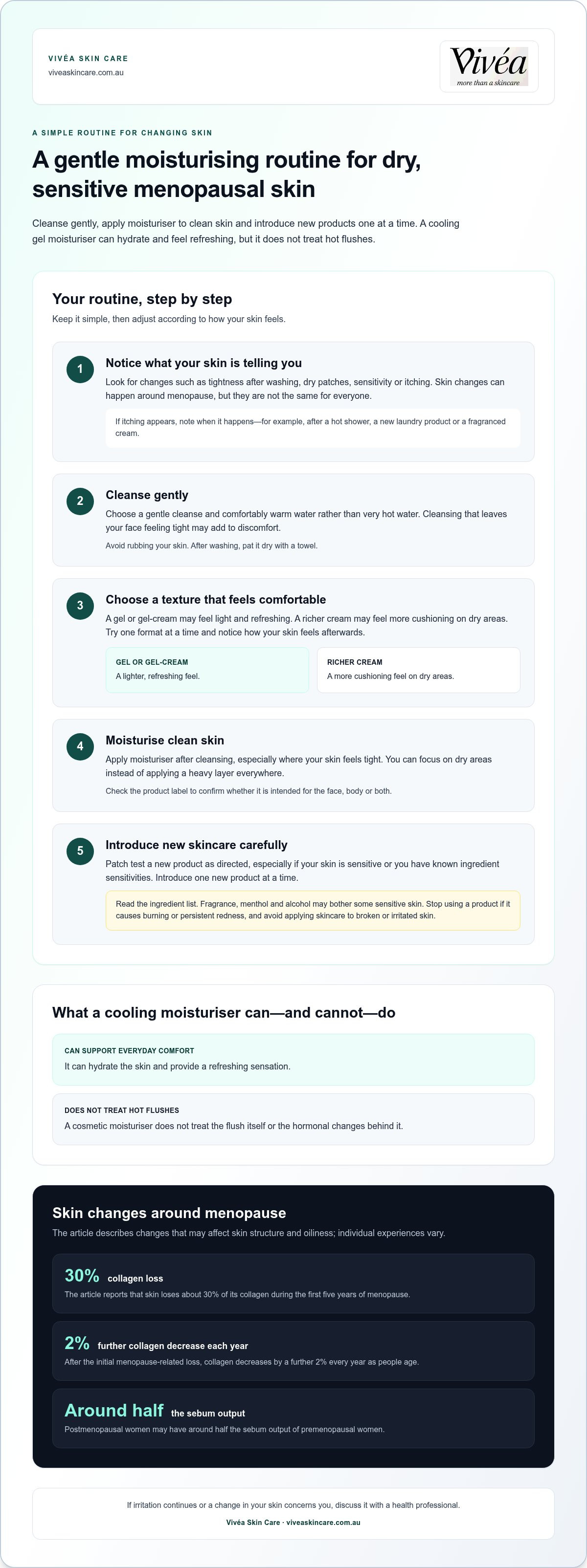
During the first five years of menopause, skin loses about 30% of its collagen. After the initial menopause-related loss, skin collagen decreases by a further 2% every year as people age. Postmenopausal women may have around half the sebum output of premenopausal women.
3. Menopause-related skin dryness and itching
Dryness can feel like tightness after cleansing, rough patches across the cheeks, or an itch that returns during the day. During menopause, changes in skin oil and moisture can make these sensations more noticeable. Itching may also have other causes, so a new or persistent change deserves attention beyond a skincare adjustment.
Start by noticing where and when the itch appears. For example, record whether it follows a hot shower, a new laundry product or applying a fragranced face cream. This can help identify possible irritants. Avoid scratching, which can further aggravate delicate skin, and use cool water or a clean, cool cloth for brief comfort.
Bathing habits can affect how dry skin feels. Choose a comfortably warm shower rather than very hot water, and keep cleansing gentle. Pat skin dry with a towel instead of rubbing. Apply moisturiser to clean skin afterwards, especially across areas that feel tight, such as the cheeks, hands or lower legs.
Choose products with a short, clear purpose: a gentle cleanser to wash, then a moisturiser to support surface hydration. If fragrance or a strong active product causes stinging, pause it and simplify the routine. Introduce one new product at a time, and patch test first. Avoid exfoliating dry or irritated areas, as scrubs can increase discomfort.
Hydration and comfort from a suitable menopausal moisturiser may improve within days, though the feel of skin can vary. Apply consistently as directed, then notice whether tightness after washing or itching between applications changes. Keep a brief note of products used and symptoms. If irritation appears after a particular formula, stop using it rather than applying more to test it.
Seek medical advice for intense, persistent or worsening itch, or if you notice a rash, swelling, broken skin or signs of infection. These symptoms can have causes unrelated to menopause, and a moisturiser cannot diagnose or treat them. A health professional can assess the pattern, location and appearance, along with medicines or other skin products that might be contributing.
For everyday dryness without irritation, keep the routine calm and repeatable: gentle cleansing, moisturiser and fewer potential triggers. For example, avoid adding a new serum and a new exfoliant on the same day. Changing one step at a time makes it easier to see what feels soothing and what may be unsettling your skin.
4. Cooling gel moisturiser for immediate hydration
A cooling gel moisturiser can offer everyday comfort through surface hydration and a fresh, cool sensation. Its lighter texture may suit skin that dislikes heavier creams, particularly after a warm shower or during a flush. The cooling feeling is sensory relief, not a treatment for hot flushes or their hormonal causes.
Check the ingredient list for hydration-supporting ingredients. Hyaluronic acid, including hydrolysed hyaluronic acid, helps attract water to the skin’s surface. A gel formula may also contain Menthyl PCA, which creates a refreshing cooling sensation. These ingredients serve different purposes: one supports hydration, while the other contributes a cooling feel.
Texture matters too. A gel spreads easily and can feel light, while a creamier moisturiser may feel more substantial on dry areas. For example, apply a thin layer of gel to the face and neck, then assess whether tightness eases. If your cheeks still feel dry, a richer product may be more comfortable there.
Apply moisturiser to clean skin, using gentle strokes rather than rubbing. Avoid the eye area unless the product directions say otherwise. If you’re using a serum, follow its instructions and apply moisturiser afterwards. A cool product may feel pleasant after time outdoors, but don’t rely on skincare to prevent overheating.
A cooling sensation and hydration aren’t the same thing. A menthyl ingredient may feel cool without lowering your body temperature. Likewise, a moisturiser can soften the feel of dry skin without stopping a hot flush. If facial flushing is uncomfortable, a cool cloth and a calmer environment can provide simple, non-product comfort.
New formulas can affect sensitive skin differently. Patch test first, following the product directions, and introduce one new item at a time. Stop using it if burning, stinging or redness develops. Avoid applying moisturiser to broken or irritated skin, and keep products away from the eyes unless their instructions permit use nearby.
For a straightforward trial, use the gel as directed on clean skin and notice how it feels after application. Check whether it absorbs comfortably, leaves skin feeling hydrated and provides a cooling sensation you enjoy. If dryness remains, adjust the texture or routine rather than applying repeated layers without checking the directions.
A cooling moisturiser can be a useful cosmetic step when your skin feels warm or dry. Choose based on ingredients, directions and finish, not on a promise to control menopause symptoms. The best-fitting routine is one you can apply comfortably and consistently.
5. Daily application routine
A steady routine makes it easier to notice how your skin responds. In the evening, cleanse gently, pat your face dry, then apply moisturiser to your face and neck. Follow the product’s directions for amount and frequency, since formulas differ. A night gel cream intended for these areas can fit naturally into a simple bedtime routine.
After showering or bathing, apply moisturiser to clean, towel-dried skin. This timing is practical for dry areas, such as the arms or legs, because it places moisturiser straight into your body-care routine. Use a liberal amount where the skin feels dry, following the product label. Reapply when your skin needs freshness and moisture, within the directions.
For the face, a pea-sized amount is a useful guide, with a similar amount for the neck. Spread it gently rather than pulling at the skin. If you use a serum, apply it to damp skin, then follow with moisturiser. Keep each layer comfortable, and avoid the eye area unless the product directions specifically allow use there.
In the morning, apply SPF after your moisturiser as part of your daily skincare routine. Choose sun protection suited to your needs and follow its directions for application and reapplication. A moisturiser doesn’t replace SPF. If you use a cooling mist, follow its product instructions and apply moisturiser as needed for hydration.
Some general skincare guidance suggests using moisturiser twice daily. However, the right frequency depends on the specific product directions and how your skin feels. If a formula is designed for evening use, keep it to that routine. Avoid adding repeated layers simply because skin feels warm; a cooling sensation doesn’t mean more moisturiser is needed.
Consistency matters more than changing products each day. Give a regular routine time, and assess hydration and firmness after 8 to 12 weeks of consistent use. Note simple observations, such as whether your face feels less tight after cleansing or your neck feels comfortable by bedtime. Change one product at a time if irritation develops.
Before using a new moisturiser, patch test it according to its instructions. Keep it away from your eyes, and don’t apply it to broken or irritated skin. If you use menopausal hormone therapy gel, follow its medicine instructions separately; skincare moisturiser is not a substitute. A calm routine can include clean skin, moisturiser and morning SPF without unnecessary steps.
Vivéa Skin Care: Vivéa Cooling Night Gel Cream for Menopause
Vivéa Cooling Night Gel Cream for Menopause is a cooling, hydrating option for an evening face and neck routine. Its formula includes hydrolysed hyaluronic acid, niacinamide and Menthyl PCA, which provides a refreshing cooling sensation. It is designed to soothe overheated or flushed skin, but it doesn’t treat hot flushes or menopause.
Apply it every evening to clean skin, following the product directions. Patch test before first use, especially if you have sensitive skin or sensitivities to stone fruit, as the formula contains peach kernel oil and fragrance. It’s for external use only; avoid the eyes and don’t apply it to broken or irritated skin.
If this cooling moisturiser suits your routine, contact Vivéa Skin Care to learn more about the product.
Make your next skincare step feel manageable
Let comfort guide your choices. A cooling gel moisturiser for menopause can be one part of a simple routine, alongside cleansing and a refreshing mist. Vivéa Skin Care offers the Vivéa Cooling Night Gel Cream for Menopause, Vivéa Gentle Creamy Cleanser for Sensitive Mature Skin and Vivéa Hydrating Cooling Mist Spray. Choose the step that best fits your skin’s needs and a routine you’ll be comfortable maintaining.
As you settle into a routine, notice how your skin feels after cleansing and throughout the day. Keep the steps that feel comfortable, and pause any product that causes irritation. Skincare can offer everyday hydration and sensory comfort, while persistent or concerning symptoms deserve care beyond a cosmetic routine.
If you’d like to explore these options for your routine, contact Vivéa Skin Care. A thoughtful, gentle approach can help make daily skincare feel like a supportive part of this transition.
Frequently Asked Questions
How can menopause affect my skin?
Skin changes around menopause can have more than one contributor, so note when symptoms appear and which areas are affected. For a useful record, jot down the skincare products you use, recent routine changes and whether discomfort follows washing or time outdoors. This can help you spot patterns to discuss with a health professional if symptoms persist, rather than assuming every new skin concern is caused by menopause.
What is a cooling gel moisturiser and how can it help menopausal skin?
Choose a gel moisturiser by considering when and where you’ll use it. A lightweight texture may work well under daytime makeup, while an evening formula can fit into a bedtime routine. Check whether the directions specify face, neck or body use, and whether the finish suits your preferences. A comfortable texture makes a skincare step easier to maintain consistently.
Which cooling gel moisturisers are available in Australia for menopause-related hot flushes or night sweats?
Vivéa Skin Care offers Vivéa Cooling Night Gel Cream for Menopause, Vivéa Women's Cooling Day Gel Cream, Vivéa Women's Hand & Body Cooling Gel Cream and Vivéa Hydrating Cooling Mist Spray. For an evening face-and-neck routine, the night gel cream is the relevant option. Product formats differ, so use each only as directed and choose according to the area you want to moisturise.
What ingredients in moisturisers can soothe dry, sensitive menopausal skin?
Rather than choosing by a single ingredient, compare the full ingredient list with products you already tolerate. If a familiar formula works well, note its ingredients before trying something new. This gives you a useful reference if your skin reacts. A moisturiser’s overall formula and texture matter too, so consider whether it feels comfortable and suits the area where you plan to apply it.
Can menthol, fragrance or alcohol in cooling moisturisers irritate menopausal skin?
Some people find certain ingredients uncomfortable, but “alcohol” covers different ingredients with different roles in skincare. If you’ve reacted to a product before, compare its ingredient list with the new one and look for shared names. Keep a note of the product and reaction, including where it was applied. This record can help you avoid personal triggers and explain the pattern during a health appointment.
How should you apply cooling gel moisturiser for the best results?
Use the amount and frequency stated on the product label, and don’t increase application simply because you’re experiencing a flush. If you also use prescription skincare, avoid blending products together in your hand; follow each product’s directions and seek guidance from the prescribing health professional about order or timing. Keep the routine simple enough to follow, and note any changes after introducing a new step.
Are cooling gel moisturisers safe for sensitive skin and rosacea?
Sensitive skin may react to fragrance or cooling ingredients such as menthol, and alcohol can sting or feel drying for some people. Check the ingredients, patch test as directed, and stop using the product if it causes burning or persistent redness.


