

Supporting firmer-feeling skin after menopause is less about chasing a dramatic fix and more about building a few steady, gentle habits. If your skin feels drier, more delicate or less supple than it used to, you’re not imagining the change, and you don’t need an elaborate routine to care for it.
Changes in oestrogen during menopause can affect the skin’s collagen, moisture and supportive structure, which may contribute to changes in firmness and comfort. If you’re wondering how to improve skin elasticity after menopause, a practical starting point is daily sun protection, gentle cleansing and regular moisturising. These habits can support hydration and the skin barrier, but skincare can’t promise to restore lost elasticity or reverse every change.
This guide explains why skin may feel different, which everyday steps are worth considering and what results are realistic. You’ll also learn how to introduce products thoughtfully, avoid routines that leave sensitive skin feeling stressed, and recognise when a concern is best discussed with a health professional.
Key Takeaways
- Learn how to improve skin elasticity after menopause with everyday care that supports skin health without promising to reverse natural changes.
- Understand the difference between skin that feels more hydrated and changes to its deeper supportive structure.
- See how sun protection, gentle cleansing and moisturising each play a different part in a manageable routine.
- Find out how to introduce skincare gradually and what to do if your skin becomes irritated.
- Consider whether Vivéa® Cooling Night Gel-Cream could be an optional moisturising step for night-time comfort.
How menopause can change skin firmness and elasticity
To support skin after menopause, focus on daily sun protection, gentle care and consistent moisturising. These habits can help maintain skin comfort and a healthy-looking appearance, but they can’t guarantee a reversal of changes in elasticity. Skin changes vary from person to person, and menopause isn’t the only influence on how skin looks or feels.
What does skin elasticity mean?
Skin elasticity is the skin’s ability to stretch and then spring back towards its resting shape. Think of a soft fabric that gives a little when pulled, then settles back. Elasticity is different from firmness, which describes how supported or taut skin feels, and from fine lines, which are visible creases. Surface dryness can make skin feel rough or look less supple, but moisturising that dryness doesn’t necessarily change the skin’s deeper elasticity.
Why can skin feel different after menopause?
Oestrogen plays a role in maintaining collagen, elastin and moisture in the skin. Collagen and elastin are structural proteins that help provide support and allow skin to stretch and recoil. As oestrogen levels change around menopause, the skin’s structure and moisture may also change. Some people notice more dryness, sensitivity or reduced suppleness, although the timing and degree vary. The American Academy of Dermatology’s guidance on skin care during menopause describes collagen loss and visible changes such as sagging and wrinkles as possible effects.
Hydration can help skin feel softer and more comfortable, but it doesn’t show that collagen has been restored. Other factors matter, too. Ageing, accumulated sun exposure, smoking, health and daily skincare habits can all influence skin’s appearance and feel. Regular sun protection is a practical way to help protect exposed skin from further UV damage, though it won’t undo existing changes.
If you’re exploring how to improve skin elasticity after menopause, keep expectations kind and realistic. A simple routine can support hydration and comfort, while changes in skin texture or firmness may have several contributing factors. If a skin concern is persistent, changing or worrying you, seek advice from a health professional rather than relying on skincare alone.
What happens beneath the surface: collagen, moisture and the skin barrier
Collagen and elastin help form the skin’s supportive framework, while hydration and the skin barrier affect how comfortable and smooth its surface feels. These processes are connected, but they aren’t interchangeable. A moisturiser may ease dryness without rebuilding the proteins that support skin structure.
Collagen and elastin: what changes can mean
Collagen provides much of the skin’s structural support, while elastin helps it stretch and return. Changes in these proteins can affect how firm or resilient skin appears. The American Academy of Dermatology explains that hormonal changes during menopause are associated with collagen loss and visible changes such as sagging and wrinkles. This is general information, not a forecast for every person.
Collagen and elastin support the skin’s structure, while surface moisturisation mainly helps relieve dryness and improve comfort. Keeping this distinction in mind can make skincare claims easier to assess, particularly if a product suggests that a hydrated or smoother appearance means deeper elasticity has been restored.
Hydration and barrier support are related, but not identical
The skin barrier is the outermost layer that helps limit moisture loss and protect against everyday irritants. When it’s unsettled, skin may become dry, tight or more easily irritated. Gentle cleansing and regular moisturising can support comfort by helping the surface retain moisture, though they don’t treat the underlying hormonal changes of menopause.
Hydrated skin can look temporarily smoother or more plump, much as dry fabric looks softer after it’s dampened. That visible change may be welcome, but it isn’t proof that collagen or elastin has been replenished. When considering how to improve skin elasticity after menopause, separate the immediate comfort a moisturiser may offer from claims about long-term structural change.
Ingredient research also needs careful interpretation. A study of a single ingredient, at a particular concentration and under specific conditions, doesn’t establish that every product containing it will have the same effect. The finished formula, how it’s used and an individual’s skin all matter. Look for clear, realistic claims, and introduce new products gradually if your skin is sensitive.
For an optional night-time moisturising step, Vivéa® Cooling Night Gel-Cream is described as a lightweight, cooling gel-cream. Explore menopause-focused moisturising care as one possible part of a comfort-led routine, rather than as a treatment for elasticity loss.
Which approaches can support skin elasticity after menopause?
For everyday care, prioritise sun protection, gentle cleansing and moisturising. These habits can support skin health and comfort, but they can’t guarantee a change in deeper elasticity. Research on an ingredient also doesn’t prove that a finished product will produce the same results. The formula, how it’s used and your individual skin all matter.
The dermatologist-recommended skin care guidance from the American Academy of Dermatology discusses skin changes during menopause and practical care. Use it as general information, and consider your own skin’s needs when choosing a routine.
| Approach | Potential role | Important limitation |
|---|---|---|
| Daily sun protection | Helps protect skin from UV exposure and supports ongoing skin health. | Doesn’t reverse changes that have already occurred. |
| Moisturising | Supports surface hydration and can ease the feel of dryness. | A smoother, more comfortable appearance doesn’t show that collagen or elastin has been restored. |
| Gentle cleansing | Cleans skin without adding unnecessary friction or a stripped feeling. | Doesn’t directly rebuild the skin’s supportive structure. |
| Advice from a health professional | Helps you discuss persistent, sudden or concerning changes and possible next steps. | Any clinical care depends on individual assessment; cosmetic skincare isn’t a substitute. |
Daily habits versus topical skincare
Consistency matters more than a crowded shelf. Protect exposed skin from the sun as part of your daily routine, cleanse gently, and choose a moisturiser that feels comfortable. If you’re trying a new product, introduce it gradually and stop using it if irritation develops. Research on an individual ingredient doesn’t prove that a finished skincare product will improve elasticity. Be wary of claims that supplements or particular foods can reliably firm skin, and seek qualified health advice before making changes for a health concern.
When professional advice may be useful
Consider speaking with a GP or qualified skin professional if a change is persistent, sudden, worrying or accompanied by other symptoms. Prescription skincare and procedures require individual assessment and are not services offered by Vivéa Skin Care. A health professional can discuss whether further assessment is appropriate, without assuming every change is caused by menopause.
If you’re weighing how to improve skin elasticity after menopause, think of daily care as supportive rather than corrective. It can help you protect and care for your skin, while professional advice can help you make sense of changes that need more attention.
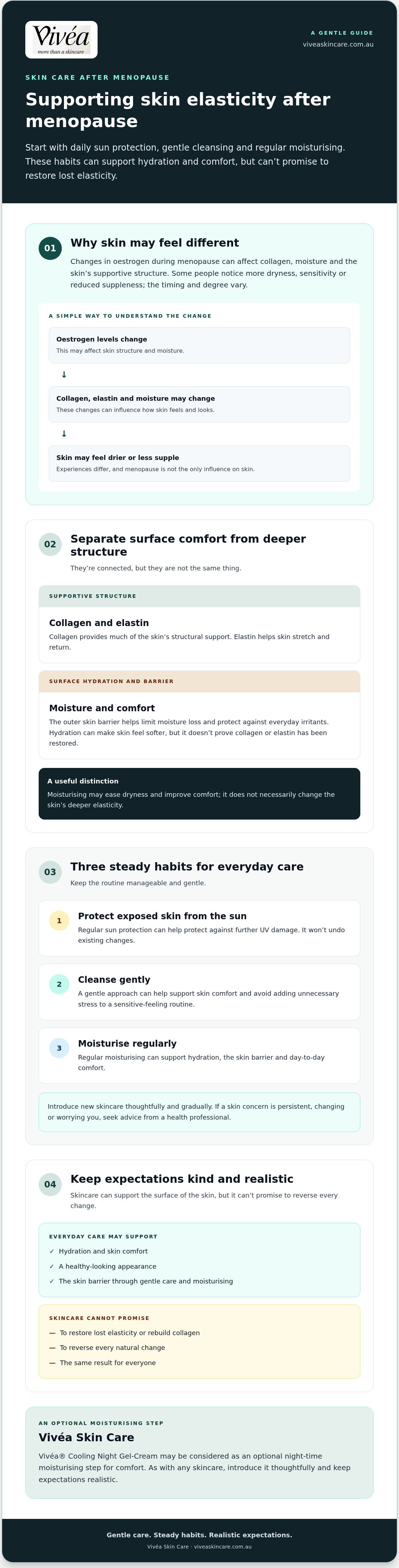
A simple routine to support skin comfort and a firmer-looking appearance
A manageable routine can help keep skin clean, comfortable and protected without promising to restore elasticity. Start with a few familiar steps, then adjust them to suit how your skin feels. Consistent care can make daily routines easier, but individual experiences and visible changes vary.
A gentle morning routine
- Cleanse gently, if needed. If your skin feels comfortable on waking, rinsing may be enough. Otherwise, use a gentle cleanser and avoid scrubbing or water that feels uncomfortably hot. For more guidance, read this gentle cream cleanser guide.
- Moisturise for comfort. Apply a moisturiser that feels pleasant on your skin. This can support surface hydration, but it shouldn’t be treated as a way to rebuild collagen or guarantee firmer skin.
- Apply broad-spectrum sun protection. Choose and use sunscreen according to its label directions and reputable Australian sun-safety guidance. Make this a regular part of your morning routine, especially when you’ll be outdoors. Sun protection helps protect skin from UV exposure, but it won’t reverse existing changes.
A supportive evening routine
In the evening, gently cleanse to remove the day’s sunscreen, make-up or residue, then apply a moisturiser that suits your skin’s comfort and preferences. You don’t need to add several active products at once. If you’re considering a night-time moisturiser, the cooling night cream guide offers further considerations. Vivéa® Cooling Night Gel-Cream is one optional moisturising step, not a treatment for loss of elasticity.
Keep the routine adaptable. Introduce one new product at a time so you can notice how your skin responds. Stop using a product if irritation develops. If reactions persist or keep returning, seek advice from a GP or qualified skin professional rather than trying to push through discomfort.
For anyone wondering how to improve skin elasticity after menopause, a gentle routine is best viewed as steady support for skin comfort and a cared-for appearance, not a promise of structural change. Start with the steps that feel manageable, and build only if your skin is comfortable. To explore an optional moisturising step, visit Vivéa Skin Care’s night-time moisturising option.
What to expect from skincare, and where Vivéa Skin Care fits
Skincare can help skin feel more hydrated and comfortable, and support a smooth, cared-for appearance. Those are worthwhile goals, especially if dryness or sensitivity has become more noticeable. A moisturiser can’t guarantee a change in skin elasticity, reverse structural changes or replace advice from a health professional when a concern needs attention.
How to assess whether your routine suits your skin
Rather than treating the mirror as a clinical measurement, notice how your skin feels day to day. Does it feel less tight after moisturising? Is dryness more manageable? Are you experiencing stinging, redness or irritation after using a product? These observations can help you decide whether your routine feels supportive, although they can’t show whether collagen or elastin has changed.
If a product causes discomfort, stop using it and simplify your routine while your skin settles. Introduce new skincare gradually so it’s easier to identify what may not suit you. For persistent or concerning reactions, ask a GP or qualified skin professional for advice. Moisturisers are cosmetic skincare, not medical treatment.
A menopause-specific moisturiser as one possible step
If you’d like an optional moisturising step in the evening, Vivéa® Cooling Night Gel-Cream is described as a lightweight, cooling, moisturising gel-cream that supports the skin barrier. It may suit a night-time routine if those qualities fit your preferences, but it isn’t a treatment for reduced elasticity and no result is guaranteed.
Vivéa Skin Care describes its skincare line as having low-allergen scent and mood-balancing fragrances. These qualities don’t mean every product will suit every person, so consider your own sensitivities and discontinue use if irritation develops. Developed and created in New Zealand, Vivéa Skin Care aims to help women feel understood, supported and confident during this powerful stage of life.
If you’re researching how to improve skin elasticity after menopause, keep your expectations grounded: a routine may support hydration, comfort and a cared-for appearance, while visible changes vary between individuals. Explore Vivéa Skin Care if you’d like to learn more about its night-time moisturising option.
Keep your skin care gentle, steady and realistic
Menopause-related changes can influence skin, but they’re not the only factor, and everyone’s experience is different. If you’re considering how to improve skin elasticity after menopause, focus on what you can support day to day: protect your skin from the sun, cleanse gently and moisturise for comfort. These habits can help skin feel hydrated and cared for, but they can’t promise to restore elasticity.
Notice how your skin responds, and simplify your routine if a product causes irritation. For persistent or concerning changes, a GP or qualified skin professional can offer advice beyond cosmetic skincare.
Vivéa Skin Care’s range is developed and created in New Zealand. Vivéa® Cooling Night Gel-Cream is one optional moisturising step for night-time comfort, not a treatment for elasticity loss. If its approach feels right for you, Explore Vivéa Skin Care’s menopause-specific skincare.
A few thoughtful, comfortable habits are a worthwhile place to begin. Let your routine support you gently, at your own pace.
Frequently Asked Questions
Can skin elasticity improve after menopause?
Skin may look or feel more supple when dryness is eased, but that doesn’t necessarily mean its deeper elasticity has changed. Menopause-related skin changes vary, and skincare can’t guarantee that lost elasticity will return. Gentle cleansing, regular moisturising and sun protection can support skin comfort and help protect its appearance. If you’re concerned about a change, a health professional can help you understand what may be contributing.
What is the best way to improve skin elasticity after menopause?
There isn’t one skincare step that can reliably restore skin elasticity. A practical routine focuses on broad-spectrum sun protection, gentle cleansing and moisturising to support skin comfort and hydration. Introduce new products gradually, especially if your skin is sensitive, and stop using anything that causes irritation. These habits can support skin health and a cared-for appearance, but results vary and they aren’t a substitute for professional advice about concerning changes.
Does moisturiser help with skin elasticity after menopause?
Moisturiser can ease the feeling of dryness and help skin look temporarily smoother or more supple by supporting surface hydration. This can make skin feel more comfortable, but it doesn’t prove that collagen or elastin has been restored. Choose a moisturiser that feels comfortable for your skin and use it consistently if it suits you. If irritation develops, stop using it and consider seeking professional advice if the reaction persists.
Can collagen cream restore skin elasticity after menopause?
Collagen cream shouldn’t be relied on to restore skin elasticity. A product may moisturise the surface and temporarily improve the look or feel of dryness, but claims about an ingredient don’t establish that a finished cream rebuilds the skin’s deeper structure. Research results for an ingredient may not apply to every formula. Check product claims carefully, and discuss persistent skin concerns with a GP or qualified skin professional.
How long does it take to see a difference in menopausal skin?
There’s no reliable, universal timeframe for visible changes in menopausal skin. Some people may notice that dryness feels more comfortable after moisturising, while changes in firmness or elasticity can’t be predicted from a skincare routine. Give new products time only if your skin tolerates them, and introduce them one at a time so you can notice reactions. Stop using a product if irritation develops; seek advice if it continues.
When should I ask a doctor about changes in my skin after menopause?
Ask a GP or qualified skin professional about skin changes that are sudden, persistent, worsening or concerning to you. It’s also sensible to seek advice if a product reaction doesn’t settle after you stop using it. Menopause may be one influence on skin, but it isn’t necessarily the cause of every change. A health professional can assess your concern and advise whether further evaluation is appropriate.
Can skincare replace professional treatment for loss of skin firmness?
No. Skincare can support hydration, comfort and a cared-for appearance, but it can’t replace professional assessment or treatment when those are needed. A moisturiser isn’t a medical treatment for loss of firmness, and cosmetic products can’t guarantee restored elasticity. If you’re considering clinical options or have a skin concern, speak with a GP or qualified skin professional. They can discuss appropriate next steps based on your individual circumstances.


