

What if your skin needs a gentler routine, not stronger products? If familiar skincare suddenly leaves your face feeling dry, tight or unsettled, you’re not imagining the change. If you’re researching skincare for skin barrier perimenopause concerns, a helpful first step is often to simplify: use a mild cleanser, moisturise and pause products that sting or increase discomfort.
The skin barrier is the outer layer that helps retain moisture and protect against irritants. Hormonal changes during perimenopause may contribute to dryness and sensitivity, so products you once enjoyed might not feel as comfortable now. That doesn’t mean you need an intensive overhaul. A calm, consistent routine can offer everyday support while your skin’s needs evolve.
In this guide, you’ll learn how the barrier works and why perimenopause may affect skin comfort. You’ll also find practical ways to adjust cleansing and moisturising without rushing into stronger actives, plus signs that persistent or concerning symptoms are worth discussing with a GP or dermatologist.
Key Takeaways
- Learn what the skin barrier does and why dryness, tightness or sensitivity can make familiar skincare feel different.
- Explore how changing oestrogen levels may influence skin comfort, while recognising that perimenopause affects everyone differently.
- See why skincare for skin barrier perimenopause concerns doesn’t necessarily call for stronger products or a more complicated routine.
- Follow a simple routine built around gentle cleansing, moisturising and daytime sun protection.
- Understand when persistent or concerning skin symptoms may be worth discussing with a health professional.
Skincare for skin barrier perimenopause: what changes and what the barrier does
Dryness, tightness or increased sensitivity can make a familiar skincare routine feel unexpectedly uncomfortable. If you’re exploring skincare for skin barrier perimenopause concerns, understanding the skin’s protective outer layer can help you make more considered product choices. Skin experiences vary, and these sensations don’t automatically mean your barrier is damaged.
The skin barrier is the outer protective layer of the skin that helps limit water loss and shield it from irritants and other environmental stressors. It supports moisture retention and everyday skin comfort, though it can’t block every possible irritant or prevent every skin concern.
What does the skin barrier do?
The outermost layer of skin, known as the stratum corneum, is often described as a brick wall: skin cells are the bricks, while lipids between them help hold the structure together. This protective surface helps keep moisture in and some external irritants out. DermNet’s explanation of the skin barrier provides further dermatology information about its structure and function.
When the surface is comfortable, skin may feel less dry and more settled. Cleansing, weather, low humidity and products that don’t suit you can all affect how skin feels. Dryness or sensitivity alone, however, can’t confirm barrier damage. These symptoms can have different causes.
What might changing skin feel like during perimenopause?
Some people notice that their skin feels drier, tighter or more reactive during perimenopause. A moisturiser or cleanser that once felt fine might now tingle or leave skin feeling less comfortable. Changing oestrogen levels may be one factor in skin changes, but individual experiences differ, and not every change is caused by hormones.
Notice the pattern rather than assuming a diagnosis. Consider whether discomfort follows a new product, a change in the weather or another shift in your routine. This can help you decide whether simplifying your skincare is worth trying. Avoid adding multiple new products at once, so it’s easier to notice how your skin responds.
If symptoms persist, are severe, worsen or appear without a clear explanation, seek advice from a GP or dermatologist. A professional can help assess possible causes and advise whether the issue needs more than cosmetic care. Gentle skincare may support day-to-day comfort, but it isn’t a substitute for assessment when symptoms concern you.
How perimenopause may influence skin-barrier comfort
Changing oestrogen levels may be one influence on how skin feels during perimenopause, but they don’t create a predictable pattern for everyone. Some people notice more dryness or sensitivity; others may see little change. This connection is one part of the picture, not a way to diagnose a skin concern.
What can hormonal changes mean for skin?
The American Academy of Dermatology explains that declining oestrogen around menopause can contribute to drier, thinner skin. This may help contextualise changes in comfort, but it doesn’t mean everyone will experience them or confirm that the skin barrier is damaged. The advice is focused on menopause, so it shouldn’t be taken as proof that every perimenopausal skin change has the same cause.
Skin comfort can also be shaped by factors such as age, weather, indoor heating or air conditioning, existing skin conditions and the products in your routine. For example, a new active product or a cleanser that leaves your skin feeling stripped may contribute to discomfort, regardless of hormonal changes. Note when symptoms began and whether anything in your environment or routine changed around the same time. That detail can be useful if you seek professional advice.
For skincare for skin barrier perimenopause concerns, distinguish what’s well understood from what’s uncertain: the skin barrier helps limit moisture loss, but an individual’s changing skin comfort can’t be explained by perimenopause alone.
When is it more than a skincare concern?
Occasional dryness may settle with simple cosmetic care, but persistent, worsening, severe or unusual symptoms deserve more attention. Seek advice from a GP or dermatologist if discomfort continues, affects daily life or comes with changes that concern you. A professional can assess possible causes. Skincare can support everyday comfort, but it can’t diagnose or treat an underlying condition.
The American Academy of Dermatology offers guidance on caring for skin during menopause, including practical measures for dry skin. If you’re also considering a menopause-specific cosmetic option, you can explore Vivéa Skin Care’s menopause skincare as one part of a gentle routine, not as a substitute for professional advice.
Skin-barrier skincare in perimenopause: common mistakes and better choices
If your skin feels unsettled, adding more products can seem like the quickest way to help. But stronger actives or several new products at once may make it harder to tell what your skin tolerates. For skincare for skin barrier perimenopause concerns, a simpler, consistent routine can make it easier to notice what feels comfortable, though no approach suits everyone.
Should you add more active ingredients when skin feels unsettled?
Before introducing another active ingredient, review recent changes. Have you started a new exfoliant, serum or cleanser, or increased how often you use a familiar product? Consider pausing products that cause discomfort and sticking to familiar, gentle basics while you observe how your skin feels. Don’t assume an ingredient is suitable just because it’s described as gentle or natural. If irritation persists or concerns you, seek advice from a GP or dermatologist.
How can you tell whether a product suits your skin?
Check the ingredient label and follow the product’s official directions. If you choose to patch test, follow the product guidance. This may help you notice a reaction, but it can’t guarantee future tolerance or predict how your skin will respond on your face. Introduce products cautiously rather than changing several parts of your routine together.
If a product causes discomfort, stop using it. For a reaction that is severe, persistent or otherwise concerning, seek appropriate medical advice. A calmer routine isn’t about avoiding every active ingredient. It’s about making thoughtful changes at a pace that lets you understand what your skin is comfortable with.
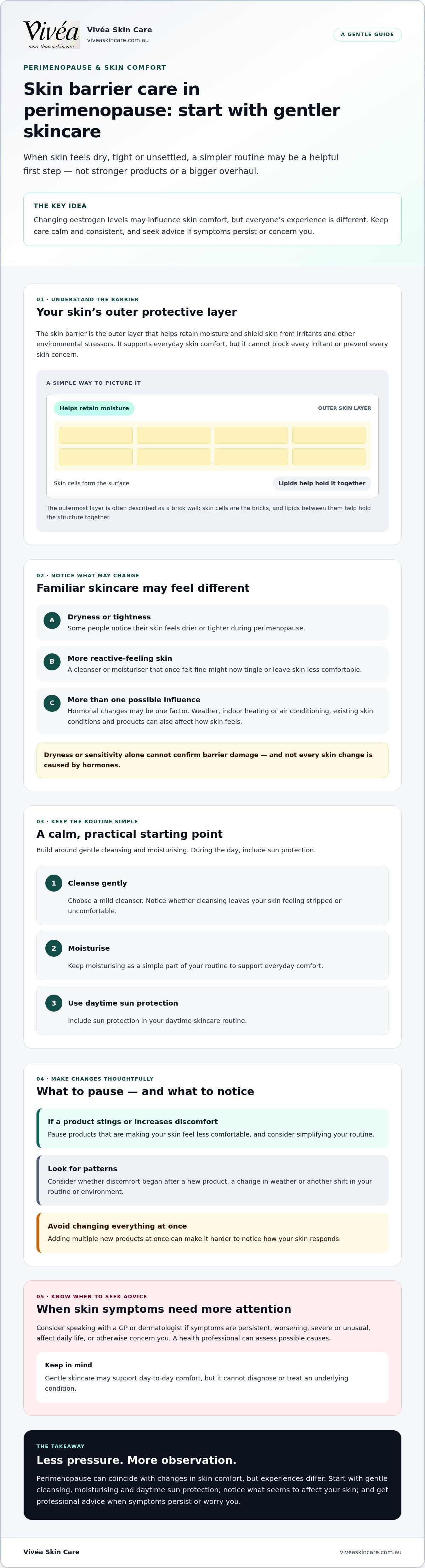
A gentle routine to support the skin barrier during perimenopause
A steady, uncomplicated routine can make daily skincare easier to manage when your skin feels dry or sensitive. Think of it as general cosmetic care for comfort, not a treatment for a diagnosed skin condition. Add or change products gradually, so you can better tell what suits you.
A simple morning and evening approach
Keep the sequence simple and follow the directions on each product. Adjust according to your skin’s tolerance.
- Morning: protect. Apply a broad-spectrum sunscreen as directed on its label, and reapply according to the instructions, particularly when spending time outdoors. The American Academy of Dermatology includes sun protection in its advice for caring for skin during menopause.
- Evening: cleanse gently. Use a cleanser that leaves your skin feeling comfortable rather than stripped. Avoid scrubbing, and follow the product’s directions.
- Evening: moisturise. Apply a moisturiser that feels comfortable on your skin. Vivéa® Cooling Night Gel-Cream is described as a lightweight, moisturising, barrier-supporting gel-cream. As with any cosmetic product, follow its official directions and consider your own tolerance.
The American Academy of Dermatology’s menopause skincare guidance offers further general advice. Adapt your own routine to what feels comfortable.
How to adjust when skin feels dry or sensitive
Before buying additional products, review what has changed. A new cleanser, exfoliant, fragrance or other product may be worth reconsidering if discomfort began around the same time. Temporarily simplifying your routine can make it easier to identify possible triggers. It won’t reveal every cause, but it can help you make changes more thoughtfully.
Introduce any new product one at a time and follow its label. Don’t assume that a particular ingredient, or a product described as natural, will suit everyone. If something causes discomfort, stop using it and seek advice if the reaction is concerning.
Comfort and tolerance matter more than routine complexity. A gentle routine doesn’t need to be elaborate to feel considered; consistency and attention to your skin’s response are useful starting points. If discomfort persists, worsens or affects daily life, speak with a GP or dermatologist rather than relying on cosmetic skincare alone.
If you’re looking for an optional night-time moisturiser, explore Vivéa Skin Care’s menopause skincare and consider whether the product details and directions suit your routine.
Where menopause-specific skincare may fit into barrier care
Once you have a gentle routine in place, choosing a moisturiser can come down to how it feels on your skin and whether you’re comfortable using it consistently. Menopause-specific skincare may be one option to consider, but it isn’t essential for everyone and shouldn’t be expected to treat a skin condition.
What to look for in a menopause-aware moisturiser
Consider texture, moisturising feel and fragrance preferences, as well as how your skin responds. A product that feels comfortable and fits easily into your routine may be more practical than one chosen for a long list of claims. Check its directions and ingredients, especially if you know certain ingredients don’t suit you. “Natural” doesn’t automatically mean suitable for every person.
Terms such as “barrier-supporting” describe a cosmetic benefit, not a promise to repair a diagnosed condition or prevent a reaction. If your skin is already unsettled, introduce a new moisturiser thoughtfully and avoid changing several products at once. That makes it easier to notice whether the product feels comfortable for you.
How Vivéa Skin Care can be introduced without overclaiming
Vivéa Skin Care is a New Zealand-developed, menopause-specific skincare brand. Vivéa® Cooling Night Gel-Cream is described as a lightweight, moisturising, barrier-supporting gel-cream. These are cosmetic product descriptions, not evidence that it treats perimenopause, repairs a medical condition or will suit every individual. Check the product information and directions before use, and stop if it causes discomfort.
The range is described as having low-allergen scent and mood-balancing fragrances. These descriptions don’t mean a particular product is fragrance-free or guaranteed to suit sensitive skin. Individual preferences and tolerance still matter.
If you’re weighing up skincare for skin barrier perimenopause concerns, let your routine and your skin’s response guide your choice rather than assuming a menopause-specific label is a necessity. Persistent or worrying symptoms are best discussed with a qualified health professional.
If you’d like to learn more, you can explore Vivéa Skin Care’s menopause-specific skincare and review the product information at your own pace.
Keep your skincare gentle and responsive
Perimenopause can coincide with changes in skin comfort, but everyone’s experience is different. The skin barrier helps hold moisture and protect the skin; dryness or sensitivity alone doesn’t confirm it’s damaged. A simple routine of gentle cleansing, moisturising and daytime sun protection can be a thoughtful starting point. Make changes gradually, and seek professional advice if symptoms persist, worsen or concern you.
For skincare for skin barrier perimenopause concerns, let your skin’s comfort and tolerance guide your choices rather than assuming you need stronger or more products. Menopause-specific skincare is an optional part of cosmetic care, not a substitute for professional assessment. Vivéa Skin Care’s range is developed and created in New Zealand and is described as clinically tested and dermatologically approved for safety and efficacy.
If you’d like to explore a menopause-specific skincare option, take a look at Vivéa Skin Care’s range and review each product’s information at your own pace. Gentle, considered care can help you feel more confident as your skin’s needs evolve.
Frequently Asked Questions
Can perimenopause affect your skin barrier?
Yes, changing oestrogen levels during perimenopause may be one factor in changes to skin comfort, including dryness or sensitivity. The skin barrier helps limit moisture loss and protect the skin, but symptoms don’t confirm that it’s damaged. People’s experiences differ, and age, weather, existing skin conditions and skincare products can also influence how skin feels. Ongoing or concerning changes are worth discussing with a health professional.
How do I support my skin barrier during perimenopause?
Support everyday skin comfort with a simple routine: cleanse gently, moisturise and use daytime sun protection according to product directions. For skincare for skin barrier perimenopause concerns, introduce changes gradually and notice how your skin responds rather than adding several products at once. The American Academy of Dermatology’s menopause skincare advice also offers general guidance. Seek professional advice if symptoms persist or worsen.
What are signs of a compromised skin barrier?
Dryness, tightness, stinging or increased sensitivity can occur when skin feels unsettled, but these signs aren’t a diagnosis of a compromised barrier. They can have different causes, including a product that doesn’t suit you or changes in your environment. Notice when symptoms appear and whether they follow a routine change. If they persist, worsen or concern you, ask a GP or dermatologist for advice.
Should I stop using active skincare ingredients during perimenopause?
No, perimenopause alone doesn’t mean you need to stop every active skincare ingredient. If a product is comfortable and used as directed, you may not need to change it. If your skin becomes irritated, review recent additions and consider pausing the product that causes discomfort. Avoid introducing several new products at once. If irritation continues or is concerning, seek advice from a GP or dermatologist.
Can a moisturiser repair the skin barrier?
A moisturiser can help hydrate skin and support everyday comfort, but it can’t be guaranteed to repair a damaged barrier or treat an underlying condition. Choose one that feels comfortable, check its label and follow the directions. Introduce it thoughtfully, particularly if your skin is sensitive, as individual tolerance varies and even natural ingredients may not suit everyone. Seek professional advice for persistent or worsening symptoms.
When should I see a doctor about perimenopausal skin changes?
See a GP or dermatologist if skin symptoms are persistent, worsening, severe, unusual or affecting daily life. It’s also reasonable to seek advice if you’re unsure what may be causing a reaction or what care is appropriate. A health professional can assess possible causes; cosmetic skincare can support daily comfort but doesn’t replace medical assessment. If a product causes a concerning reaction, stop using it and seek appropriate guidance.


